
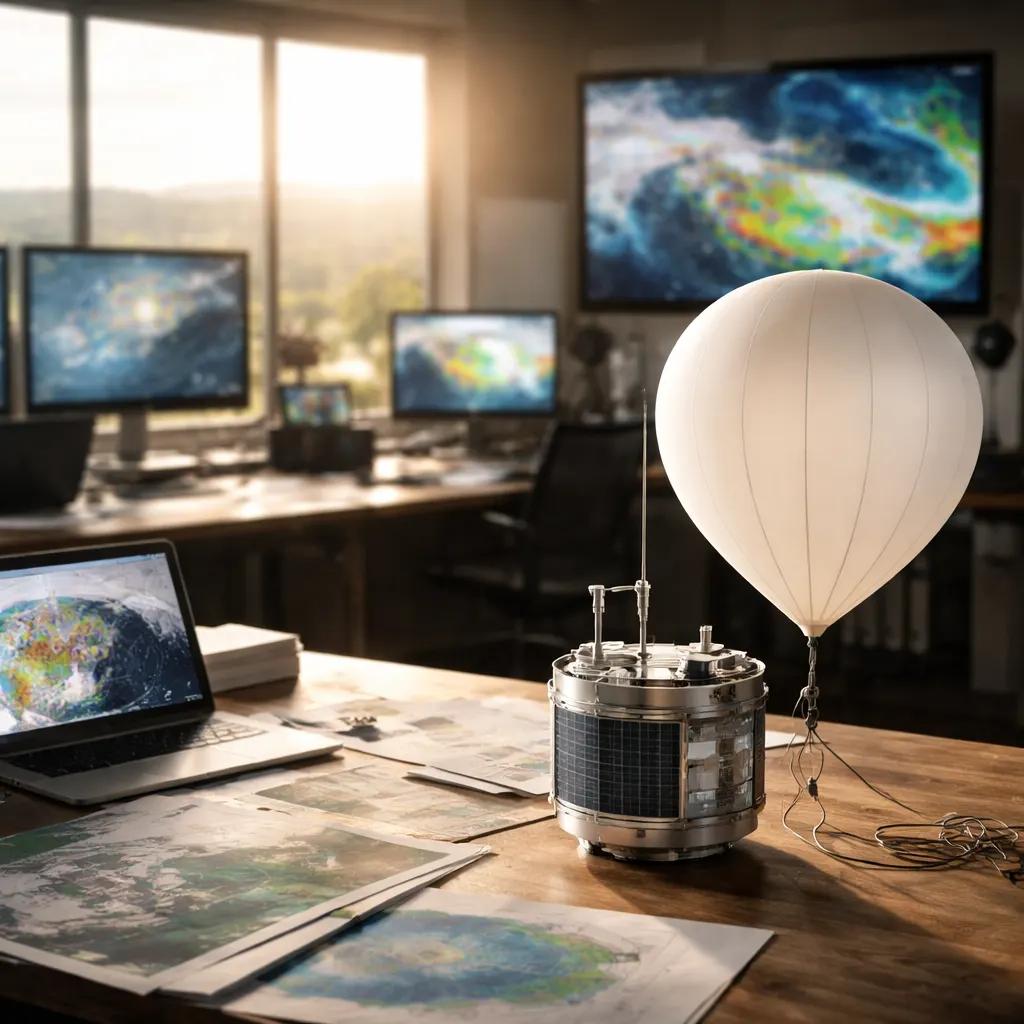
WindBorne Systems, a startup that gathers atmospheric data using the world's longest-flying weather balloons and processes it through an AI forecasting model, has secured $37 million in Series B funding, CEO John Dean told TechCrunch. The investment round, which values the company at $250 million, was jointly led by Khosla Ventures and Galvanize, with participation from Translink Capital, Lux Capital, and existing backers. The company aims to tackle the challenge of making weather predictions easier for businesses and organizations to use in decision-making.
Established in 2019, WindBorne currently operates 20 launch facilities globally and maintains approximately 600 balloons airborne simultaneously, gathering measurements in challenging locations such as typhoon centers. The startup is now rolling out aerial sensor units that can descend into oceans and function as floating buoys for continued data collection. Government entities represent the company's primary client base today, with the U.S. National Weather Service buying the firm's data and both the U.S. Air Force and U.S. Navy funding WindBorne through research collaborations, including work on forecasting systems that can operate aboard vessels with spotty connectivity.
Dean stated that WindBorne has shown that incorporating balloon data improves forecast accuracy, with each data point delivering stronger value than satellite information. He also noted the company has grown revenue during this period, reducing investor concerns about market demand. Saloni Multani, a partner at Galvanize who jointly led the funding round, explained that the private weather market has been constrained because "integrating weather forecasts into broader business decision-making has traditionally been expensive and difficult," but believes AI alters this dynamic by making superior forecasts worth the investment and simplifying their connection to business choices.
The arrival of deep learning methods that power large language models has also enabled weather simulations to run on laptops rather than supercomputers, transforming meteorology and allowing private firms to create their own forecasts for the first time without prohibitive computing costs. WindBorne's unique dataset, which Dean describes as a "planetary nervous system," combines with government weather agency data to create a competitive advantage for their model. The new capital will fund computing infrastructure, an initiative to replace the balloon fleet's satellite communications with mesh radio technology, and expansion of the go-to-market team to grow the company's footprint in commercial markets, currently concentrated on investment funds using weather information to forecast commodity prices and other business results. Private weather companies have historically struggled to penetrate business markets beyond repackaging government forecasts for media, handling specialized requirements like aircraft de-icing and maritime routing, or serving speculators, but AI tools that streamline data analysis may shift that landscape. The challenge ahead mirrors what other sensing startups have faced over the past decade: earth observation satellite networks and similar ventures found extracting value from their data demanded expertise and established processes that most private sector clients lacked, pushing them toward government customers already accustomed to working with such information.