
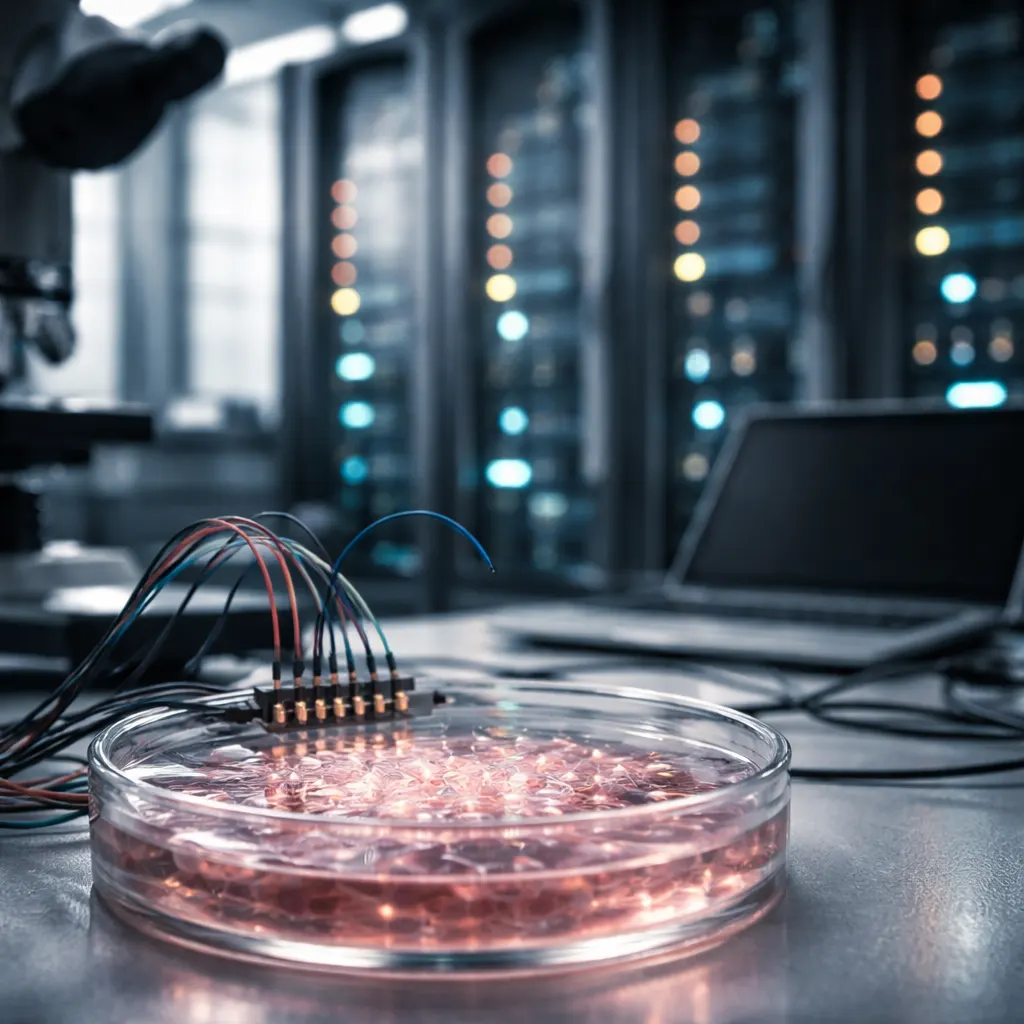
A startup that builds artificial intelligence by studying neural patterns from rat brain cells is now available to select Amazon Web Services customers, according to a report published Tuesday by Wired. The Biological Computing Company, known as TBC, has partnered with Amazon to offer its "rat brain" AI model through a limited preview, with both companies expecting the technology to reach all AWS enterprise customers soon. The startup's platform is specifically designed to enhance AI systems that generate videos.
The Baltimore-based company was established four years ago by neuroscientists and neurosurgeons Alexander Ksendzovsky and Jon Pomeraniec, the report notes. TBC raised $25 million in its first significant funding round earlier this year, led by Primary Venture Partners, then secured an additional $25 million shortly after in March, bringing its total funding to more than $50 million. The company now employs about 35 people, some of whom work directly with rat brain cells and human stem cells in its San Francisco research and development lab. Previously, TBC's technology was only accessible through a neocloud provider called Bluesky Compute. The startup claims its AI model is up to five times faster at video generation compared to the open-source AI model it runs on, and significantly reduces the cost of inference, the processing or thinking part of an AI model.
"We figured out a way to code information, like images for example, to the biological material," TBC cofounder Alexander Ksendzovsky told Wired. The company places living cells on multi-electrode silicon arrays manufactured by Swiss biotech company 3Brain, then uses the arrays to send electrical stimulation patterns into the neurons and record their responses. According to the report, TBC analyzes that neural activity for computational patterns that can be translated into software and used to improve existing AI models. The startup's decision to focus on video generation was driven by both scientific and practical factors, including the physical layout of the multi-electrode silicon arrays, which allowed visual information to be mapped onto the grid more readily than text or language.
The field of biological computing has begun gaining traction as AI companies search for ways to make their models more efficient, the report explains. Researchers have long envisioned software that performs more like the neural networks inside human brains instead of relying solely on math-based algorithms. However, biological computing requires running actual biology labs where brain cells, stem cells, or synthetic biomaterials must be kept alive or preserved, carefully monitored, and somehow translated into meaningful digital information. Amazon isn't new to biologically-derived computing platforms—the cloud giant also works with Cortical Labs, an Australia-based company that combines lab-grown neurons with silicon chips to help companies process data. Deap Ubhi, global director of technology for startups at Amazon Web Services, says TBC takes a pragmatic approach by working within existing standards of the generative AI space rather than trying to reinvent the transformer, the core architectural unit of large language models.
As TBC enters its next phase with Amazon's distribution potentially reaching a much larger customer base, the technology faces scaling questions. Amazon's Ubhi says the key test is whether the model will still show improvements when pushed to extremes—for instance, if customers want to generate longer-form videos of ten minutes or an hour, and whether the model can maintain consistency and track what has already happened as a video gets longer. The company will be watching to see whether its technology holds up as new customers try pushing it to the limit. For enterprise decision-makers, the partnership represents a test of whether biology-inspired computing can move from laboratory curiosity to practical infrastructure, and whether the operational complexity of maintaining living cells can be abstracted away enough to compete on pure performance metrics.