
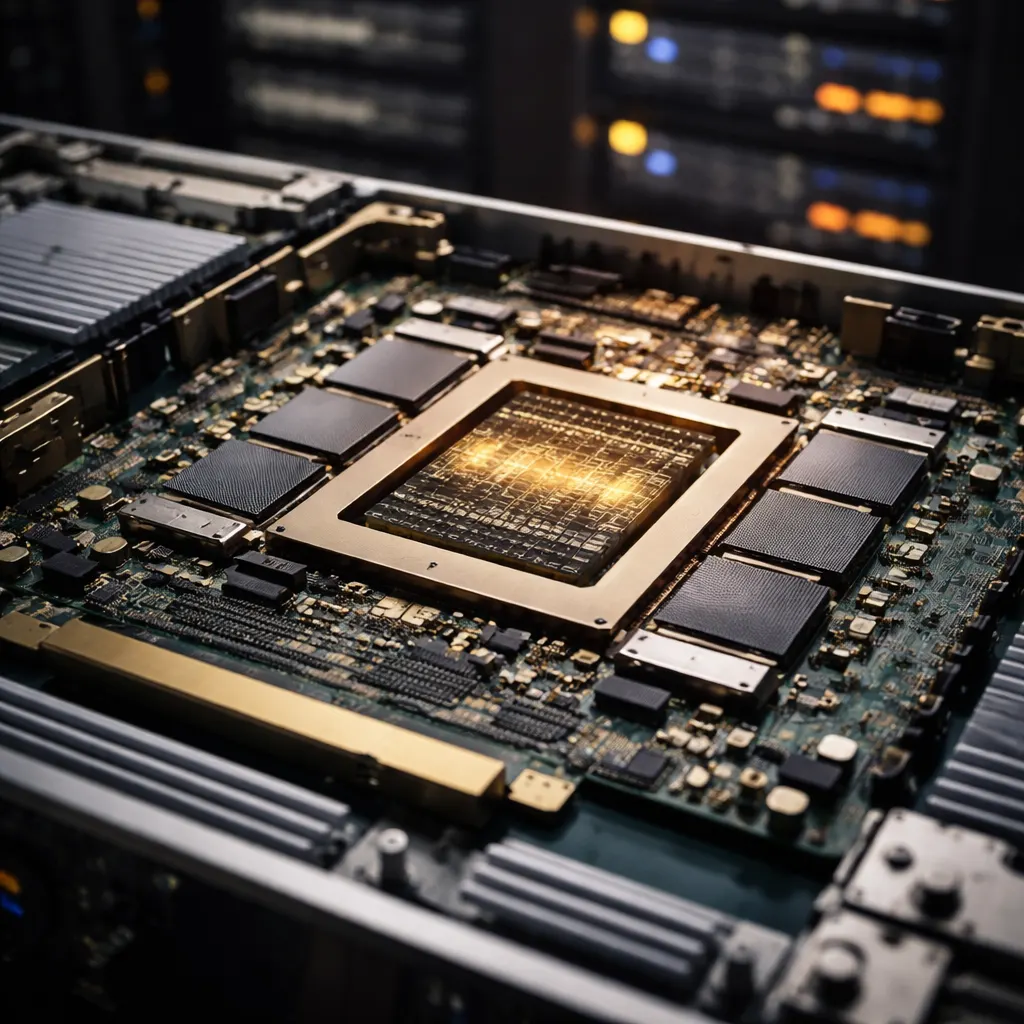
The first computers featuring AMD's Gorgon Halo chip have launched with up to 192 GB of unified memory, but standard pricing begins at $6,799 for the GMKtec EVO-X5 Pro, marking a 64 percent premium over last-generation systems. According to a report published by The Register on September 29, 2026, the dramatic price increase stems from a global memory shortage driven by AI infrastructure demand. The chip targets local AI enthusiasts and privacy-focused small businesses seeking to run large language models without cloud services.
Gorgon Halo's 192 GB capacity allows users to operate models with approximately 345 billion parameters on Linux or 320 billion parameters on Windows at 4-bit precision, enough to handle frontier models like DeepSeek V4 Flash's 284 billion parameters or GLM-5.3-Flash's 320 billion parameters. The Windows environment requires allocating 160 GB of memory to the GPU, while Linux systems can utilize nearly the full memory pool thanks to kernel and driver optimizations. The chip includes 16 Zen 5 cores, a 40-compute-unit integrated GPU, and an XDNA 2-based NPU, running 100 MHz faster than its Strix Halo predecessor with memory bandwidth reaching 273 GB/s compared to Strix Halo's 256 GB/s. Gorgon Halo supports 8,533 MT/s LPDDR5x memory versus Strix Halo's 8,000 MT/s configuration paired with 128 GB capacity.
The report notes that Strix Halo systems cost between $2,000 and $3,000 a year ago, but prices jumped to $4,000 by summer 2026 when AMD launched its AI Halo workstation. The 6.5 percent memory bandwidth improvement over Strix Halo translates to only marginal performance gains, with users seeing "a few more tokens a second on highly optimized models" since large language model inference remains predominantly memory-bound. The Register states that more premium brands like Framework and HP's ZBook Ultra G3a notebooks will likely demand even steeper premiums than GMKtec's entry-level pricing.
The underlying cause is LPDDR5x scarcity driven by AI infrastructure buildouts, with each Nvidia NVL72 rack containing between 36 and 54 terabytes of the memory type for CPU alone. Samsung warned earlier in 2026 that memory supplies will likely stay constrained through 2028, affecting both AMD and competitors. Nvidia's GB10 system-on-chip workstations have seen prices roughly double from $3,000-$4,000 a year ago to $6,000-$8,000 currently, and the company's RTX Spark family announced at Computex will offer up to 128 GB capacity in premium mini PCs and notebooks from major manufacturers. The report observes that while AMD can theoretically undercut Nvidia by providing more memory at lower cost, "it's awfully hard to cross shop when you can't afford either option."
The outlook remains challenging as AMD itself adopts LPDDR5x for its AI-optimized Verano Epyc processors, intensifying competition for already scarce supplies. The report concludes that anyone needing substantial memory capacity right now faces significant financial pain, with no relief expected in the near term given Samsung's forecast extending constraints beyond 2026. Gorgon Halo positions AMD to serve customers willing to pay premium prices for on-premises AI capabilities, but the memory crisis has fundamentally reshaped the economics of desktop AI hardware. For businesses weighing cloud versus local deployment, the calculus has shifted considerably as upfront hardware costs now rival years of cloud subscription fees. Chip makers face a strategic dilemma where their most compelling technical differentiator has become their biggest pricing liability, potentially limiting adoption to only the most resource-intensive or security-conscious use cases.