
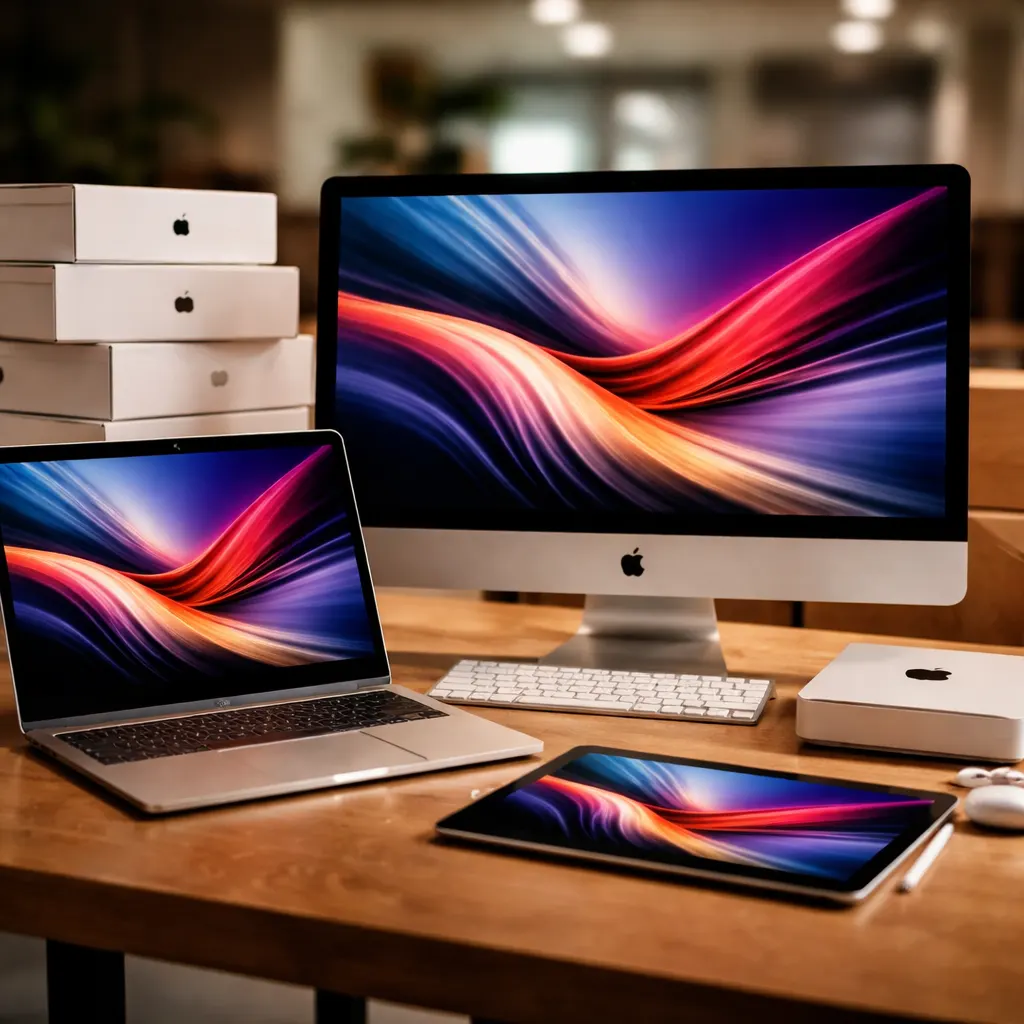
Apple sold more Macs in fiscal 2026 than in any year in its history, but escalating memory costs now threaten to undermine the company's record-breaking performance, according to the company's fiscal fourth-quarter earnings call held Monday. The call marked the first earnings announcement since John Ternus assumed the CEO role. While the Mac business delivered exceptional results, soaring RAM prices are creating supply constraints and compressing profit margins across Apple's hardware lineup.
Apple generated $10.8 billion from Mac sales in the September quarter, a 24 percent jump compared to the same period a year earlier, following June quarter Mac revenue of $10.35 billion, which represented a nearly 29 percent annual increase. The MacBook Neo and MacBook Pro drove much of the recent expansion. Company-wide, Apple posted September-quarter revenue of $114.5 billion, climbing 12 percent year-over-year, while iPhone sales rose 17 percent to $57.6 billion and services revenue reached $31.6 billion, up 10 percent. The company anticipates revenue growth between 7 and 10 percent in the December quarter despite ongoing supply challenges.
Ternus told analysts that memory pricing conditions are "unprecedented," and COO Sabih Khan warned that the company already experienced supply constraints across iPhone, Mac, and iPad during the September quarter, largely due to limited advanced chipmaking capacity. For the December quarter, Khan said Apple expects constraints on Mac and iPad "primarily driven by memory" as demand has exceeded the company's projections. Ternus disclosed that Apple's manufacturing purchase obligations surged by $33 billion between June and September as the company works to lock in supplies, though he provided no timeline for when the memory shortage might resolve.
The memory crisis is hitting Apple's bottom line hard. CFO Kevan Parekh explained that gross margin dropped by roughly one percentage point between the June and September quarters, excluding tariff impacts, entirely because of memory costs. Apple expects its gross margin to tumble from 47.9 percent in the September quarter to between 45 and 46 percent in December, primarily due to higher memory expenses and costs tied to deploying Siri AI. The company has already raised prices across much of its hardware range, including Macs and iPads in June and iPhones in September, though Parekh said Apple had "reluctantly" implemented the increases. Existing inventories and less expensive components in other areas have helped cushion the financial impact, but Ternus warned that Apple expects to pay more for memory beyond the end of the year. So far, Mac buyers haven't been deterred by either the price hikes or the supply constraints, and Ternus emphasized that the Mac mini and Mac Studio are "pushing the boundaries of local private AI" with workloads that previously would have been difficult to run on desktop hardware.
Apple is betting that its refreshed Mac lineup featuring M6-powered machines and a touchscreen MacBook Pro will give customers compelling reasons to upgrade, provided the company can secure enough memory to manufacture the devices. The company forecasts continued revenue growth in the December quarter despite the supply constraints, signaling confidence that demand will hold even as production challenges mount. For a company that thrives on controlling its supply chain and maintaining premium margins, the current memory market represents an unusual external force reshaping both product availability and profitability. The tension between record sales momentum and shrinking production flexibility will test whether Apple's aggressive procurement strategy can outpace the industrywide scramble for scarce components.