
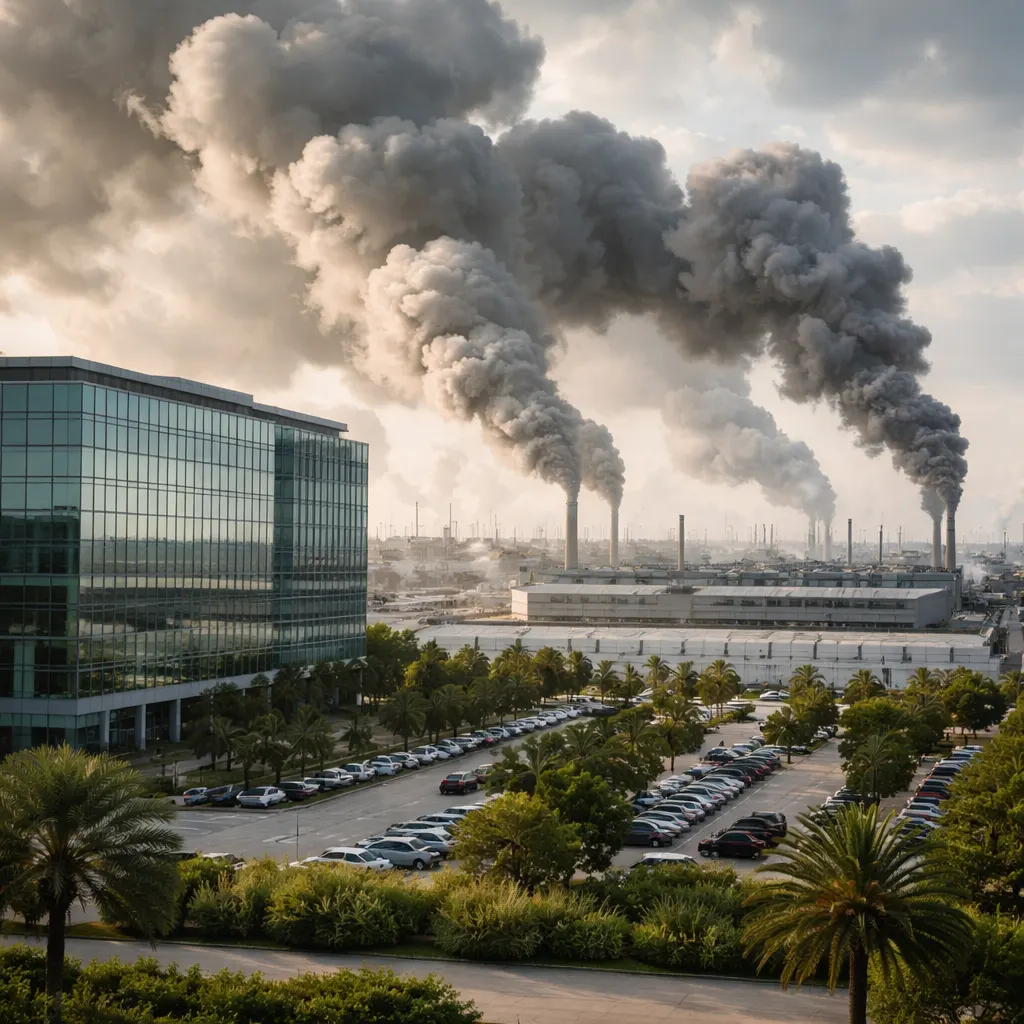
Meta is backing away from its commitment to reach net zero emissions by 2030 and won't commit to a new deadline, according to the company's 2026 sustainability report released this week. The social media giant's greenhouse gas emissions have more than doubled over the last four years, driven by a rapid expansion of AI infrastructure that has outpaced the company's clean energy plans. Meta says it's "re-evaluating" its timeline and interim milestones to reflect "current operating realities," though it maintains it remains dedicated to eventually achieving net zero.
The scale of Meta's emissions growth is stark. Between 2024 and 2025 alone, the company's data center emissions jumped more than 12 times, and its massive Hyperion data center in Louisiana—which will run on natural gas—hasn't even come online yet. For years, Meta ranked among the largest corporate buyers of clean power and set ambitious water conservation targets. But the company's multi-billion-dollar bet on natural gas at Hyperion has reversed much of that progress. That commitment led Meta to leave RE100, a corporate renewable energy initiative it had belonged to for a decade, in July after the group began requiring more stringent reporting on renewable energy goals.
In the introduction to the sustainability report, Rachel Peterson, vice president of data centers at Meta, and Blair Swedeen, global head of net zero and sustainability, wrote that when the company originally set its net zero target, it expected steady growth, declining clean energy costs, and broader system changes that would support progress at the anticipated pace. The reality has proven "far more complex," they noted, with demand for AI infrastructure growing faster than almost anyone forecast and arriving on a timeline measured in quarters rather than decades. Meeting that demand has meant building at a pace and scale the industry has never attempted, according to the executives.
The report suggests Meta's choice of natural gas is poorly timed. While natural gas burns cleaner and more efficiently than coal, its impact on global warming can be just as severe when accounting for the leaky infrastructure required to use it. Natural gas turbines prefer to run at constant speeds, but AI data centers experience surging and dropping energy demands depending on workload, requiring batteries as a buffer. Long-duration energy storage is maturing, and geothermal energy appears ready to become a major U.S. grid power source, with companies like Fervo, Mazama, and Quaise hitting milestones rapidly and potentially unlocking tens of gigawatts of capacity. The technology isn't competitive with natural gas now, but could be by the mid-2030s—just years after Meta completes Hyperion.
The report warns that Meta's decision to drop its 2030 net zero commitment risks triggering regulatory backlash with real consequences that would affect the entire tech sector, not just Meta. Surveys indicate the general public doesn't view AI or data centers favorably, correctly perceiving that infrastructure development is fueling rapid and often-unchecked expansion of polluting facilities. The tech industry spent over a decade trying to prove it would differ from previous industrial giants like oil and gas or automobile manufacturing—goodwill that one sustainability report may have significantly damaged. The broader tech industry faces an uncomfortable question about whether voluntary corporate climate pledges still carry credibility. Companies chasing competitive advantage in emerging technologies may find themselves weighing short-term market position against longer-term obligations that lack enforcement mechanisms.