
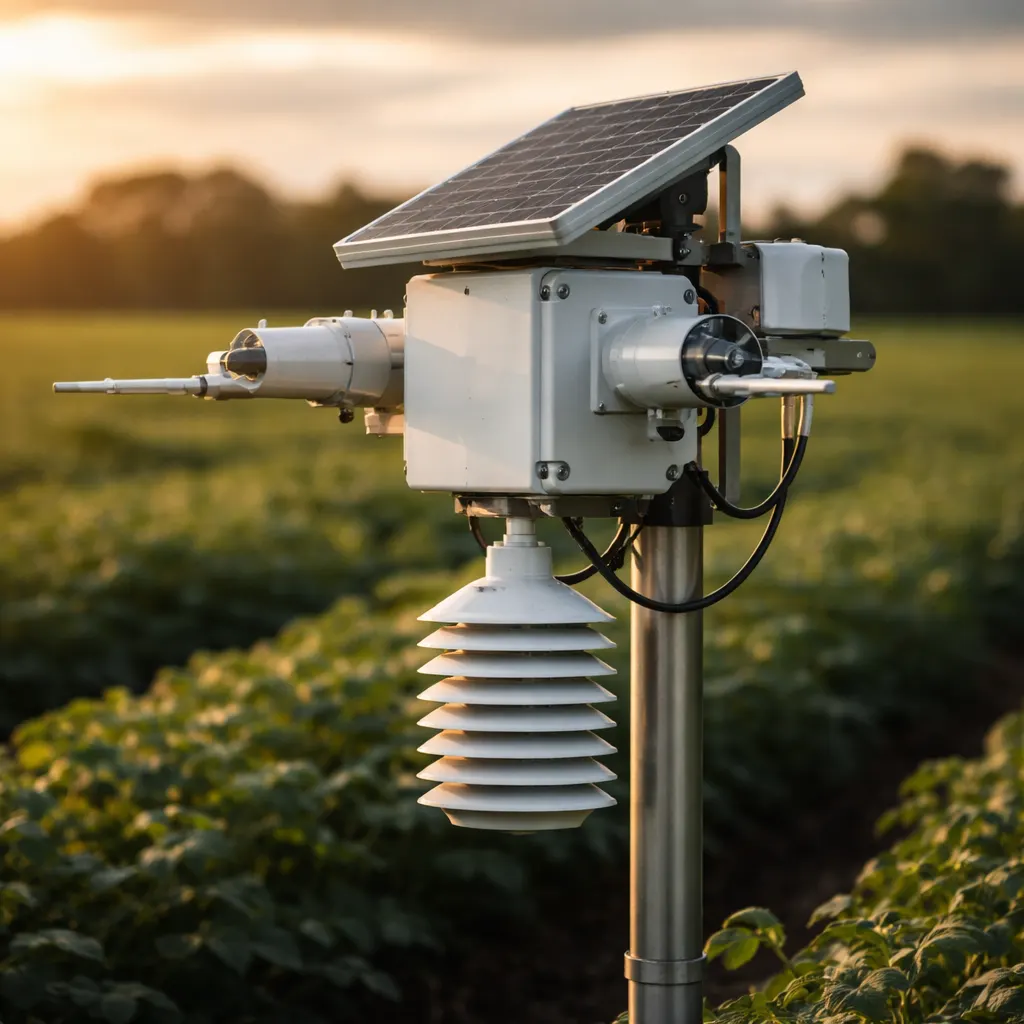
BioScout has secured A$6.75 million (US$4.8 million) in seed funding to expand its artificial intelligence-powered early-warning platform for fungal pathogens affecting crops, according to a report published by SaasRise on August 7, 2026. The round was co-led by Demea Sustainable Investment and Astanor, with backing from GrainInnovate, GrainCorp Ventures, Hort Innovation Venture Fund, Artesian and Division Q. The company plans to use the capital to grow its sensor footprint and push into European markets where deployments have already started in the UK, France and Germany.
The Australian startup will use the proceeds to grow its field sensor network from approximately 250 units currently installed to 1,000 units by 2029, the report states. Each sensor sells for roughly A$15,000 (US$10,500) and comes with an annual service agreement priced between US$7,000 and US$14,000, building a recurring revenue model similar to agronomy-as-a-service, according to the deal announcement. Early customer experience indicates that real-time alerts can reduce fungicide applications by as much as 50%, delivering substantial cost reductions for farmers growing high-value crops. Since spinning out from the University of Sydney in 2022, BioScout has placed sensors on five continents, monitoring potatoes, onions, canola, soybeans and vineyards across Australia, New Zealand, South Africa, Brazil and the United States.
The platform combines field-deployed spore-capture sensors, high-resolution microscopy and AI-based image classification to send real-time warnings about airborne fungal threats, the report explains. The company is now targeting a presence in European grain and horticulture sectors, and crop-protection manufacturers have expressed interest in the data layer as a complement to their existing chemical product lines. The seed round supplies the capital required to scale hardware manufacturing, advance AI model training and construct a sales operation in Europe, according to the analysis.
The funding reflects investor confidence in the intersection of AI, IoT and SaaS within agriculture, the report notes. By securing early-stage customers and increasing sensor density, BioScout aims to build a defensible data moat that can be monetized through higher-margin subscription tiers and additional analytics offerings, the analysis states. The capital injection allows BioScout to transition from a niche Australian pilot to a pan-European SaaS competitor, forcing traditional fungicide makers to face data-driven spray-reduction tools that may erode their volume sales, according to the report. For growers, the wider sensor coverage means more precise, region-specific disease predictions, which can shift buying decisions away from blanket chemical programs toward precision-calibrated applications, the report concludes. This shift will likely push crop-protection firms to partner with or acquire similar data platforms to stay competitive in a market that increasingly prizes sustainability and cost efficiency. Assuming an average annual contract value of approximately US$20,000 per sensor—combining unit price and service fees—the target of 1,000 units by 2029 would produce annual recurring revenue above US$20 million, positioning the firm for a mid-single-digit revenue multiple at exit, the report projects. Venture backers are demonstrating willingness to support capital-intensive SaaS models when the data advantage can be defended and monetized through subscription tiers, a pattern that may encourage more ag-tech entrepreneurs to weave AI and SaaS economics into traditionally hardware-dominated operations. The concentration of sensors should improve model precision and generate network effects that raise customer switching costs, while higher gross margins are expected as recurring service revenue outpaces hardware expenses.