
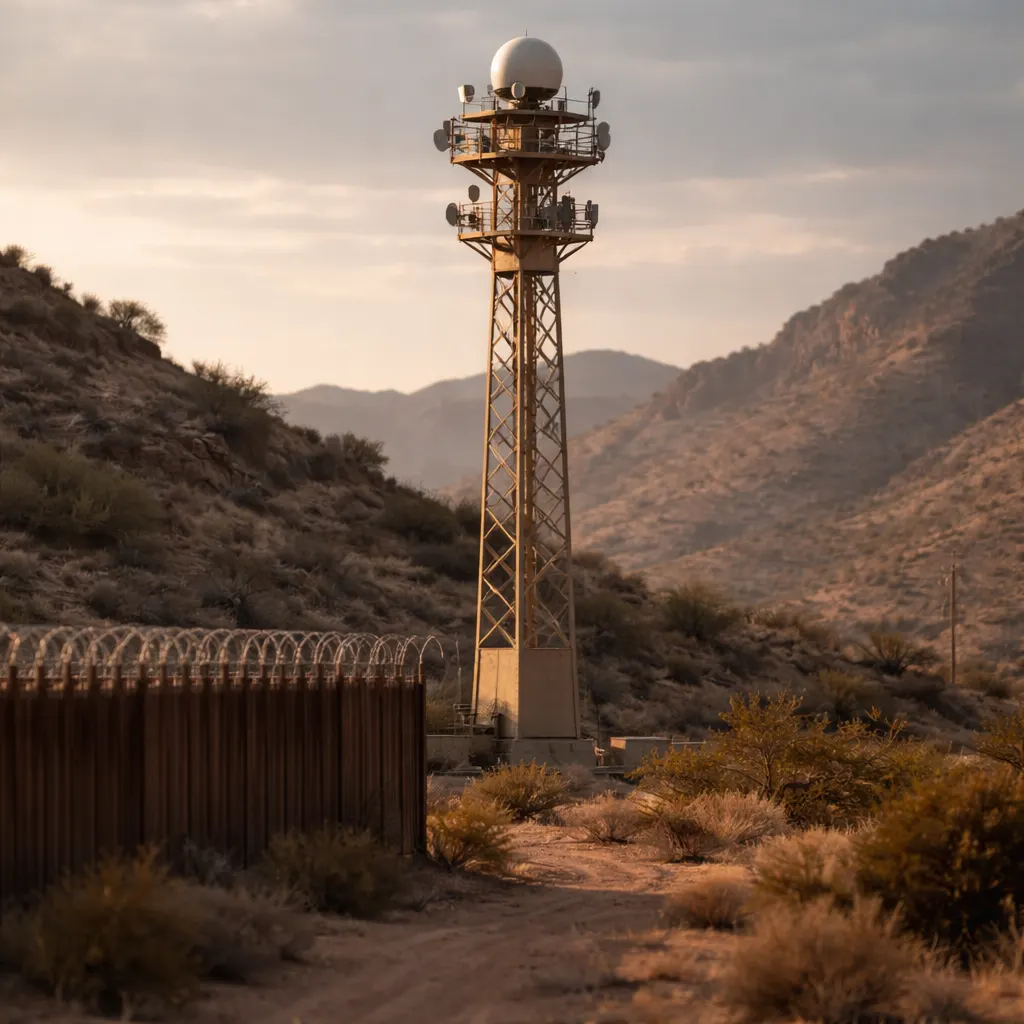
More than 500 people have died within range of government surveillance towers along the US-Mexico border since 2015, according to an investigation published September 21, 2026 by MIT Technology Review. The months-long investigation, which analyzed public records from 14 Texas counties and interviewed more than 45 people including Border Patrol agents, medical examiners, and tech company employees, found that both technology failures and agent response failures are occurring. Officials who oversaw border security across the last four presidential administrations told investigators they believed deaths near the virtual wall were either exceptionally rare or didn't happen at all, but no one could point to any comparable analysis the government had conducted on its own.
The investigation examined three generations of border surveillance technology and found deaths near all of them. Between 500 and 700 people died within range of first-generation Remote Video Surveillance System towers since 2015, with more than 150 people dying within half a mile of one tower. Nearly 350 people have died within range of second-generation Integrated Fixed Towers made by Israeli defense contractor Elbit since 2015, with 40 people dying where four or more towers had coverage and some near as many as six different systems. One Elbit tower on the Tohono O'odham reservation, which the investigation estimates has upwards of 80% visibility of surrounding terrain, has seen 27 people die in its surveillance area just since 2021. The investigation found deaths have continued near third-generation autonomous surveillance towers made by Anduril, the defense startup founded by Oculus VR creator Palmer Luckey, despite the company's 2021 press release stating that the technology would get agents "out of communications operations centers and into the field where they can effectuate security and humanitarian responses."
Current and former Border Patrol agents described multiple scenarios where the technology failed to detect people who should have been visible. One agent in the Laredo sector recalled a car carrying migrants crashing less than 100 feet from an Anduril tower and into the Rio Grande, with several occupants swimming to Mexico while the car floated in the water, yet the tower never detected the incident at all and produced no footage. Another agent described smugglers repeatedly covering groups with tarps on rubber rafts crossing the Rio Grande, which fooled the algorithm into detecting only an "unidentified object" rather than people, meaning no audible alert was generated. Several agents estimated the towers initially missed 10% to 15% of what they should theoretically have caught. When former agents and officials were asked about deaths near towers, the investigation found that Customs and Border Protection doesn't formally investigate whether surveillance should have detected someone or, if they were detected, why agents didn't reach them before they died.
The investigation traced how information overload has plagued the virtual wall since its inception. Early camera systems required agents to monitor upwards of 30 screens covering potentially 850 square miles, with one former CBP official asking what the chances were that agents would notice activity on one screen after 20 minutes—"about zero," he said. The camera room became the job nobody wanted, with injured agents who couldn't go into the field often assigned to monitor screens while also handling sensor alerts, radio traffic, and records checks. One Border Patrol station supervisor said five of his 30 cameras were broken on any given day, with other cameras having limited functionality like only seeing in one direction or only during daytime. Members of the House Committee on Homeland Security wrote in 2024 that more than 66% of Border Patrol's first-generation towers were unusable, despite operating budgets of $50 million to $100 million each year. Even as newer autonomous towers promised to solve these problems by automatically detecting and tracking people, agents described a negative feedback loop where missed detections led to distrust, causing agents to override the artificial intelligence and use cameras manually, which led to more missed alerts.
Despite these documented problems, federal spending on the virtual wall continues to surge. The government spending bill passed in July 2025 awarded $2.7 billion for border security technology alone, and CBP plans to spend $1 billion for 1,497 additional towers by 2034, bringing the total to 2,300 systems. The 2023 government estimate projected that plans for the towers, which then numbered 803, would cost $6.2 billion over their lifespan. In a permitting request filed in 2024 for towers in California, the government stated explicitly that "if anyone within the viewshed of the towers appears to be in distress, EMTs or first responders will be sent to help." Yet the investigation found CBP has done little to assess how its towers are working or how many people have died where they keep watch, with years of incremental data collection improvements followed by repeated findings that resulting data is unreliable or insufficient to determine how well the technology performs. The bottom line, according to one researcher quoted in the investigation: a system may fail, but humans suffer. The expansion reflects a broader bet that surveillance technology can manage a problem that has repeatedly proven resistant to technological fixes alone, even as the evidence base for measuring effectiveness remains fragmented and the human cost continues to mount in terrain the cameras were explicitly designed to monitor.