
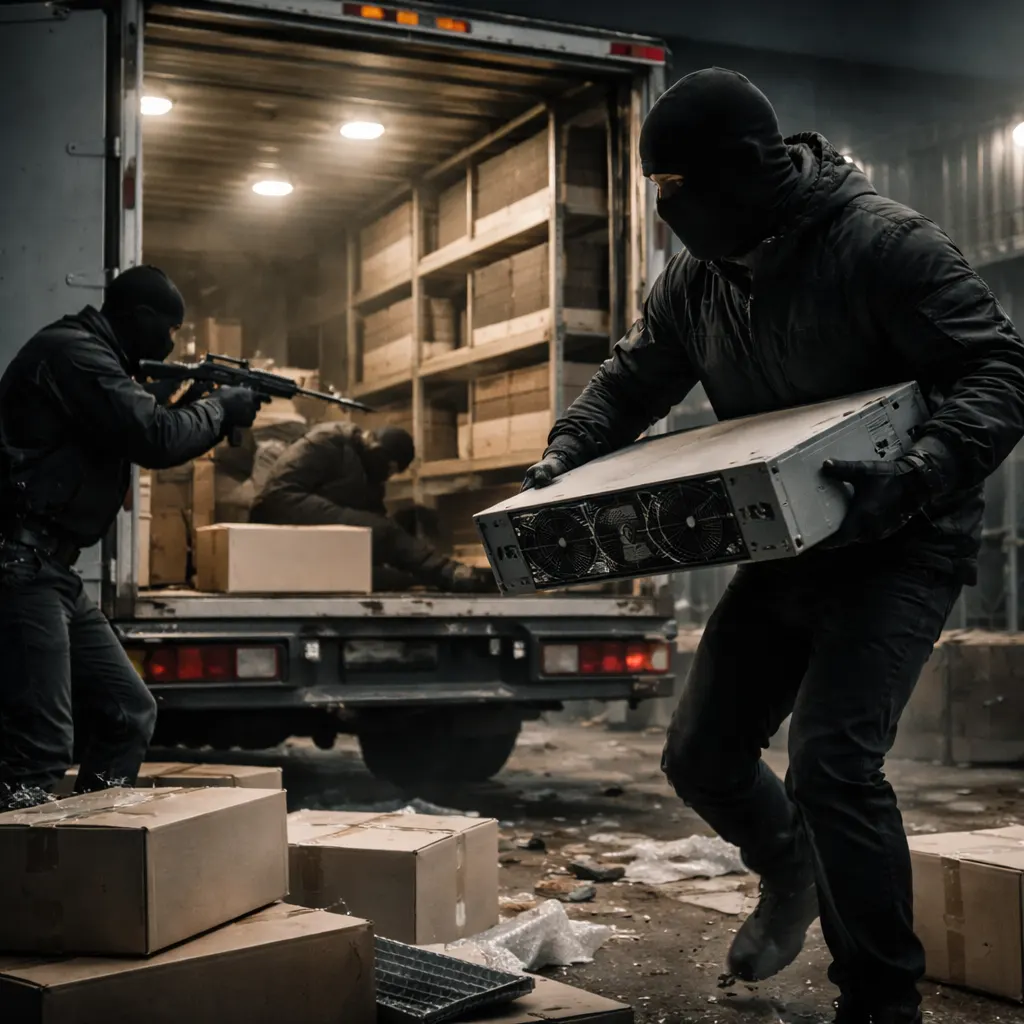
Thieves targeting AI data center equipment have begun using violent tactics to disable security escorts protecting high-value cargo, including deliberate collisions and police-style maneuvers, according to a report published by WIRED. The incidents, which occurred in recent months on shipments traveling from Silicon Valley to Southern California, represent what investigators describe as an unprecedented escalation in cargo theft methods. Millions of dollars in data center gear remains missing, and the truck drivers involved have disappeared without a trace.
In both cases, criminals appeared to deliberately immobilize private security vehicles escorting the semitrucks carrying expensive technology. During one journey, another driver rear-ended the escort vehicle in a hit-and-run, forcing it to stop. In the second incident, thieves used what's known as a PIT maneuver—nudging the escort into a tailspin—before fleeing the scene. Once the trucks lost their protection, the drivers continued moving but never reached their intended destinations. Investigators believe the truck drivers were complicit in the scheme, a growing problem in freight crime. While cargo theft reports fell 26 percent year over year last quarter, the value of stolen goods more than doubled as criminals increasingly target expensive shipments, according to new data from Verisk CargoNet, an analytics and risk assessment firm.
Gerardo Pachuca, a consultant and former Los Angeles sheriff's detective who has investigated cargo theft for 25 years, told WIRED "it's the worst I've seen" when describing the current state of nationwide freight crime. He pointed to "the methods they are using, the value they are getting, the frequency these crimes are occurring." J.J. Coughlin, chairman of the Southwest Transportation Security Council, confirmed that one affected escort company reported its vehicle was attacked while guarding "high-value technology," while Danny Ramon, director of intelligence at freight-monitoring software developer Overhaul, characterized the situation as a "coordinated assault" involving AI hardware. All three sources confirmed no one was injured in the attacks and that perpetrators remain at large.
The surge in AI-related cargo theft reflects the explosive growth of data center construction, which saw total spending in just the first half of this year exceed the entire 2025 total. Metals like copper and enterprise-grade computer equipment rank among the most frequently stolen items, according to Verisk CargoNet, which noted these shipments often move under standard procedures despite their high value, creating "a significant mismatch between their financial value and their ordinary transportation and security profile." Michael Duffy, CEO of Solutions Group International, says his escort business now receives constant calls from companies moving liquid cooling parts, servers, and computer chips—work that used to spike only before the holiday shopping season. Escort operators are now scrambling to strengthen their defenses, with some encouraging personnel to call 911 at the first hint of trouble.
The incidents suggest freight security may need to evolve as quickly as the threats targeting it, particularly as high-value AI cargo becomes a permanent fixture on American roads rather than a seasonal concern. While escort companies like Duffy's report perfect track records—he estimates protecting 13,000 shipments over four years without a single loss—the new violent tactics could force the industry to rethink whether traditional security measures remain adequate. Companies shipping AI hardware now face a landscape where even professional protection doesn't guarantee safe delivery, and the criminals remain sophisticated enough to vanish with millions in equipment. The freight industry finds itself navigating an uncomfortable truth: as AI infrastructure becomes more valuable, the incentives for organized theft grow proportionally, and purely defensive postures may no longer suffice. Businesses relying on physical supply chains for cutting-edge technology will need to weigh whether current security investments match the evolving sophistication of the adversaries they're designed to counter.