
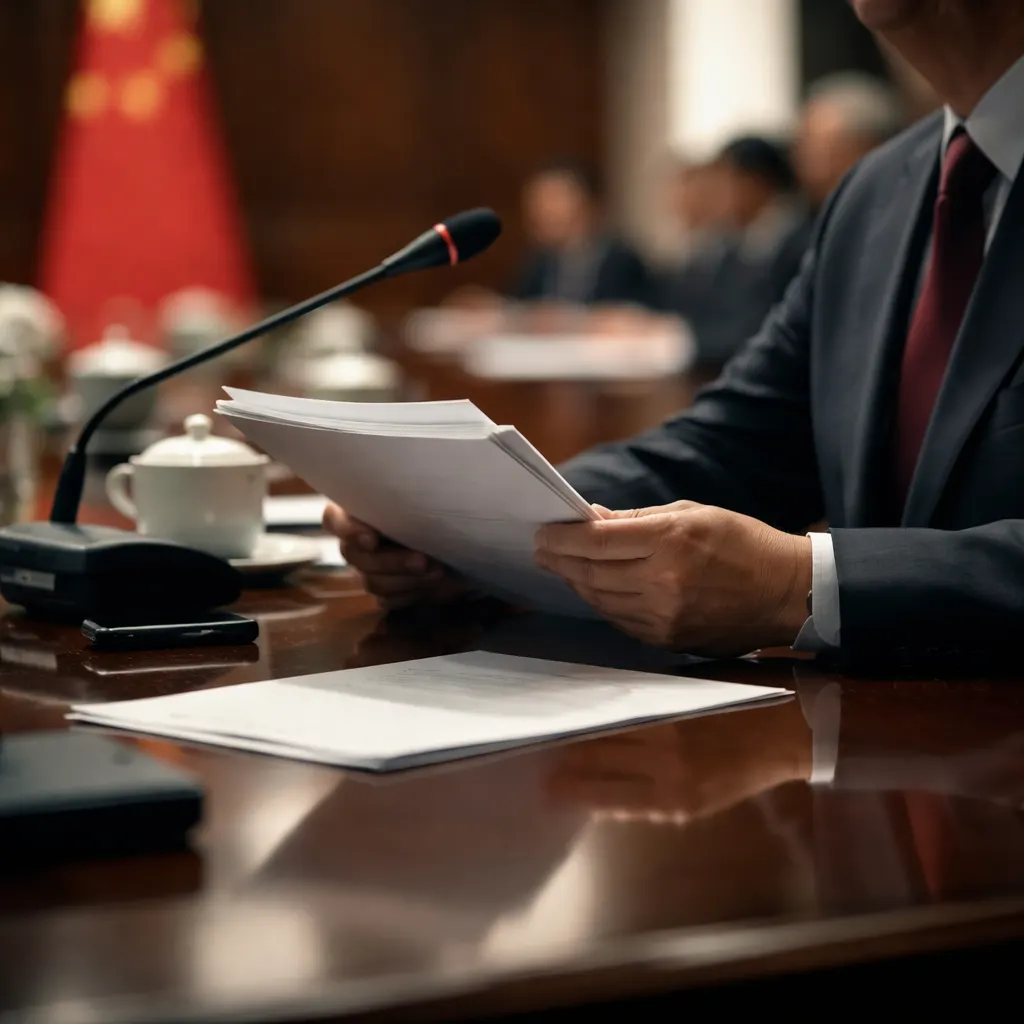
China's minister for State Security has declared that artificial intelligence poses a threat to the ruling Communist Party's grip on power, according to an article published in China Cyberspace Magazine by Party secretary and minister Chen Yixin. The minister frames AI as "the main battleground for global technological competition and a new arena for strategic rivalry among major powers," while expressing concern that the technology creates challenges for social governance and public order under Communist rule. His remarks signal a sharp pivot toward tighter AI regulation in China, standing in stark contrast to US President Donald Trump's recent dismissal of AI safety concerns as a "hoax."
Chen outlined multiple security fears in his piece, including worries that AI could be weaponized to detect software vulnerabilities and launch attacks on critical infrastructure or to steal industrial and state secrets. He pointed to products like OpenClaw as having "structural problems such as remote control of device management permissions and leakage of sensitive user information." The minister also blamed Chinese users for lacking "sufficient security awareness" and using foreign AI tools to process sensitive information, which he says has led to "large-scale data leaks from within the country." His article repeats longstanding complaints about US sanctions on China's technology sector.
According to Chen, AI's "black box" algorithms and "poisoning" of data risk amplifying existing social biases, while misuse of personal information could "trigger a crisis of user trust." He argues that AI's rapid advancement has "broken through the traditional technology governance framework," leaving legal norms, ethical principles, and oversight mechanisms unable to keep pace. The minister writes that "automatic decision-making of the system creates problems in attribution of responsibility," making it difficult for authorities to maintain control. Chen recommends that China follow President Xi Jinping's guidance to "ensure the independent control of key core technologies, firmly grasp technological sovereignty, and achieve a virtuous cycle and synergistic progress between innovation empowerment and security governance."
The minister's stance explains why the report suggests US chipmakers Nvidia and AMD face bleak prospects in China's market. Chen calls for "special laws and regulations targeting the research, development, application, and supervision of artificial intelligence technology," along with updated standards covering the full lifecycle from research through accountability. One day after his article appeared, China's Cyberspace Administration released version 3.0 of the nation's AI Safety Governance Framework, which proposes using "regulatory sandboxes" to allow room for innovation while promising to "take timely measures to address any risks that infringe upon the legitimate rights and interests of individuals, harm public interests, threaten national security, and endanger human survival and development." The framework commits China to "make every effort to ensure AI safety," marking a regulatory approach that prioritizes state control over the rapid deployment championed by Trump's administration. Beijing's move to tighten its grip on AI development may force multinational technology companies to choose between access to China's massive market and alignment with Western approaches to the technology, while domestic Chinese AI firms will need to navigate an increasingly complex web of security requirements that could slow their pace of innovation.