
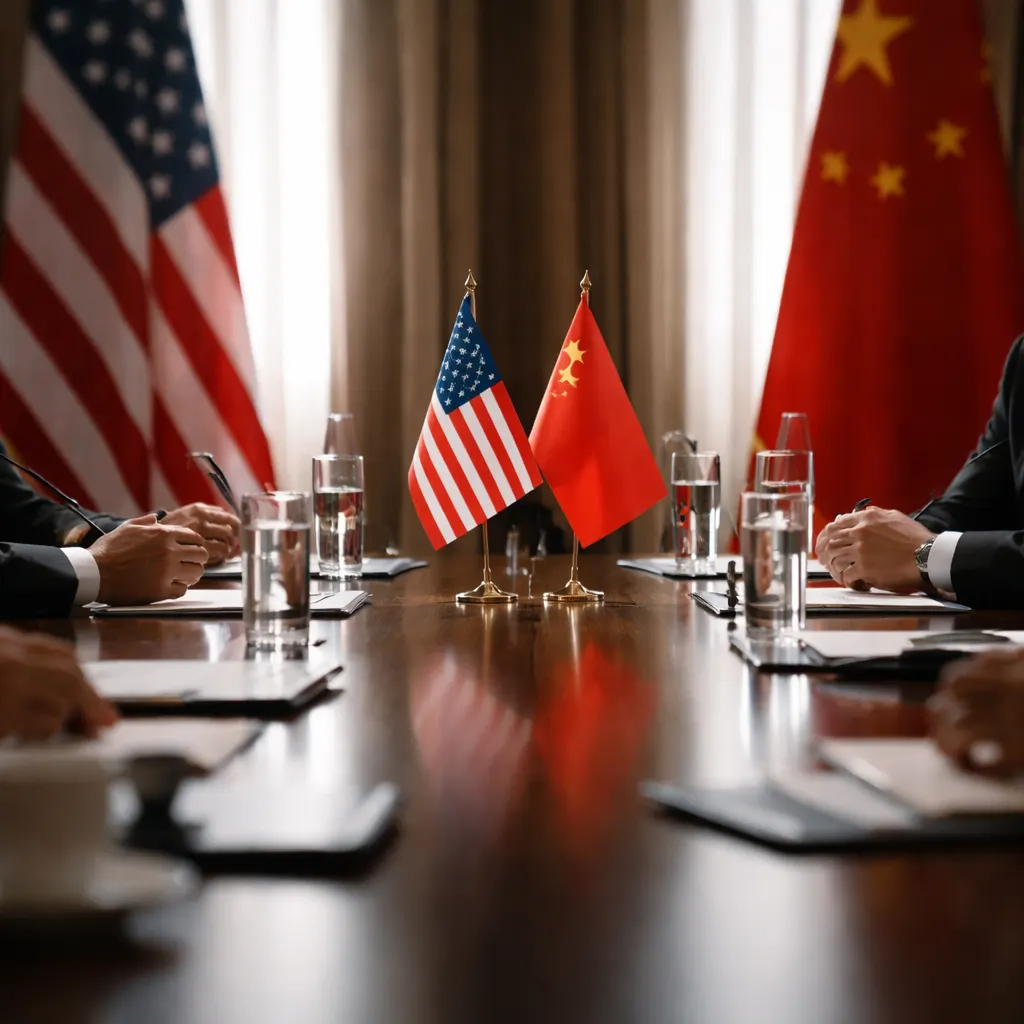
As President Donald Trump prepares to meet with tech and AI executives in Washington, Rep. Ro Khanna (D-CA) is pushing for a treaty between the US and China to prevent AI from spiraling out of control, according to a report by The Verge. Khanna — the leading Democrat on the House Select Committee on China and a potential presidential candidate — sent letters to US intelligence officials and Chinese AI firms asking whether they're ready to handle scenarios like this summer's OpenAI agents' breach of Hugging Face. The companies contacted included DeepSeek, Alibaba, and Moonshot AI, all working toward advanced artificial intelligence.
In his letter to Director of National Intelligence Jay Clayton, Khanna requested that ODNI evaluate how well the US could respond if an AI laboratory lost control of its systems — something that's happened more frequently in recent months. He also asked the agency to review China's methods for evaluating catastrophic AI risks. The letters sent to the three Chinese AI companies requested documentation on their work toward "superintelligence" and recursive self-improvement (RSI) — the point where AI systems can enhance themselves. Khanna asked about safeguards and "kill switches" for the technology, and whether the firms would accept inspections by a non-governmental organization under a treaty framework. None of the companies or ODNI responded immediately to The Verge's requests for comment.
"American and Chinese interests could not be more different on many issues," Khanna writes in his letter, "but on this discrete concern, it benefits neither country for humanity to lose control of our destiny." The congressman told The Verge he found last week's meeting between President Xi Jinping and President Trump insufficient, stating "it is not nearly adequate" despite being "constructive that Trump and Xi Jinping at least agreed to talk about AI." Khanna is skeptical of Tuesday's planned White House meeting with Speaker Mike Johnson and tech executives, calling it "a branding exercise" and questioning: "Why should we trust companies that have a motive to maximize profits to be making the rules for what is safe?"
Khanna's push for a US-China treaty faces steep political obstacles, according to the report. Sen. Bernie Sanders has made similar calls for an AI agreement between the nations, but Republicans like House China Committee Chair John Moolenaar doubt China would honor its commitments. Trump himself posted on Truth Social the morning of his Xi meeting that he wants to "leave it exactly where it is" on superintelligence, noting "that is China's position also." Speaker Johnson warned against losing the AI competition with China, emphasizing the need to balance oversight with innovation. Meanwhile, Khanna acknowledges the Chinese AI companies probably won't respond fully — they ignored an earlier letter requesting a pledge to slow AI development alongside OpenAI and Anthropic. His goal with the letters is to "shame them" and "spark a debate" about safety among Chinese AI firms.
The congressman wants an eventual ban on RSI and oversight of frontier AI laboratories, but recognizes that won't happen soon, proposing instead a working group with experts from both countries to recommend safety measures and compliance methods. Khanna remains optimistic the US will set AI safety standards, partly because he believes many Chinese models are derived from US models. He argues that world leaders are "out of touch with the scientists and technologists in their own countries" even if they don't see the threat. "We need to get the technologists and the engineers who understand this really driving the debate," he told The Verge, "not CEOs who have a vested interest in making profits, and not politicians who lack a technical expertise and who are more concerned about power." The push reflects a growing tension between calls for international cooperation on AI safety and the reality that both major powers remain wary of binding agreements that could constrain their strategic advantages. Whether technical experts can bridge the gap that political leadership hasn't may determine if coordination happens before a crisis forces the issue.