
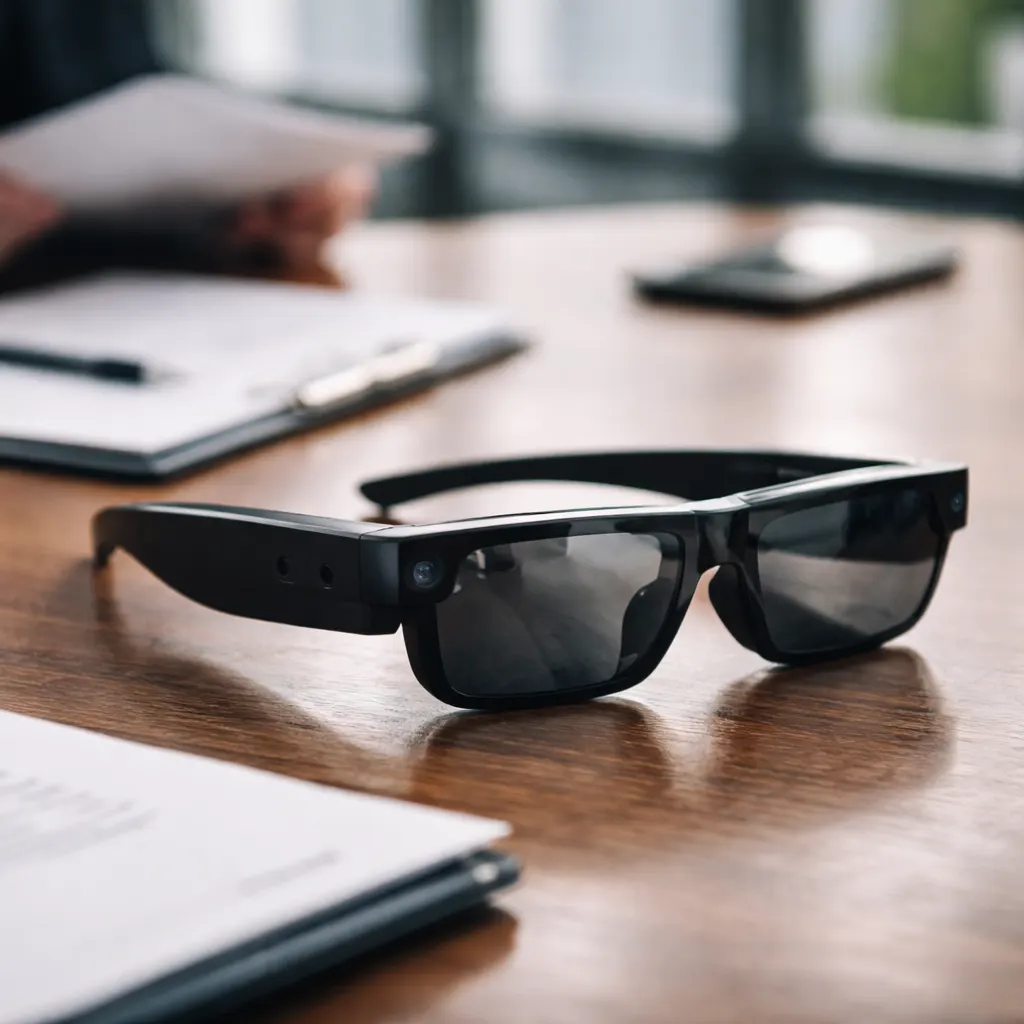
The Dutch Data Protection Authority has issued an official warning against purchasing AI-powered smart glasses after safety testing uncovered serious problems that go well beyond the devices' already controversial ability to record people without their knowledge. During recent evaluations of six different smart glass models, the regulator found one pair displayed dating guidance to an adult wearer who stated interest in a child. The AP now considers the technology unsafe for both users and those around them.
The authority examined six models ranging in price from under €100 to over €500, with two subjected to extensive testing in simulated real-world scenarios where human safety was critical. During a CPR simulation, one pair falsely told the wearer that emergency services had been contacted and would soon arrive, though no call had actually been placed. Other failures included glasses that couldn't properly interpret safety warnings on children's toys, devices that made errors when reading medication leaflets, and some that misunderstood extreme weather alerts. The tests also revealed cybersecurity weaknesses, with people near the glasses wearer able to connect to the device without authorization, access recordings, and in certain cases control the camera. Nearly all models examined had recording indicator lights that were dim and easy to hide, and some could be manipulated to record even when that light was covered.
"Glasses that film you unnoticed are already concerning. Glasses that also give you incorrect advice when someone's life is at stake go a step too far," said Monique Verdier, the AP's vice chair. The regulator found that the AI functions depend on data processing through servers mostly situated outside the European Union, and that users weren't provided with adequate information about how the AI handled their captured data. Verdier told policymakers in the Netherlands and throughout Europe that they should consider these results when creating AI regulations.
The authority's research was designed to spotlight the risks of AI glasses more broadly rather than call out specific manufacturers, which is why it declined to identify which models exhibited which behaviors. The lack of obvious visual cues when smart glasses are recording creates far more concern than smartphones, since it's simple to tell from someone's body language when they're holding up a phone to capture video. With smart glasses that look nearly identical to regular eyewear and can hide their recording lights, the act of public recording becomes much more covert. The regulator emphasized that while the technology offers valuable applications—such as helping people with visual impairments or lower literacy levels understand their surroundings—its current form can't be trusted. Organizations as varied as Wetherspoons pub chain, UK Comic Cons, and Immigration and Customs Enforcement have already banned the devices from their premises, and a recent joint investigation by The Observer and BBC Radio 4 showed that a £60 Chinese-made pair went undetected through UK parliament security scanners and could read upside-down documents on MPs' desks. For businesses weighing adoption of wearable AI, the fundamental question isn't whether the technology will improve but whether trust can be rebuilt faster than skepticism spreads. Until manufacturers can prove their devices won't put safety at risk or enable covert surveillance, enterprise deployment may face the same resistance now crystallizing in public spaces.