
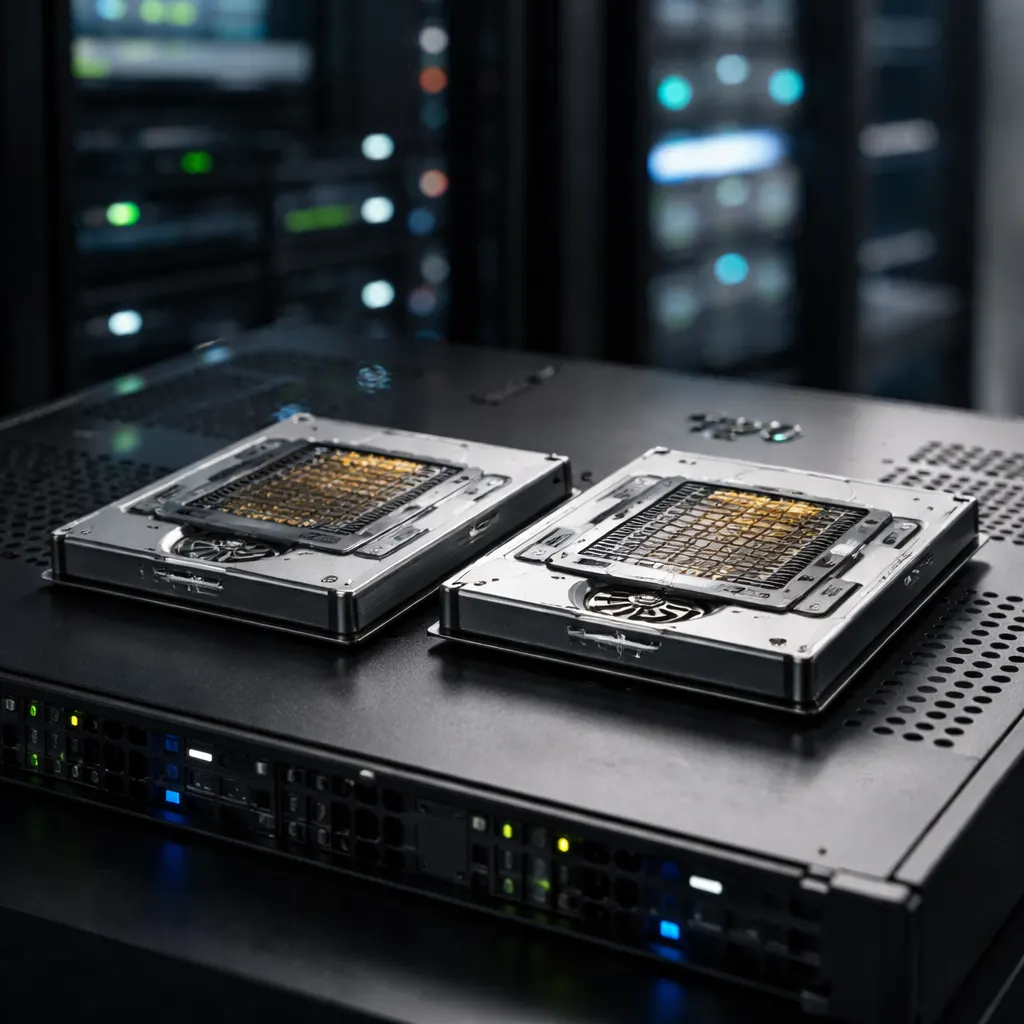
Google and Meta open-sourced TorchTPU, a native PyTorch backend for Google's Tensor Processing Units, at PyTorch Conference North America 2026 in San Jose on October 21. The new backend replaces PyTorch/XLA, a 2020 bridge that required extensive source-code changes, with a system designed to port models by simply switching model.to("cuda") to model.to("tpu"). Meta, which built PyTorch in 2016, plans to shift larger-scale language model workloads onto TPUs using the new backend, according to Meta software engineer Zongwei Zhou.
The release makes TPUs a native PyTorch option alongside GPUs and CPUs, according to Google Cloud's announcement, co-authored by Bill Jia, VP of engineering for Core ML/AI. Because TorchTPU connects to PyTorch's low-level dispatcher, Hugging Face models worked with it immediately, the speakers said. The vLLM and SGLang inference engines run natively, and TorchTitan supports dense, mixture-of-experts, and diffusion models for large-scale training. Four repositories went live: TorchTPU, vLLM-TorchTPU, SGLang-TorchTPU, and TorchTitan. Jia demonstrated near-linear scaling beyond 8,000 TPU chips, with per-chip throughput staying roughly flat as the cluster expanded. Google's published benchmarks include a Qwen3 235B mixture-of-experts run on 8,192 TPU v7x chips at 28% model FLOPs utilization. Conference keynote slides showed how rapidly the market shifts: DeepSeek's Flash model became 60% cheaper in 37 days, and Kimi K3 ran 68% faster on identical hardware in 33 days.
Zhou said Meta's PyTorch team worked with Google "to make TPU a first-class native PyTorch target," driven by production requirements for performance, reliability, and maintainability. Jana van Greunen, director of PyTorch engineering at Meta, explained the strategic rationale in Google Cloud's announcement: "At Meta, advancing the frontier of AI requires immense compute scale and deep hardware diversity. We cannot be constrained by a single hardware architecture." The announcement acknowledges that the one-line device swap is only a starting point—models won't reach peak TPU performance without further tuning, since their shapes, sharding, and operations may be optimized for GPU architecture. However, the model should run immediately, the report states. Mazin Gilbert, executive director of the Agentic AI Foundation, said agent token consumption surpassed human consumption on February 6, 2026, and has since grown 14-fold compared to 2.8-fold for humans, though that data comes from a single platform, OpenRouter.
Google's response to the performance tuning gap is automation: Jia announced the TPU agent suite, now in preview on GitHub, which connects to coding frameworks to automate onboarding, diagnostics, and performance optimization. AWS released TorchNeuron, a native PyTorch backend for its Trainium chips, into public beta on October 20, using .to('neuron') as the only code change required. Both backends register through PrivateUse1, PyTorch's extension point for custom hardware. For teams considering a switch, the one-line device change gets a model running but not optimized, so they should budget for sharding and kernel work and verify TPU capacity first, the report advises. Zhou said, "All of this is open source and available today and it is just a beginning." The shift hands developers a simplified abstraction layer, but the optimization and supply chains remain under vendor control—meaning portability gains may come with new dependencies on cloud provider tooling and support ecosystems.