
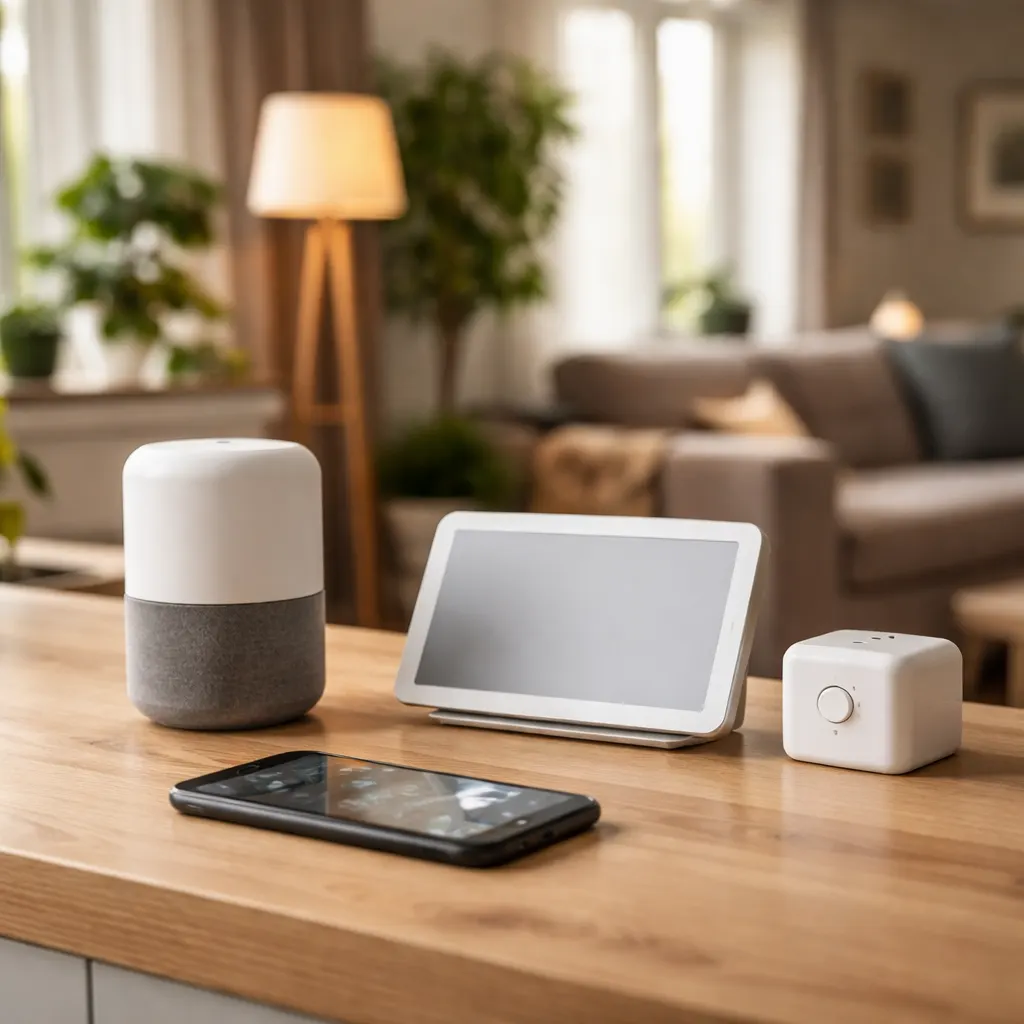
Google is allowing external AI tools to access and operate smart home devices through a new integration announced this week. The company's Home MCP (Model Context Protocol) lets third-party AI agents including Claude, Open Claw, Hermes, and Google's own Antigravity connect to Google Home ecosystems and control connected devices on behalf of users. According to Taylor Lehman, group product manager at Google Home & Nest, the system enables agents to "securely work with all of the devices and event history" in a user's Google Home setup.
The integration launches first for Google Home Premium Advanced subscribers in the US, who pay $20 monthly or $200 annually, with access rolling out over the coming weeks. Setup requires users to create a Google Cloud project and configure it for Home MCP. The system enables capabilities like analyzing footage across multiple cameras to answer questions such as what a child did after arriving home from school, using device state history to calculate how many laundry loads ran last week, or determining how long lights stayed on. Agents can also communicate through Google Home speakers by sending audio messages when tasks are complete, and users can have their agent build custom dashboards for controlling Google Home devices.
Lehman said the integration connects AI agents to real-world events, opening up new possibilities for smart home interaction. Google has built in rate limits and safety protections—for instance, agents can't unlock doors—but the company warns that "connecting it to Home MCP can result in unexpected or even undesired behavior" depending on which agent is used. The feature doesn't replace Gemini for Home, Google's primary assistant for interacting with Google Home through the Home app and Nest speakers following the discontinuation of Google Assistant. Instead, MCP adds another control layer allowing third-party AI agents to interact directly with devices through their own interfaces.
The real significance isn't simply voice control through a different app—it's that AI agents now have access to the underlying data and control infrastructure of users' homes. This moves smart homes from basic command-and-control systems toward contextual, proactive platforms capable of reasoning across generated data and acting on it. A system that can troubleshoot devices, recommend automation improvements, and identify patterns across a home proves more valuable than one limited to simple commands. Beyond consumer applications, the announcement signals Google's broader developer strategy: positioning itself as the smart home's infrastructure layer, similar to how AWS became foundational for internet and software businesses. Google launched API access to its smart home in 2024 and recently expanded Gemini for Home into a full-stack AI offering, pointing toward a business-to-business-to-consumer approach where Google provides AI and smart home infrastructure while other companies build consumer products on top.
The platform also opens a path for developers to use Google's Antigravity coding tool to build custom AI agents for smart homes that tap into Google Home device data and controls. Whether developers embrace this vision remains uncertain—Google has launched and abandoned numerous smart home platforms over the years, including Android @ Home, Weave, Project Brillo, Works with Nest, and Google Assistant. Developers must decide if Google has finally committed to a platform it intends to maintain long-term. The convergence of agentic AI and home infrastructure represents a fundamental architectural shift, one that could either concentrate power in a few platform providers or fragment into competing ecosystems. For enterprises evaluating smart building strategies, the durability of Google's commitment matters as much as the capability itself.