
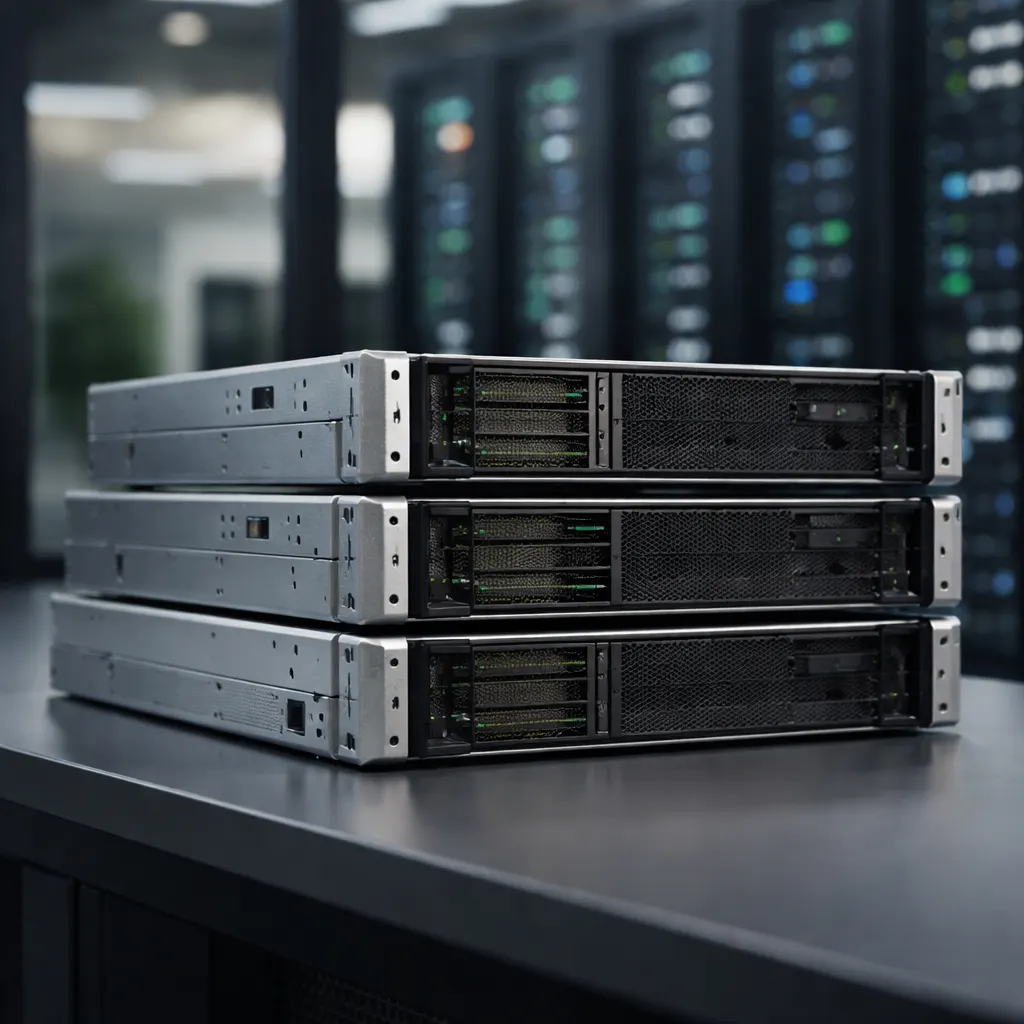
Hewlett Packard Enterprise is rolling out four new ProLiant Gen13 servers powered by AMD's 6th Generation EPYC processors, targeting AI workloads with higher compute density and integrated security features designed to simplify management of distributed IT environments. The announcement, detailed by Channel Insider, positions the new systems as infrastructure modernization opportunities for channel partners, with HPE linking the hardware refresh to centralized management capabilities and operational efficiency gains beyond raw performance upgrades.
The four systems—ProLiant DL525, DL585a, XD245, and XD285 Gen13—are built to boost compute density, memory bandwidth, and I/O capacity for workloads including AI inference, agentic AI, analytics, virtualization, simulation, and modeling. The DL585a Gen13 stands out as the most AI-centric configuration, supporting up to eight double-wide PCIe GPUs, two 6th Gen AMD EPYC processors, and PCIe Gen6 connectivity for AI inference, retrieval-augmented generation model fine-tuning, and emerging agentic AI tasks. The 1U DL525 Gen13 uses a single AMD EPYC processor with up to 256 cores, while the OCP-compliant XD245 and XD285 are engineered for dense, compute-intensive AI and high-performance computing settings—the XD245 leveraging direct liquid cooling and the XD285 using air-cooled architecture to fit a wider range of data center environments. The DL525 Gen13 is slated for late 2026, the DL585a for early 2027, and the XD245 and XD285 during 2027.
"Organizations need to turn their investments in agentic AI and inference into business value without adding operational complexity or risk," said Krista Satterthwaite, senior vice president and general manager of Compute at HPE. HPE is bundling Gen13 with security through iLO 8 and centralized infrastructure management via HPE Compute Ops Management, a cloud-based SaaS platform that allows IT teams to monitor, manage, update, and secure ProLiant servers across data centers and edge locations. A September 2026 Forrester Consulting study commissioned by HPE examined six Compute Ops Management customers managing between 280 and 16,000 ProLiant servers, then constructed a composite model around an organization running 1,200 servers. For that composite organization, Forrester calculated a 209% three-year ROI, $2.3 million in present-value benefits, and a payback period under six months, with a 50% cut in server management time, 50% lower planned downtime, and 80% lower unplanned downtime. The study also identified an 80% reduction in time spent on server monitoring and data analysis and a 95% reduction in compliance audit preparation time.
The management layer could reshape how partners approach server sales, shifting the pitch from performance metrics to lifecycle economics. Forrester's model found that 80% of edge-location service trips could be eliminated through remote resolution, while interviewed customers reported using automation for firmware updates, policy enforcement, and compliance monitoring. For MSPs and infrastructure partners managing distributed customer environments, those efficiencies translate into opportunities around fleet management, firmware and security compliance, edge infrastructure, and AI readiness—letting partners demonstrate operational savings alongside the performance argument. HPE is positioning Gen13 refreshes as an entry point for partners to layer assessment, migration, deployment, and ongoing managed services around new server investments, targeting broader infrastructure lifecycle needs rather than one-time hardware purchases. Partners who adapt their go-to-market strategy to emphasize operational automation and compliance tooling may find more sustainable engagement models than those focused solely on compute upgrades. The real competitive edge for channel players could lie less in which chip vendor they champion and more in how convincingly they can quantify downtime reduction and audit burden for decision-makers already stretched thin by edge expansion.