
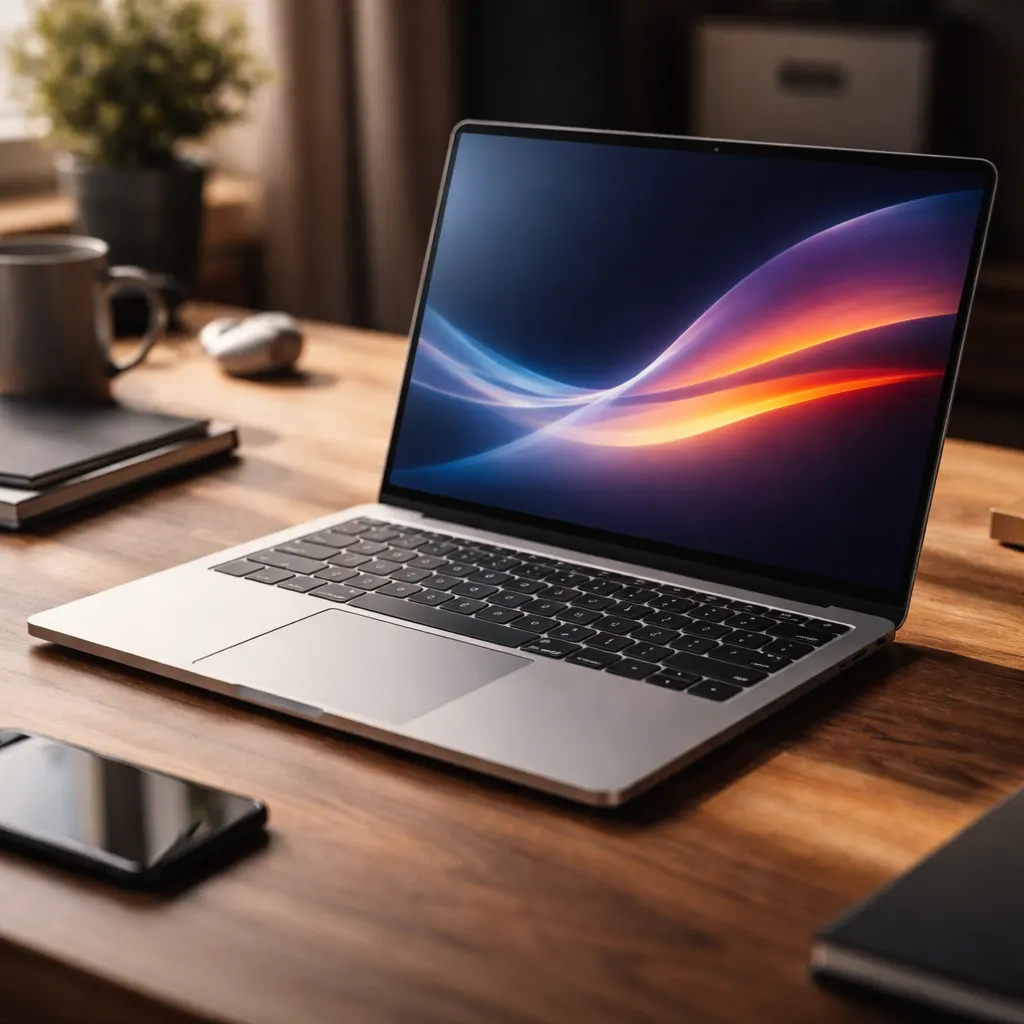
Microsoft released its first Surface notebook powered by Nvidia's RTX Spark system-on-chip during a Wednesday event in San Francisco, marking a departure from Intel processors. The Surface Laptop Ultra, one of several new Copilot+ PCs running the N1X chip, is targeted at "builders" and became available for preorder immediately, with shipments expected to begin next week. The machine serves as the platform for a suite of new AI capabilities, including hybrid compute functionality that dynamically routes tasks to on-device or cloud models based on connectivity, privacy, cost, and complexity considerations.
The base configuration starts at $2,599 and includes the lower-end 18-core N1X processor, 24 GB of unified memory, and a 512 GB user-serviceable SSD in a gray finish. The top-tier model, equipped with a 20-core chip, 128 GB of memory, and 1 TB of storage, carries a price tag of $5,899. The N1X chip itself is built on Nvidia's year-old GB10 platform, with certain CPU and GPU cores disabled on entry-level variants to hit different price points. The notebook features a 15-inch mini-LED display capable of 2,000 nits peak brightness in Microsoft's 3:2 aspect ratio, along with three USB-C ports (one with magnetic MagSafe-style connectivity), full-size HDMI, an SD card reader, and a USB-A port. Microsoft says the system can handle large language models up to 284 billion parameters in size with the maximum 128 GB memory configuration, though only at 1.6 bits of precision.
According to the report, the GPU delivers a peak theoretical throughput of 1 petaFLOPS at 4-bit precision, though Nvidia's marketing relies on 2:4 sparsity support to reach that figure. The report notes that almost no AI inference workloads currently leverage this functionality, meaning the chip's actual peak performance sits closer to 500 teraFLOPS, which still edges out competing processors like AMD's Strix and Gorgon Halo chips. Microsoft highlighted the GPU's capabilities for creative and gaming tasks, claiming 60 FPS in the latest Gears of War release, though the report suspects Nvidia's DLSS AI upscaling technology is likely handling much of the work. To prevent overheating, the Surface Laptop Ultra incorporates a cooling system with 2.5 times more capacity than previous Surface notebooks, achieved through a large vapor chamber.
The N1X chip represents Nvidia's push into the laptop market for AI-focused workloads, a space traditionally dominated by Intel and increasingly contested by AMD. The hybrid compute model Microsoft is introducing addresses a core challenge in on-device AI: balancing the need for immediate, private processing with the superior capabilities of cloud-based models. By routing workloads dynamically, the system can theoretically optimize for both performance and cost, though real-world effectiveness will depend on how well the software layer executes those decisions. Microsoft also announced a mini PC development kit based on the N1X priced at $5,999 with 2TB of storage, which undercuts Nvidia's similarly specced DGX Spark at $6,950 (which includes 4TB of storage and runs a modified Ubuntu). The report notes that Lenovo, Asus, Dell, MSI, and HP are all launching similarly specced systems over the next week, while AMD's AI-tuned chips now support up to 192 GB of unified memory and are expected to support many of the same hybrid AI features rolling out to Windows 11 in coming months. The premium pricing and Microsoft's decision to abandon Intel signal a bet that professional users will pay for integrated AI performance, even as competing platforms offer more memory headroom at comparable costs. For enterprises evaluating AI hardware investments, the window between announcement and competitive response has never been narrower, and the performance claims will need real-world validation before buyers commit to either platform.