
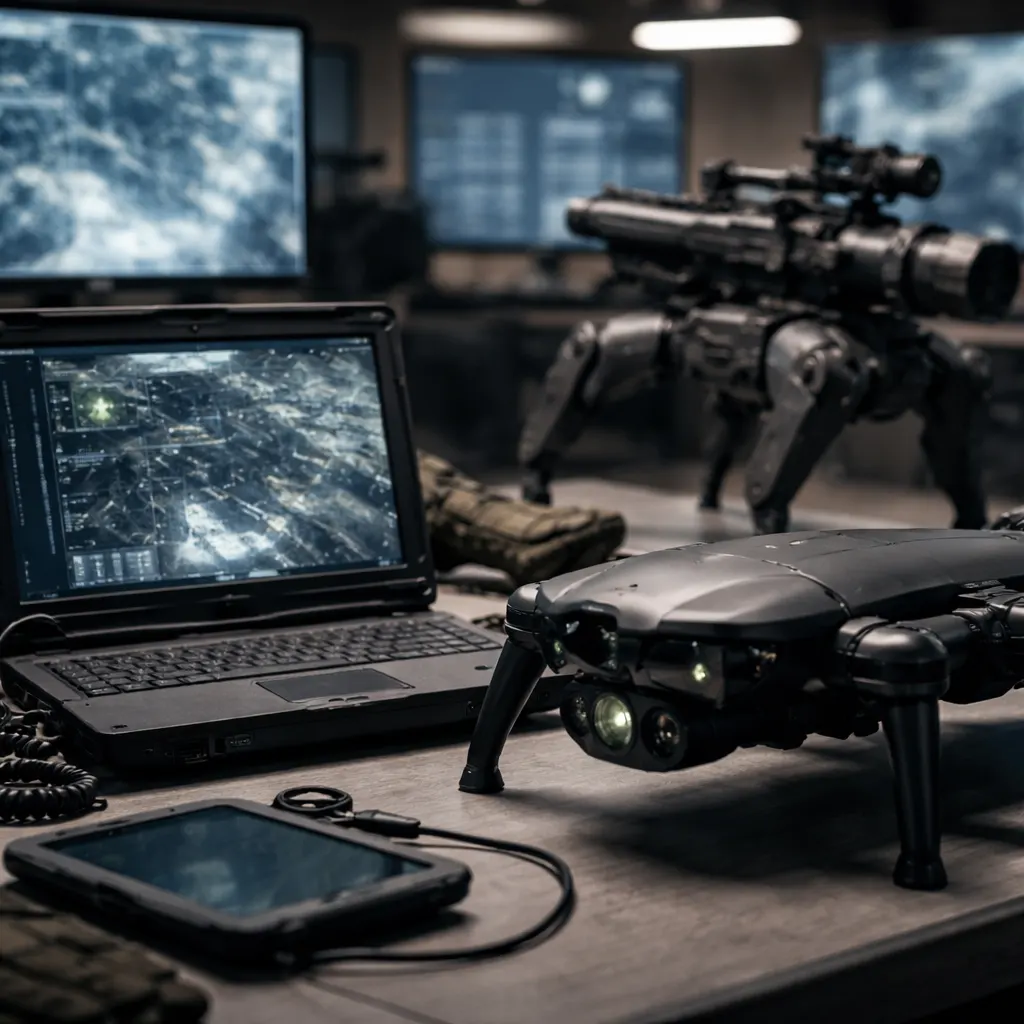
The Department of Defense has been awarding special procurement statuses to defense contractors based on product videos that can't exceed five minutes, according to a report from WIRED. The program, called Tradewinds, allows the Pentagon to bypass standard competitive bidding requirements and purchase AI systems in as little as one week. Major AI companies including OpenAI, Anthropic, and Google are all enrolled as participants in the initiative, which the military hopes will help it regain influence over an industry it once controlled.
The program operates through the Pentagon's Chief Digital and Artificial Intelligence Office, where contractors submit videos showing how their AI products address government-defined "strategic focus areas" that change on a regular basis. At least monthly, judges review the submissions and choose which ones gain entry to the Tradewinds Solutions Marketplace, where federal officials can view them. Products that get accepted receive "post-competitive" status, letting government purchasers satisfy competitive requirements and potentially cut months from buying timelines. The Trump administration has requested $1.5 trillion for the Department of Defense in its 2027 budget proposal, highlighting "historic investments" in artificial intelligence as a key focus area. Current video submission requests seek AI technology that can "enhance force lethality" and AI-powered agents that can support joint targeting operations, including what's known as kill chain execution. Meanwhile, requests from the final Biden-era submission cycle—seeking products that foster "a culture of responsible AI" and offer guardrails for AI development—are no longer as relevant.
The Tradewinds marketplace designation makes it easier for the government to strike deals using "other transaction" agreements, or OTs, which aren't bound by certain federal acquisition rules. Federal law permits the Pentagon to spend as much as $500 million on a single OT without informing Congress. Will Roberts, a former acquisition lead for CDAO's predecessor organization who helped create the effort, explains that one of Tradewinds' core objectives is attracting "nontraditional" players to the defense sector. Senator Joni Ernst of Iowa tells WIRED that "while OTAs offer opportunities to attract new procurement partners and reduce red tape, numerous reviews have raised red flags," pointing to issues like questionable costs, lack of oversight, and reduced transparency. Public records show that Google, Anthropic, and OpenAI all hold OTs with the Pentagon's CDAO, though the companies didn't confirm whether Tradewinds was used for those specific agreements.
The program reflects the Pentagon's attempt to reclaim leverage it lost when Silicon Valley began generating its own wealth and setting its own research agendas without military funding or influence. Following the Cold War, the Pentagon pushed defense companies to consolidate during a meeting nicknamed the Last Supper as Congress prepared to cut defense budgets—a move that ultimately damaged market competition, Roberts says. Around the same period, the personal computer boom let Silicon Valley make enough money to operate independently of military dollars and priorities, explains Sharon Weinberger, a national security reporter and author. The military once funded and shaped technologies like the Internet and GPS, giving it significant sway over technological direction. But Roberts notes that dynamic has reversed: "We've sort of lost that leverage because there's billions of dollars in AI being invested by companies themselves." Weinberger warns the shift has handed Silicon Valley enormous power over the Pentagon's technological future, pointing out that Pentagon AI spending is "like a drop in the bucket" compared to venture capital investment. That power imbalance has already surfaced publicly—Weinberger notes the recent legal fight over Anthropic's status as a supply chain risk could represent the government trying to work out what legal tools it has to assert authority over AI firms. Roberts recalls that Google employees grew "super paranoid" in 2018 about the company's work on Project Maven, eventually causing Google to withdraw from the effort, and the Pentagon spent years trying to "appease" Google with less controversial projects focused on humanitarian aid and veteran health. In July 2025, Google announced a $200 million agreement with CDAO to deploy its frontier AI technology, with a Google vice president stating the company was "committed to advancing the deployment of innovative technology across the defense ecosystem." The relationship between commercial AI giants and military buyers will likely grow more complex as technological development accelerates and federal budgets expand, forcing both sides to negotiate influence in an arena where neither holds complete control.