
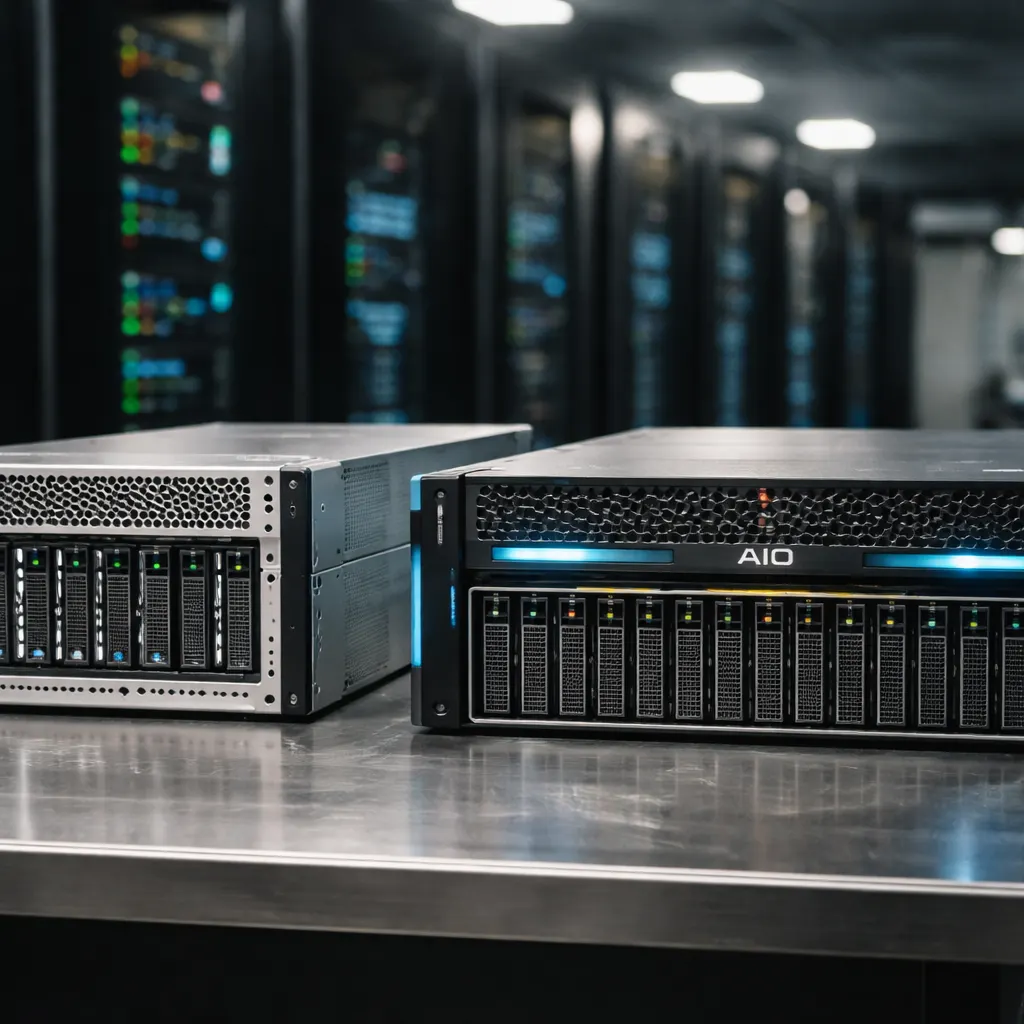
NetApp announced Friday it will acquire Peak:AIO, a developer of next-generation metadata architecture and high-performance parallel file systems, in a move to strengthen its AI infrastructure and high-performance computing capabilities. The acquisition will bring Peak:AIO's parallel NFS technology into NetApp's portfolio, allowing channel partners to address enterprise AI factories, massive data workloads, and more demanding performance requirements. Financial terms and a closing date were not disclosed.
The deal centers on Lattice, an open-source parallel NFS metadata server developed through a collaboration between Peak:AIO and Los Alamos National Laboratory and unveiled in June. According to Peak:AIO, Lattice delivers a new distributed metadata architecture designed to eliminate a persistent constraint in large-scale AI and high-performance computing infrastructure by providing ultra-fast, parallel access to massive datasets for AI workloads including training, inference at scale, and agentic AI applications. The technology is already deployed at several national laboratories and high-performance computing environments. NetApp's chief platform and technology officer, Arindam Banerjee, told CRN that the company is buying Peak:AIO to provide the orchestration needed to build large-scale environments, noting Peak:AIO's work with multiple large national laboratories.
Peak:AIO CEO Roger Cummings wrote in a LinkedIn post that the combination creates a compelling fit for customers. "NetApp brings decades of enterprise experience, a global customer base, and a reputation built on helping some of the world's largest organizations manage their most critical data," Cummings stated, adding that Peak:AIO contributes "the performance, scale and efficiency required as AI and HPC fundamentally change what customers expect from their infrastructure." Together, the companies aim to help customers build reliability and enterprise strength with the performance AI and high-performance computing workloads demand, according to Cummings.
The acquisition fills a gap in NetApp's technology stack, according to Ned Engelke, chief technology officer at Evotek, a San Diego-based solution provider and NetApp channel partner. Engelke told CRN that Peak:AIO's parallel NFS client is something NetApp hasn't had in its portfolio, enabling greater throughput bandwidth and probably lower latency for file workloads—an area that had been a competitive weakness for NetApp. Engelke explained that infrastructure has three elements: finding and managing data, moving that data around, and delivering it to whatever application needs it. NetApp already has the first two pieces with a robust control plane and data plane, he said, so the acquisition improves how data reaches applications. Before this deal, NetApp had done co-development work with Nvidia to feed the cache and made progress in high-performance computing over the last decade, but this acquisition expands how the company interacts with customers by making data from their control plane more available to applications, Engelke said.
The Peak:AIO acquisition positions NetApp to better serve enterprise and institutional requirements for building AI factories, Banerjee said. As AI workloads demand faster data access and parallel processing at scale, the addition of Lattice's distributed metadata architecture could help NetApp compete more effectively in an infrastructure market where performance bottlenecks have constrained large-scale deployments. The combination of NetApp's enterprise data management experience and Peak:AIO's high-performance parallel file system technology addresses the growing gap between what traditional storage can deliver and what modern AI applications require. NetApp's channel partners gain access to technology that removes a longstanding competitive disadvantage while opening new opportunities in government laboratories and enterprise AI deployments.