
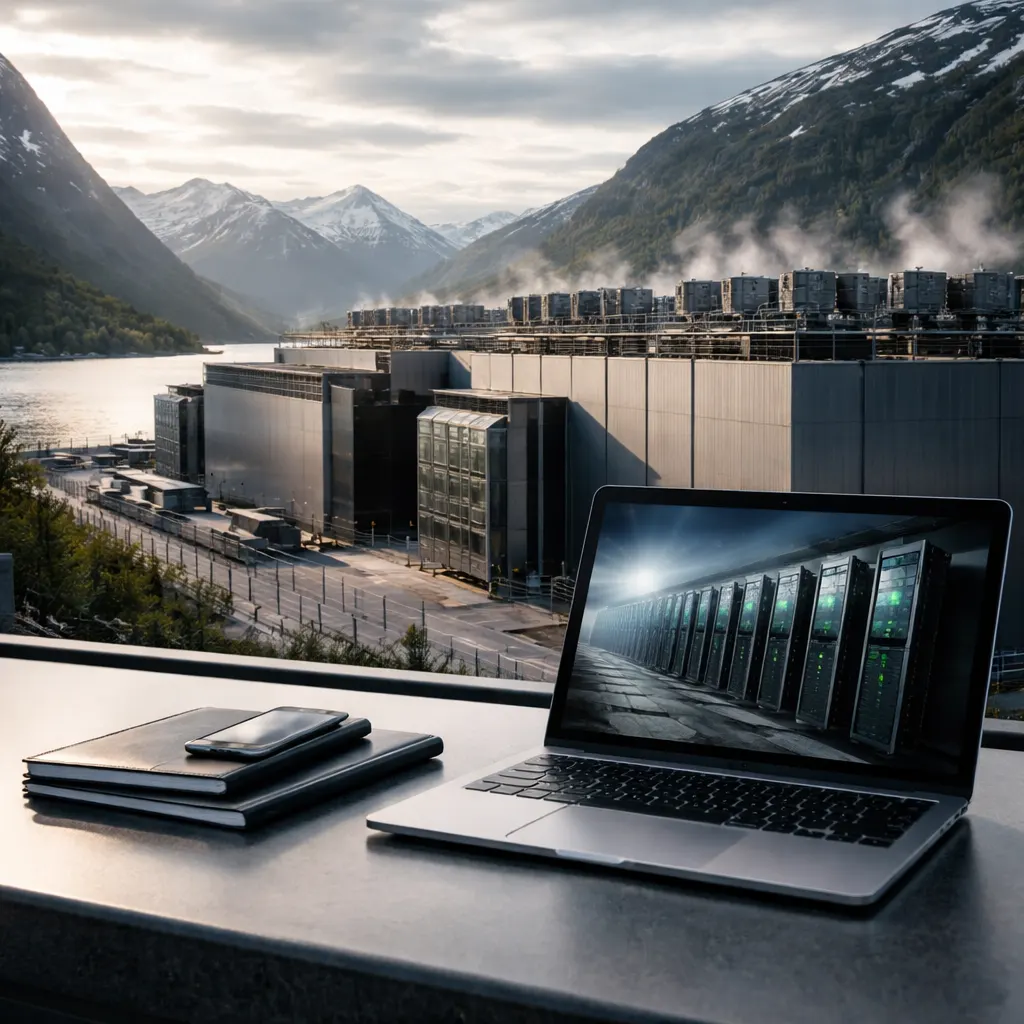
An AI cloud startup with financial backing from Nvidia and Michael Dell has secured a $10 billion strategic partnership with an unnamed AI lab to construct compute infrastructure in Norway, according to an August 5 report from The Register. Volta, emerging from stealth mode, describes itself as a vertically integrated AI infrastructure business designed to finance, build, and operate what the industry calls "AI factories" — data centers dedicated to training and running AI models. The partnership has been identified elsewhere as being with Anthropic, the model developer giant, though Volta declined to officially confirm the client's identity.
Volta raised approximately $300 million across its seed and Series A funding rounds, reaching a valuation of $2.4 billion. Andreessen Horowitz and Nvidia led the most recent funding round, with participation from Michael Dell's family office. The Norway facility will span 133 megawatts and is being developed in partnership with Bitdeer, a cryptocurrency miner and GPU cloud operator. The site is expected to deploy Nvidia Vera Rubin systems, specifically VR200 NVL72 configurations. The Norwegian project represents the first in Volta's development pipeline, which exceeds 1 gigawatt of capacity across North America and Europe, with the company targeting multiple gigawatts by 2030. The $10 billion figure represents a compute commitment over the partnership's six-year lifespan, according to a company spokesperson who clarified the arrangement is a commercial strategic partnership rather than an investment.
Founder and CEO Ricard Boada stated that "compute has become a new infrastructure asset class, with AI models and applications as the verticals built on top." He added that the company's ambition is to "build The Utility of Compute so that compute works as reliably and invisibly as electricity, while being priced transparently and built to endure." The company claims to have created "the world's first fully vertically integrated AI infrastructure platform, extending beyond technology into capital formation," combining infrastructure finance, data centers, compute, software, and operations under one roof.
Volta positions itself as distinct from other rent-a-GPU operators like Nscale and CoreWeave through its financing approach. A company spokesperson explained that most neoclouds finance hardware through high-yield debt and rely on third-party capital for each new project, which influences both pricing and financial stability. Volta applies an infrastructure finance model instead, which the company says results in lower, more stable capital costs that flow into pricing. The company plans to construct its sites using Nvidia's DSX reference architecture and software tooling, which cover design, simulation, construction, and operation of AI factories, including digital twins that can model a facility before construction. Volta operates as an Nvidia Cloud Partner but uses its own proprietary full-stack cloud platform covering orchestration, multi-tenancy, storage, networking, billing, and capacity management, which it claims provides capabilities beyond the standard Nvidia stack.
The report indicates Volta intends to use this capital structure advantage to accelerate deployment and reduce financing costs compared to competitors dependent on debt financing. The company's infrastructure finance model aims to provide pricing transparency in a way that debt-heavy competitors may find difficult to match. The broader trend toward treating compute as an infrastructure asset class suggests a shift in how AI resources are financed and deployed at scale. If the model proves successful, it could reshape how AI labs secure long-term compute access while potentially stabilizing pricing in a volatile market. Whether infrastructure financing can truly differentiate Volta in a crowded field will depend on execution speed and whether promised cost advantages translate to meaningful pricing power against entrenched competitors.