
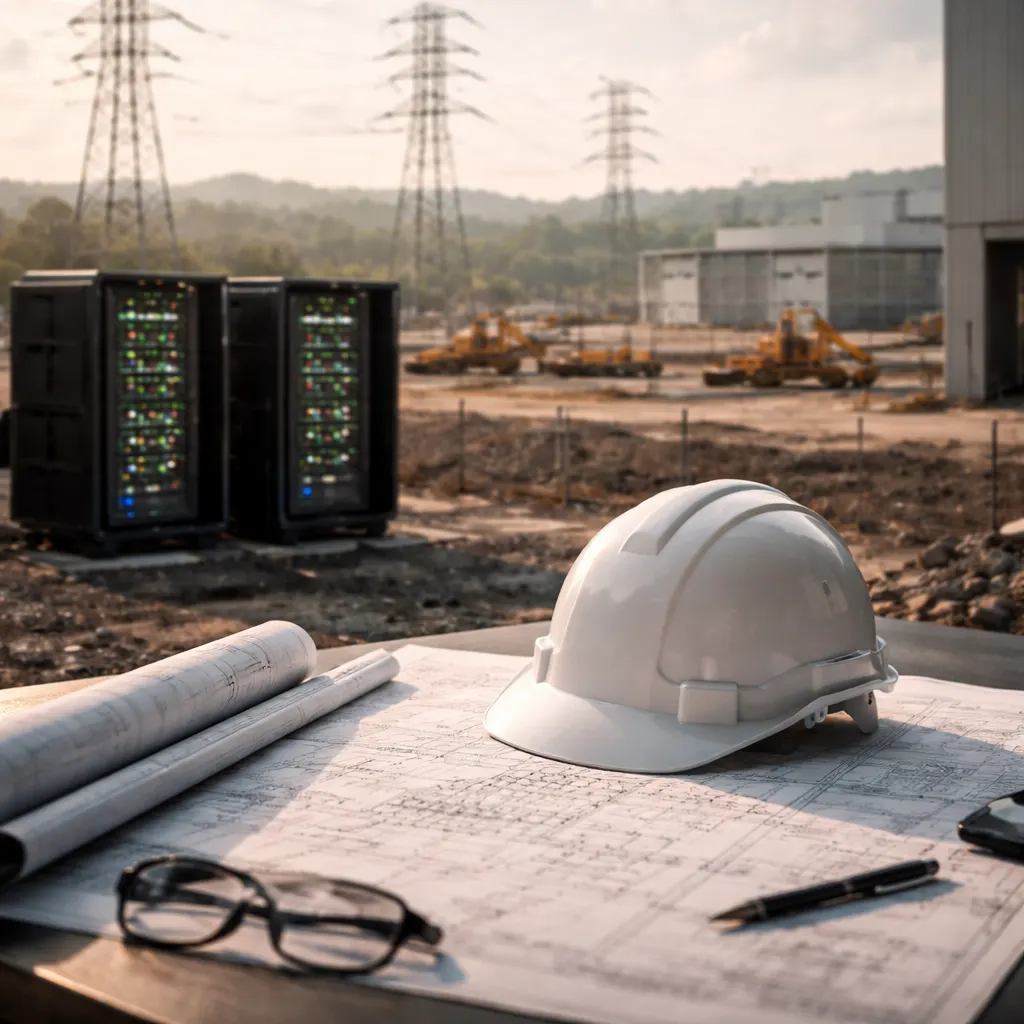
Nvidia announced Friday it has become a minority investor in Cloverleaf, a 2024-founded company specializing in securing land and power infrastructure for datacenter construction, according to a report published Friday by The Register. The investment represents the chip giant's latest effort to address roadblocks threatening the AI boom by ensuring customers have the necessary facilities to deploy its hardware. Nvidia can only sell GPUs if datacenters exist to house them, and those facilities can only operate where adequate power is available, the report notes.
The deal follows a broader shift in Nvidia's product requirements that's forcing a datacenter overhaul. Until 2024, most Nvidia systems relied on air cooling and could fit into existing facilities with minimal changes. The Blackwell generation began requiring liquid cooling for its most powerful NVL72 systems, while the upcoming Rubin generation eliminates air-cooled options entirely for the HGX and NVL form factors that drive most AI training and inference workloads. Liquid-cooled facilities demand heavier, more power-hungry racks—roughly 250kW currently, scaling to 600kW next year—plus coolant distribution units at a rate of about one per one to three megawatts of compute capacity. Nvidia's DSX platform, launched this spring, provides blueprints specifying exactly how much power, cooling infrastructure, and space are needed to support a given amount of compute.
The report finds that Nvidia has prioritized customers with ready-to-fill datacenters, but many of its biggest buyers don't own facilities and instead lease capacity from others—Crusoe built OpenAI's Stargate facility in Abilene, Texas, while Oracle operates it, for example. Nvidia has already invested in model developers like OpenAI and neocloud partners including CoreWeave and Nebius by helping them secure financing or investing directly in their businesses. As part of the Cloverleaf deal, the company is adopting Nvidia's DSX spec, which includes DSX Flex—a capability allowing datacenters to scale back workloads in response to grid conditions, such as during heat waves when air conditioner demand spikes.
The Register's report characterizes the investment as part of Nvidia's broader strategy to use its financial reserves to shore up vulnerabilities in the AI ecosystem before they become critical problems. The proliferation of AI datacenters has strained grid capacity to the point where many new facilities employ behind-the-meter power generation rather than relying entirely on existing infrastructure—Nebius, for instance, has begun using Bloom Energy's natural gas fuel cells. Cloverleaf receives a cash infusion while Nvidia gains greater control over the build process, and in theory, datacenter builders can now drop a DSX-compliant facility on a Cloverleaf-supplied site and begin serving customers without delay. The company's recent efforts to help AI infrastructure startups secure financing in exchange for revenue shares make clear it's attacking potential roadblocks from every angle, the report concludes. The circular AI economy now depends not just on chip sales but on orchestrating every layer of the supply chain, from silicon to site selection. Companies that control infrastructure access may soon wield as much influence over AI development timelines as those designing the algorithms themselves.