
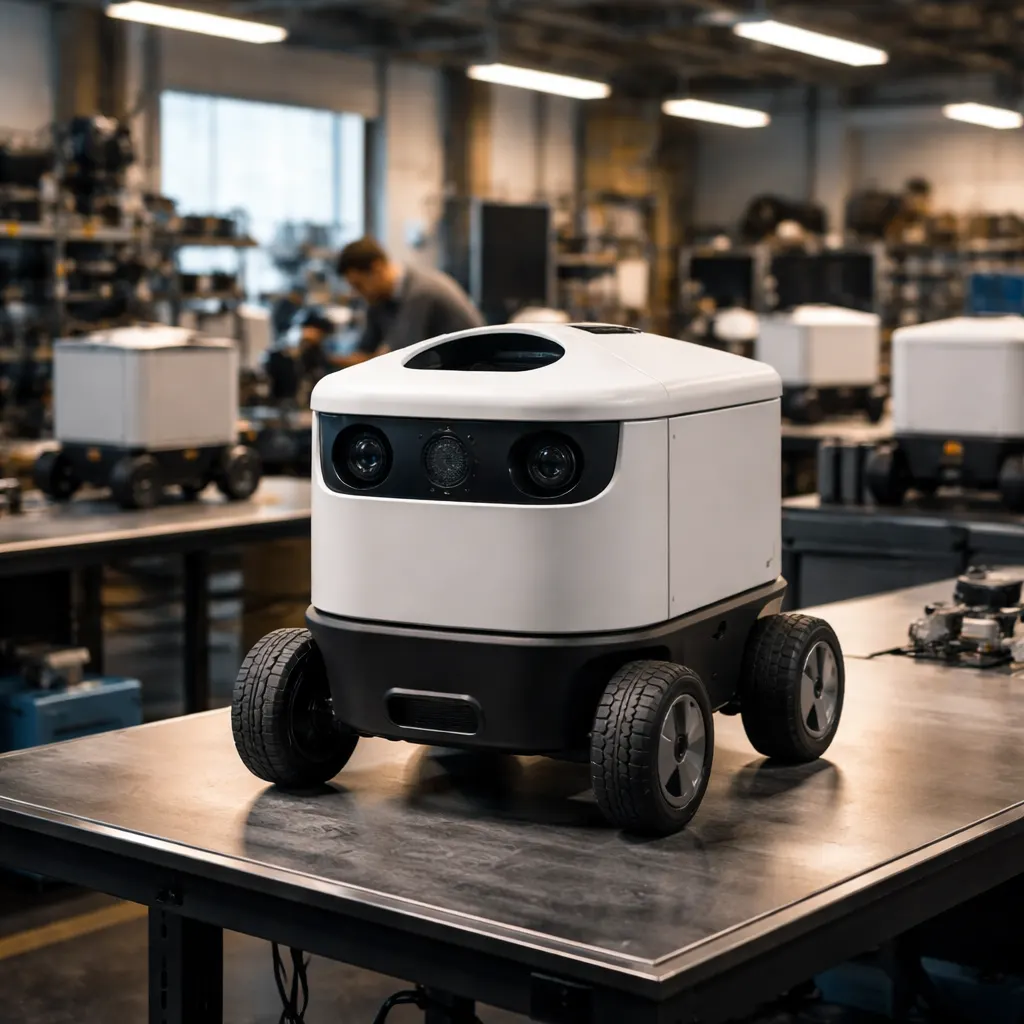
Serve Robotics, which builds autonomous sidewalk delivery robots, is launching a new business line to sell its connectivity and data technology to other companies developing robots, according to a report published Thursday by TechCrunch. The company, which separated from Uber's Postmates acquisition in 2021 and became publicly traded in 2024, announced the initiative called Physical AI Services alongside its third-quarter earnings. The expansion positions Serve as a technology supplier rather than solely an operator of its own robot fleet.
The new Physical AI Services business will offer three distinct products to customers. Serve Link connects robots operating in the field to AI systems housed in data centers, enabling companies to access more capable AI models without installing all that computing capacity onboard their machines. The company is also rolling out a data curator tool that helps firms identify unusual situations within the massive volumes of real-world data a robot gathers, which can then be channeled back into training models to boost performance. The third offering is a foundation-model data catalog derived from Serve's own sidewalk robots that can train AI models to comprehend complicated human environments. Bedrock Robotics, a startup creating self-driving systems for construction equipment, is already a customer, and Serve announced it's collaborating with T-Mobile to position AI computing capacity closer to robots.
CEO and co-founder Ali Kashani described the shift as "the AWS moment where we are taking the technology we've built for us, and we're opening it up for more people to build on," noting this wouldn't have been feasible without first developing its own robot fleet. "We are solving the problem of robots in human spaces," Kashani told the outlet. He explained that the connectivity component must deliver exceptional performance because robotic applications typically require linking robots to offline intelligence for data collection or handling exceptions, and "you need to be able to manage really unreliable networks and still reliably connect." According to Kashani, he's contemplated this approach—a strategy he learned from Amazon—for years, and emphasized that Serve's existing robot businesses aren't disappearing.
The move reflects Kashani's view that when technology is still emerging, companies must build complete applications to understand what to create, but as the technology matures, more organizations will want to build similar products, creating an opportunity to open the technology so others can build on that platform. The report notes that Serve sees potential to sell the technology it created for its own robots to other firms developing robots for farms, warehouses, and other uncontrolled settings. The expansion arrives as Serve's sidewalk delivery operations grow but transition away from Uber toward other partners including DoorDash and Wonder. Serve currently manufactures two types of robots: the sidewalk delivery robot with distinctive googly eyes and a hospital-focused model it obtained through acquiring Diligent Robotics, both of which will continue operating.
The platform strategy could reshape how robotics companies approach infrastructure, particularly those without resources to build connectivity and data systems from scratch. By offering these tools as services, Serve is betting that the robotics industry will follow a similar trajectory to cloud computing, where shared infrastructure became more efficient than every company building its own. For companies deploying robots in unpredictable real-world environments—from construction sites to agricultural fields—the ability to tap into proven connectivity solutions and curated training data could accelerate development timelines and reduce the technical barriers to scaling operations. Whether this approach can sustain a standalone business while Serve continues expanding its own delivery services will test the durability of the Amazon playbook in an industry where hardware and software remain tightly coupled.