
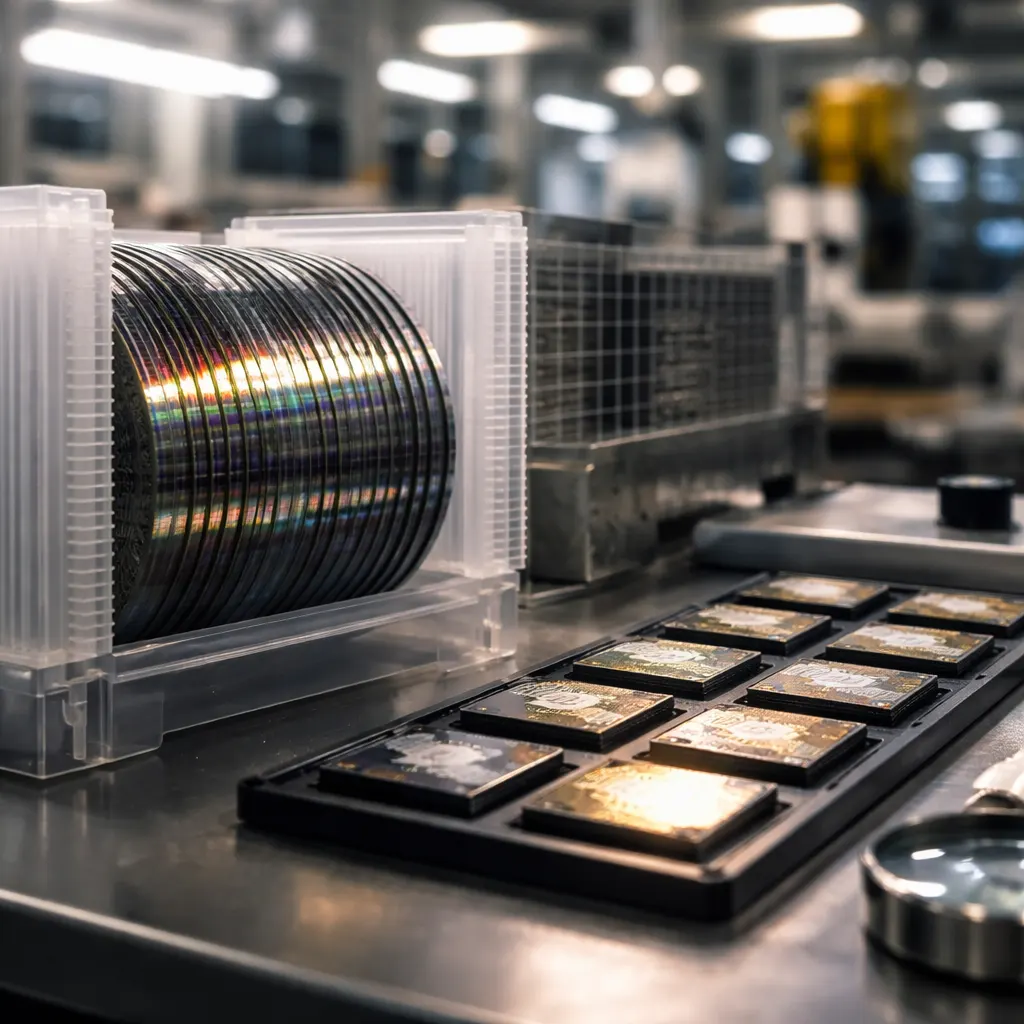
Semiconductor Manufacturing International Corporation's second-quarter wafer production is "far exceeding" the company's earlier 2026 projections, driven by surging orders for power-management chips used in AI servers, according to an earnings call report. Co-CEO Zhao Haijun told analysts that demand for BCD power-management chips—the analog components that sit alongside GPUs in AI data centres—is now visible through the end of 2027, forcing the foundry to reconsider expansion plans. The Chinese chipmaker's performance marks a sharp reversal from its own flat-revenue guidance issued earlier this year, when executives expected weak consumer and industrial orders to cancel out any AI-related gains.
Second-quarter revenue reached $3.01 billion, climbing 20% from the previous quarter and 36.1% year-over-year, the report states. Fab utilisation hit 93.7% against a self-imposed 95% ceiling, with the remaining capacity reserved for research and development work. Wafer shipments jumped 14.4% quarter-on-quarter, while roughly 90% of SMIC's revenue comes from China, meaning most of the booked capacity is serving domestic customers.
Zhao told analysts there remains "a large gap between the wafer prices of the industry leaders and SMIC's prices," and said the company needs to negotiate with customers for more reasonable pricing, according to the call. The co-CEO confirmed the foundry is now weighing equipment additions at existing fabs where physical space permits, though he did not name which facilities will receive the upgrades, which process nodes are handling the AI orders, or which customers have placed orders stretching to 2027. The report notes no details were provided on how the planned additions align with US export controls that still restrict the tools SMIC needs to expand capacity.
The pattern fits what the report describes as a recurring theme in China's AI infrastructure buildout: constraints are shifting away from the accelerator chips themselves and onto adjacent components like power-management ICs, optical modules, and packaging. Because SMIC is effectively pacing part of the country's AI infrastructure timeline through its domestic customer base, the through-2027 visibility on power-management orders stands to benefit domestic analog and power-IC design houses whose products feed into that capacity, as well as Chinese AI-server integrators who can now lock in foundry support for their bill-of-materials planning.
The report concludes that further detail on expansion plans will be provided in later announcements, with the company still reviewing which equipment additions are feasible given space constraints at existing facilities. If the multi-year order visibility holds, the foundry will need to balance pricing negotiations with capacity planning while navigating export-control limitations on advanced tooling. The question for SMIC's management becomes whether they can translate sustained demand into margin expansion without triggering supply-chain bottlenecks—or regulatory pushback that would limit their ability to add the very tools the expansion requires. For buyers watching China's AI infrastructure race, the real story isn't the headline capacity number but whether domestic suppliers can coordinate well enough to prevent power management from becoming the next chokepoint.