
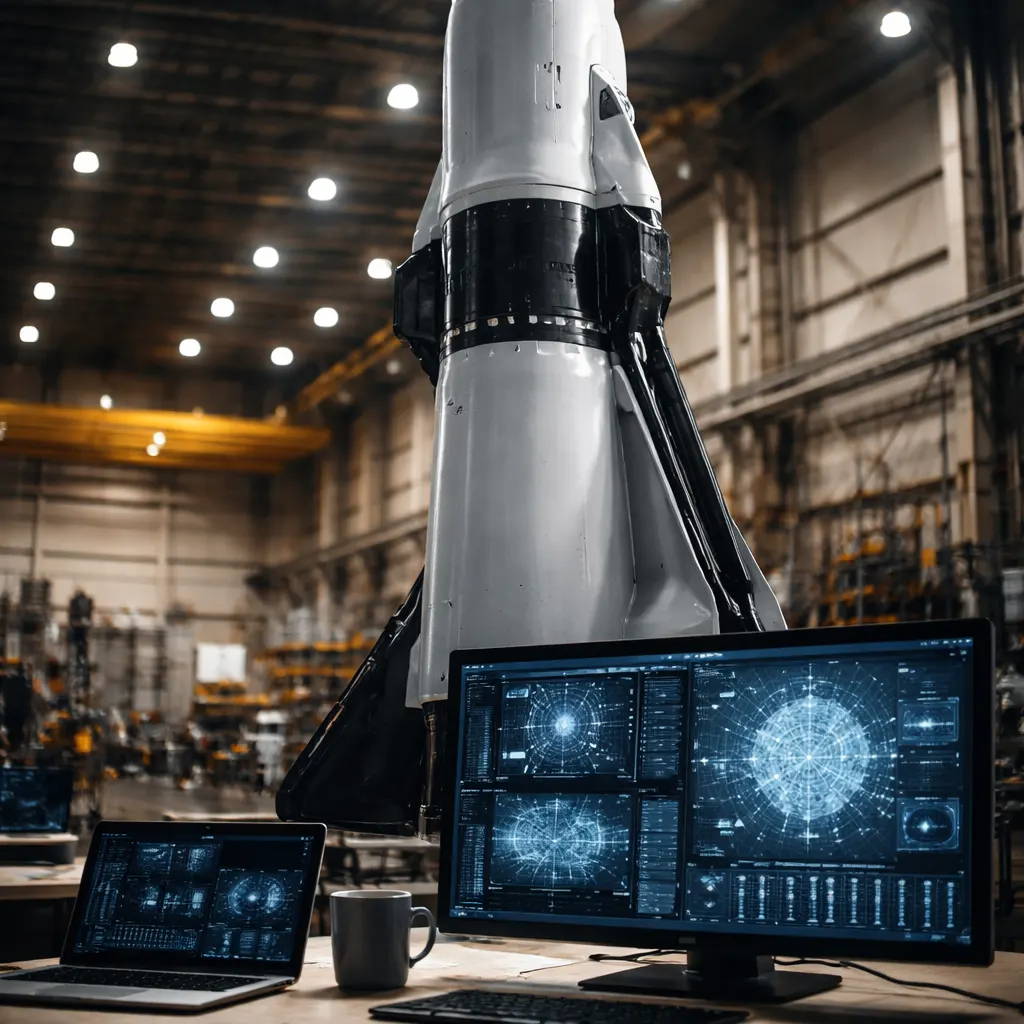
SpaceX's artificial intelligence operations generated more revenue than its original space business in the third quarter, marking a dramatic shift for the company as AI now accounts for 52% of total income. The figures come from a regulatory filing released Tuesday, showing the company's transformation from a rocket manufacturer into a hybrid aerospace and AI conglomerate. CEO Elon Musk's firm posted $14.6 billion in third-quarter revenue, with particularly strong performance in what it now calls its "Super Intelligence" division.
The Super Intelligence unit alone brought in $7.5 billion during the quarter, driven by revenue from the recently purchased Cursor coding tool, the Grok chatbot, and the company's expanding neocloud infrastructure, which now operates 1.7 gigawatts of computing capacity. That AI segment turned a $431 million profit, though the figure would've climbed higher without $1.2 billion in one-time stock-based compensation tied to the Cursor purchase. Overall revenue also benefited from roughly $1 billion connected to Bitcoin price increases and unspecified income from related parties that may stem from SpaceX's stake in another firm. The company flipped to $4.4 billion in net income for the quarter, reversing a $1 billion loss from the same period last year, though it still carried a $413 million net loss for the first nine months of 2026. Starlink's subscriber count climbed to 13.6 million, while capital spending hit $19.6 billion as SpaceX continues construction on Colossus II, a second data center, and ramps up investment in Starship, the heavy-lift rocket designed to launch next-generation Starlink satellites and orbital data centers.
During an investor livestream discussing the results, Musk said he's dedicating four days each week to working on-site in Memphis, Tennessee, where Colossus II is under construction. He argued that "the constraint on deployment of super intelligence is more in power and cooling and infrastructure than it is in chips," and described deploying SpaceX rocket engineers to tackle data center challenges as resembling "the New York Yankees playing in Little League." CFO Bret Johnsen told investors the company plans to allocate between $35 billion and $40 billion to new capital projects in the fourth quarter alone.
Musk's confidence in the AI pivot runs deep: he forecasts SpaceX's annual recurring revenue will land "somewhere between $500 billion and $1 trillion" by the close of 2027, while Johnsen offered a more near-term projection of $33 billion to $37 billion in total revenue for the first quarter of next year. The company is betting that infrastructure speed—not chip supply—will determine which firms dominate the AI race, and it's leveraging manufacturing expertise developed for rocket components to solve data center bottlenecks. In one case, Musk noted that turbine makers face 12- to 18-month delays securing the metals needed for blades and vanes, so SpaceX is now using metal casting capabilities originally built for aerospace to produce those parts and obtain turbines faster. Musk also said the next Starship test flight, expected in November, will attempt to recover both the first-stage booster and the upper stage—a feat he called a "massive technology milestone," though he emphasized the real achievement will be flying both recovered stages again. He predicted that rising demand for AI agents will drive further growth in connectivity, boosting Starlink subscriptions.
The filing shows SpaceX positioning itself as an infrastructure company first, using rocket-building expertise to outpace rivals in data center construction and energy delivery while still advancing its space ambitions as a supporting pillar. The company's willingness to pour tens of billions into capital projects each quarter suggests it views the AI infrastructure race as winner-take-most, with profitability taking a back seat to scale in the near term. If the aggressive spending delivers on Musk's revenue predictions, SpaceX could reshape expectations for how quickly companies can build and monetize massive AI infrastructure. The strategy hinges on whether the firm can sustain investor appetite for losses while capital expenditures dwarf even blockbuster quarterly revenues—a gamble that traditional tech giants with steadier cash flows may find easier to stomach over the long haul.