
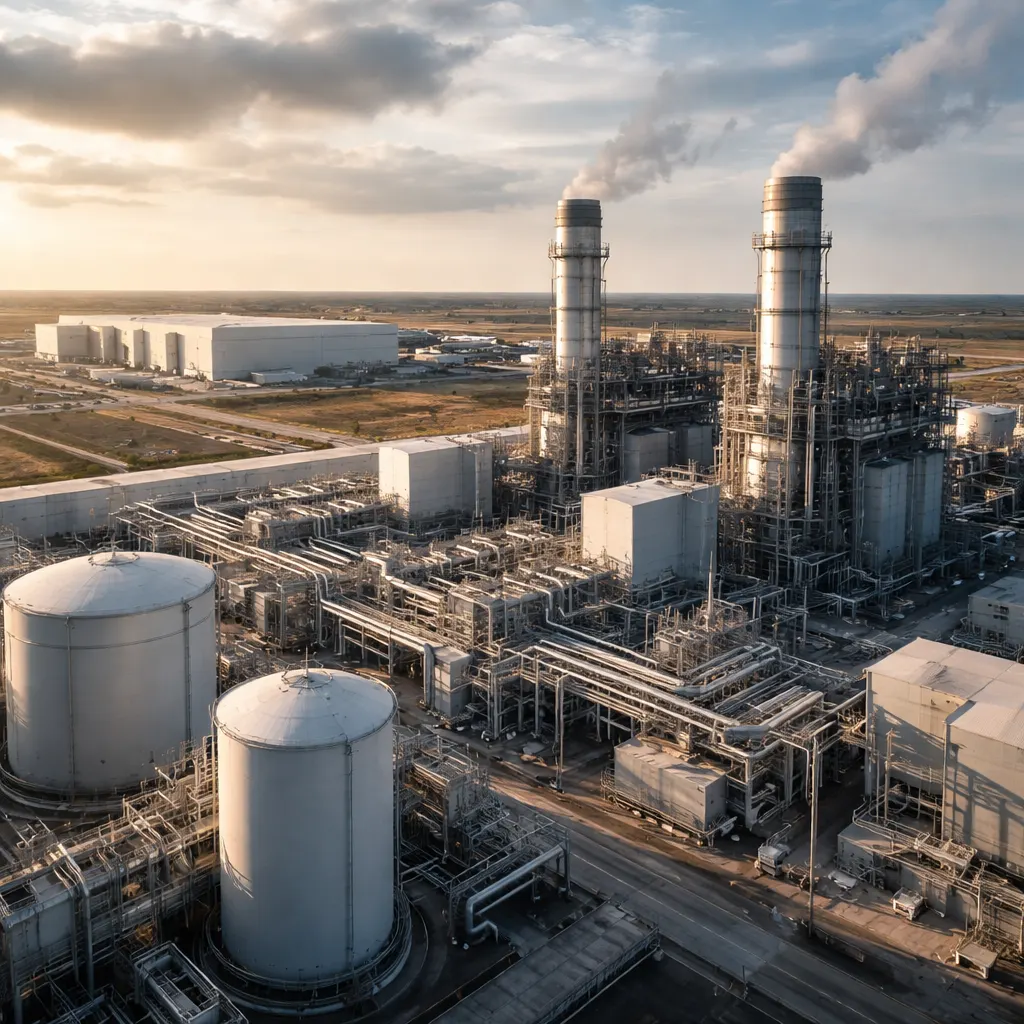
SpaceX will rely on natural gas power plants rather than solar energy to supply electricity to its planned Terafab semiconductor facility in Texas, according to a report from TechCrunch published this week. Riley Trettel, who oversees energy and data center development for the company, told a public meeting Wednesday that SpaceX will be "bringing our own power" for the project, which will also feature "very large battery arrays." Despite partnering with Tesla, a solar developer, on the Terafab project, no terrestrial solar power has been mentioned in any announcements for the facility.
The Terafab plant will be constructed in Grimes County, roughly 45 miles northwest of Houston's downtown. SpaceX secured a full tax abatement from the county after committing to invest at least $5 billion by 2030 and generate a minimum of 1,800 permanent jobs by 2035. The state of Texas is contributing $30 million in additional incentives. The first phase of the fabrication facility is projected to cost $16.8 billion, though earlier SpaceX estimates placed the total at $55 billion. The company, which raised $87.5 billion in a recent public offering, intends to manufacture chips for data centers operated by SpaceX and its xAI division. SpaceX has committed to purchasing $2.8 billion in gas turbines over the coming three years.
According to the report, CEO Elon Musk has made substantial bets on natural gas recently, with xAI's Memphis data centers running almost entirely on the fossil fuel. Musk also purchased a firm that focuses on natural gas power plant technology. The TechCrunch article notes that the AI data center expansion has sparked a wave of proposals for new natural gas facilities across the sector, driving up construction costs for such plants by 66%. Google, Meta, and Microsoft have all revealed major projects in recent months. Texas has emerged as the epicenter for these "bring your own power" data centers, with more than 70 gigawatts of planned capacity.
The report explains that these self-powered schemes aim to accelerate project timelines while addressing worries about climbing electricity costs for consumers, but natural gas turbines can emit substantial pollution. SpaceX's xAI subsidiary has faced legal action over its deployment of unpermitted natural gas turbines in one of the nation's most polluted regions. The combination of surging AI infrastructure demands and the preference for fossil fuel generation over renewable alternatives suggests the tech industry's energy footprint will grow more carbon-intensive in the near term. The disconnect between stated sustainability commitments and actual power choices may force companies to reconcile their climate rhetoric with operational realities.