
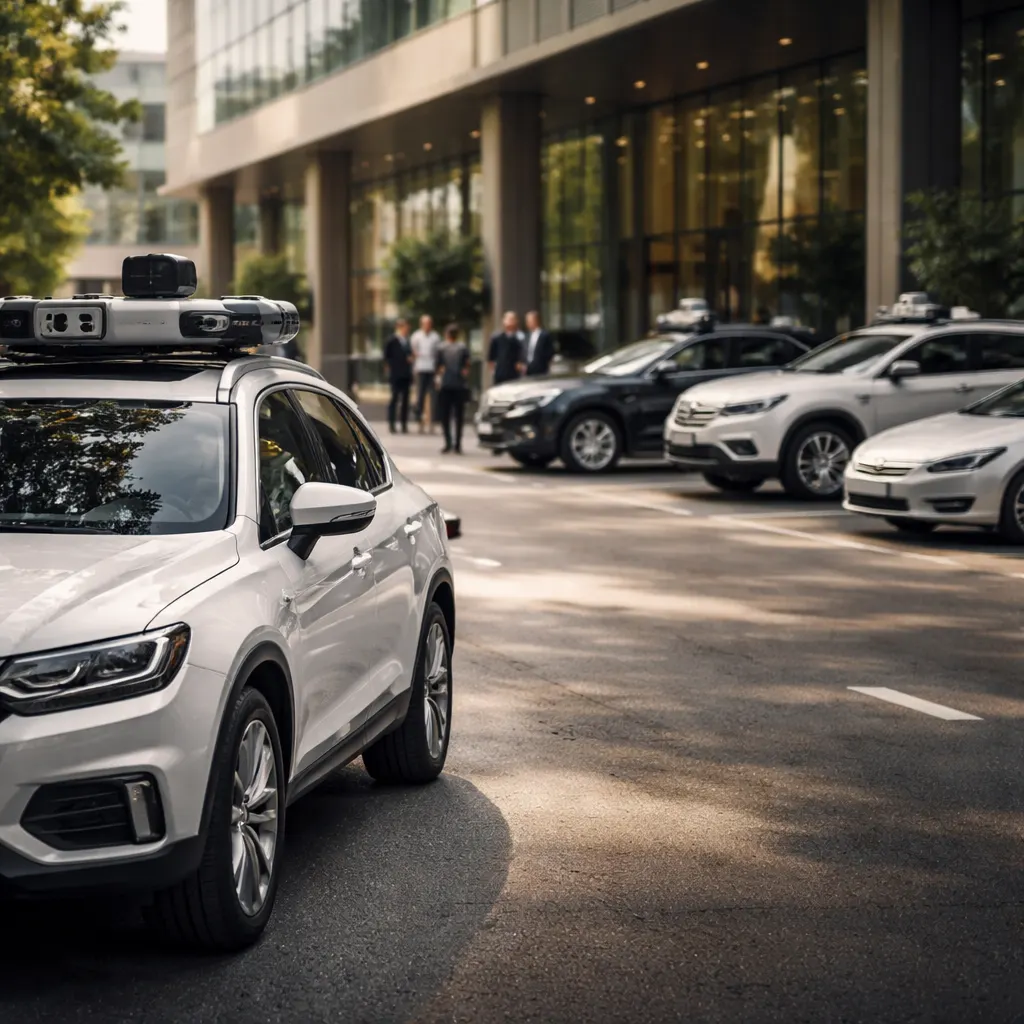
Uber has forged partnerships with — and made direct investments in — more than 30 autonomous vehicle companies over the past two years, according to a comprehensive tracker published by TechCrunch on August 1, 2026. The ride-hailing giant is pursuing a global strategy that spans robotaxis, delivery robots, and self-driving trucks across North America, Europe, the Middle East, and Asia. This marks a dramatic reversal from 2020, when Uber sold off its in-house autonomous vehicle unit and exited the technology development race entirely to focus on its core ride-hailing and delivery businesses using human drivers.
The partnerships span multiple categories and geographies. Uber has invested hundreds of millions in vehicle manufacturers, self-driving technology startups, and fleet operators. The company committed approximately $500 million to Nuro, including participation in the startup's Series E round in 2025 and future milestone-based investments, to launch a premium robotaxi service using Lucid Gravity SUVs. Uber invested $300 million initially in Rivian in March 2026, with plans to purchase 10,000 fully autonomous R2 robotaxis ahead of a planned 2028 rollout in San Francisco and Miami. The company provided Waabi with about $250 million in milestone-based capital in January 2026 to support robotaxi deployment. Uber's investment in Wayve could reach $1.5 billion, including $300 million contingent on deploying robotaxis in London. The company also invested $300 million in Lucid Motors in 2025, then added another $200 million in April 2026 while increasing its minimum vehicle order from 20,000 to 35,000 units. Uber now owns more than 11% of Lucid. Through its holding company Neben Holdings, Uber maintains a 19.7% Class A equity stake and 6.9% voting power in Aurora Innovation, according to SEC filings from April 2026.
The report details dozens of city-specific deployments already underway or scheduled. WeRide robotaxis launched on the Uber app in Abu Dhabi in December 2024 with human safety operators, then went driverless in November 2025. The partnership expanded to Dubai in late 2025 and will bring WeRide's autonomous vehicles to 15 more cities by 2030, including Madrid and Zurich. Waymo robotaxis became available on Uber's platform in Austin in March 2025 and Atlanta by June 2025, though the Phoenix partnership ended in July 2026. Avride robotaxis built on Hyundai IONIQ 5s became available on the Uber app in Dallas by the end of 2025, though they still have human safety operators on board as of June 2026. May Mobility's autonomous vehicles are available through the app in Arlington, Texas, though that remains the only market as of June 2026. The report notes that Uber Eats orders in Austin and Dallas were being delivered via autonomous sidewalk robots in partnership with Avride as of February 2025.
Uber's pivot back to autonomous vehicles came just two years after it walked away from the technology following a tumultuous history. The company created Uber Advanced Technologies Group in 2014 and recruited dozens of researchers from Carnegie Mellon University's robotics program, then acquired self-driving truck company Otto in 2016. But three events unraveled that progress: Waymo's trade secrets lawsuit against Uber, the 2017 resignation of then-CEO Travis Kalanick, and a fatal 2018 crash in Tempe, Arizona, where an Uber self-driving Volvo XC90 in autonomous mode struck and killed a pedestrian while a human safety operator wasn't paying attention. Under CEO Dara Khosrowshahi, Uber sold its autonomous vehicle unit to Aurora in 2020, though it kept equity stakes in the companies that acquired its moonshot divisions. The current strategy allows Uber to access self-driving technology across multiple providers without bearing the development costs or safety risks of building the systems in-house.
The report indicates that Uber and Nvidia announced plans in March 2026 to launch a global fleet of entirely Nvidia software-driven autonomous vehicles, starting in Los Angeles and San Francisco in the first half of 2027 and scaling across 28 cities globally by 2028. The vehicles will run Nvidia's Drive Hyperion platform and use Alpamayo, Nvidia's family of open-source AI models, datasets, and simulation tools designed to handle complex driving situations. Stellantis committed to delivering at least 5,000 Nvidia Drive-powered vehicles to Uber for robotaxi operations in the U.S. and internationally. The partnership with Rivian aims to launch robotaxis in 25 cities in the U.S., Canada, and Europe by the end of 2031. Not all partnerships have succeeded: GM pulled the plug on Cruise's robotaxi business entirely in December 2024, ending the Uber-Cruise partnership before it launched. Still, Uber's bet on becoming a platform for autonomous vehicles rather than a developer positions the company to benefit from whichever technologies ultimately win the self-driving race.