
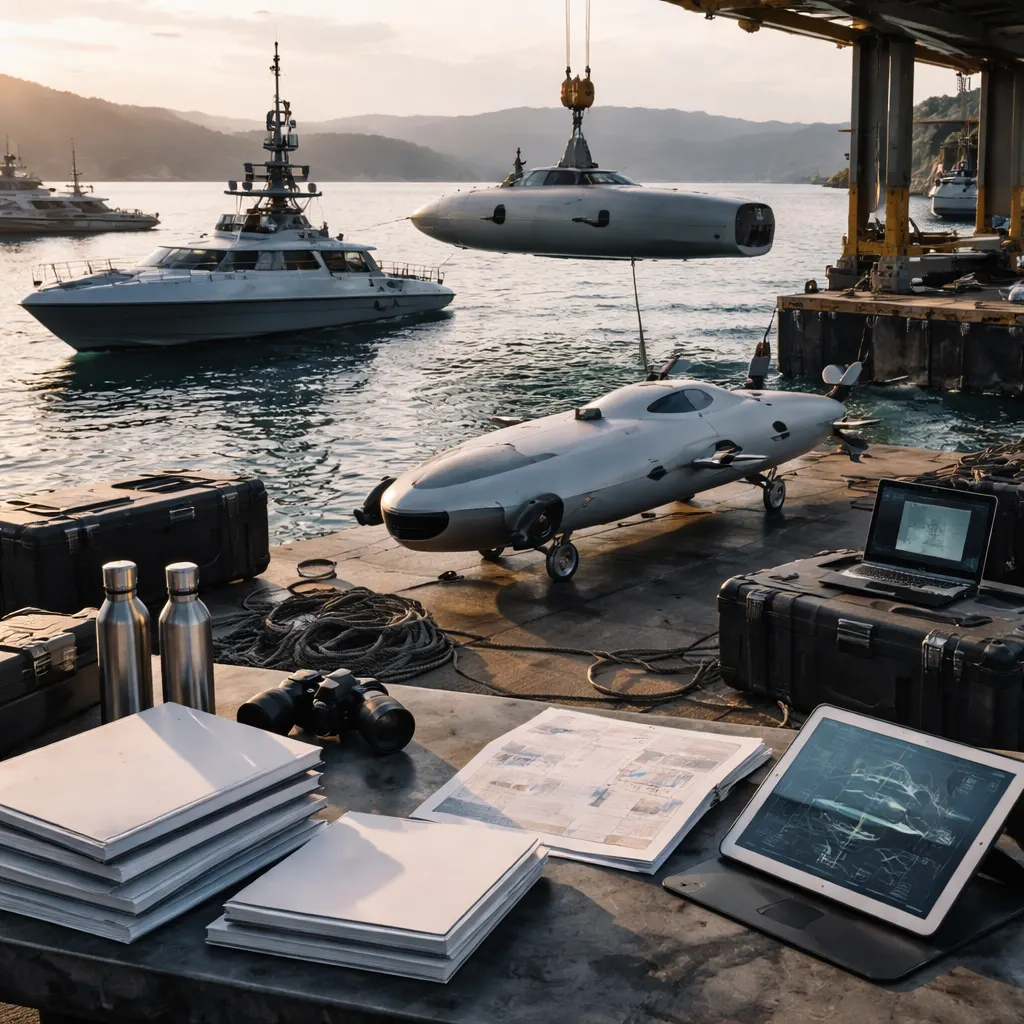
Venture capital firms have invested close to $3 billion into sizable funding rounds for marine-related startups over the past year, according to Crunchbase data published recently. The surge marks a sharp shift for a sector that historically captured only a small fraction of venture investment despite more than 70% of Earth's surface being covered by water. Key areas attracting capital include autonomous sea vessels, water robots, electric watercraft, and ocean data.
A single company dominates the fundraising landscape: Austin-based Saronic secured $1.75 billion in Series D funding in March, accounting for the majority of the past year's total, per the Crunchbase analysis. The round, led by Kleiner Perkins, valued the four-year-old autonomous sea vessel developer at $9.25 billion and positioned the U.S. Navy customer-focused startup for rapid expansion. China-based Seahi Robotics, a marine robotics technology developer, ranked a distant second with a $150 million Series A round in July backed by multiple venture investors. Rhode Island-based Regent placed third, raising $120 million in Series B equity funding in August for its Seagliders—vessels that operate just above water at aircraft speeds—plus an additional $120 million in debt financing. The round was led by maritime-focused investor Mare Liberum and AE Industrial Partners.
The report identifies several investors building substantial portfolios in the maritime space. Among generalist venture capital firms, Andreessen Horowitz has backed three companies on the sample list of 27 recently funded maritime startups: Saronic, electric-boat maker Arc Boats, and Ulysses Ecosystem Engineering, which develops small autonomous craft for undersea environments. In announcing its April Series A lead investment in Ulysses, the firm cited promoting U.S. naval supremacy as an investment theme, alongside reengineering technologies originally designed for land to function at sea. Founders Fund has also emerged as a repeat investor, backing three companies including Regent, battery electric cargo ship builder Fleetzero, and Panthalassa, which develops renewable energy systems in the ocean. Specialized firms with multiple maritime investments include Ocean Zero, focused on reducing emissions from boats and ships, and Mare Liberum, a Pentagon-backed marine investor.
Despite the sea representing relatively exotic territory for venture dealmaking, maritime funding aligns closely with broader investment trends, the report notes. Three sectors—autonomy, AI, and robotics—account for the vast majority of funding among the past year's recipients, mirroring core areas of strength for venture investments tied to land and space. A substantial portion of marine investment also carries defense tech applications, coinciding with the sharp overall rise in recent quarters in venture capital flowing to startups with military uses. The report questions whether investor enthusiasm will persist in what appears to be a capital-intensive sector to scale, but concludes that for now, marine-focused startups are successfully convincing backers they can achieve far more than simply staying afloat. The concentrated funding pattern—with one $1.75 billion mega-round dwarfing all others—suggests investors are betting heavily on a few proven players rather than spreading capital broadly across emerging competitors. Whether this winner-takes-most dynamic will hold or fragment as the sector matures could determine which maritime technologies ultimately reach commercial scale and reshape both defense capabilities and ocean-based commerce.