
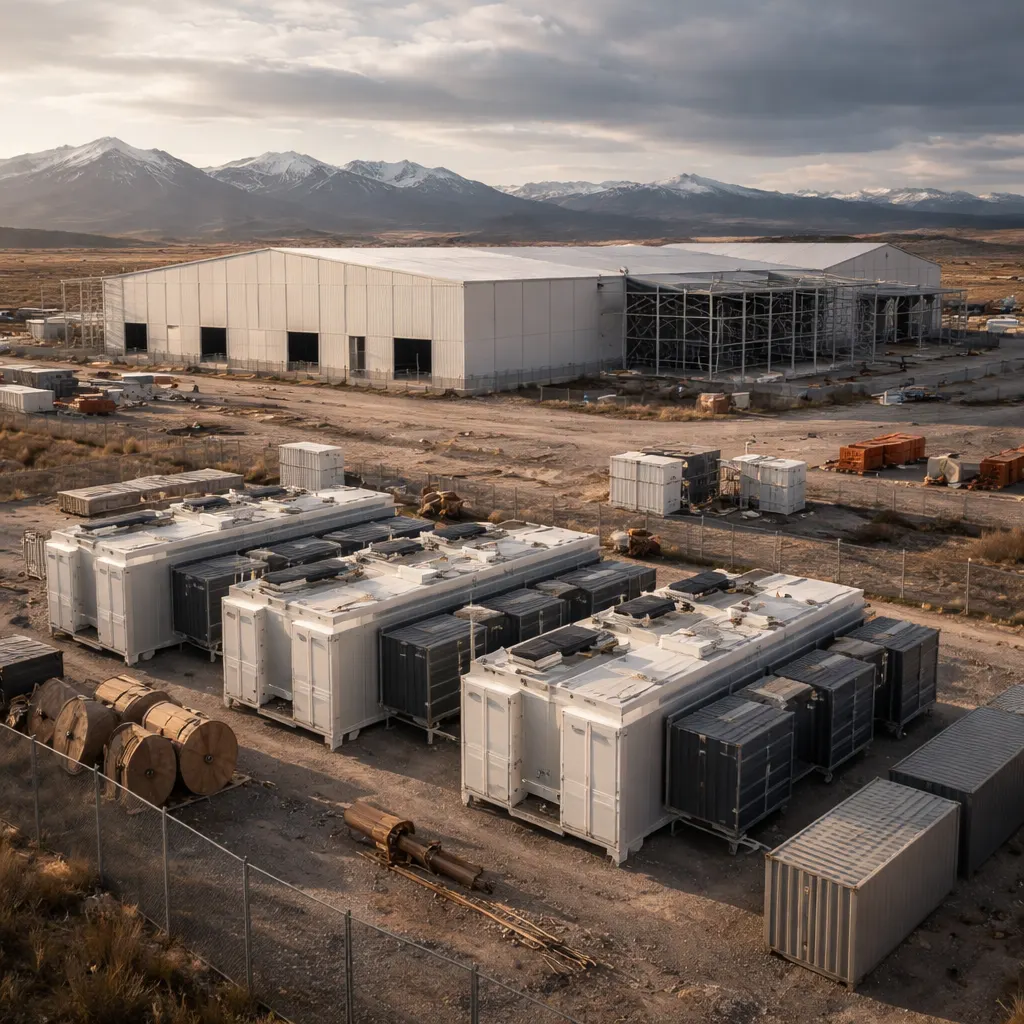
Denver-based data center developer Crusoe confirmed Friday it has sold an incomplete data center project in southeastern Wyoming to Google after the tech giant raised concerns about costs and construction timelines. The eight-year-old company, recently valued at $30.9 billion, had tried and failed to land Google as a customer for the facility before handing over the troubled development. Google is now investing $17 billion to complete the campus, though the company didn't disclose what it paid Crusoe for the unfinished project.
Crusoe originally announced the Wyoming facility last year alongside Blackstone-backed infrastructure firm Tallgrass, with plans to eventually expand capacity to 10 gigawatts. Despite the setback in Wyoming, which Bloomberg first reported in June, Crusoe secured a $3.9 billion funding round in September. The company generates revenue through three channels: leasing data center space to customers who supply their own GPUs, renting out its own GPUs, and selling compute power for running AI models. Google hasn't entirely severed its relationship with Crusoe—the developer is still building another data center for the tech giant near Amarillo, Texas.
The sale highlights challenges independent data center developers face when delivering massive projects on schedule and within budget, according to the report, given difficulties securing equipment and power. Local community opposition can add further complications to development efforts. Crusoe's client roster includes major AI players: its Abilene, Texas campus is being constructed in stages for Oracle and OpenAI, while a separate 900-megawatt campus next door serves Microsoft, with the first building expected to launch in mid-2027. Meta also uses Crusoe's services, and Bloomberg reported that trading firm Jane Street signed a five-year, $13 billion cloud agreement with the company.
The Wyoming deal underscores the gap between ambitious data center plans and execution realities, particularly as AI infrastructure demands surge. Crusoe, founded by current CEO Chase Lochmiller and Cully Cavness as a cryptocurrency-mining operation powered by otherwise-wasted natural gas, has evolved into a major infrastructure player. In September, the company added three board members during its latest funding round, including JB Straubel, the Redwood Materials founder and Tesla board member who invested in Crusoe in 2021 and later became the first customer of Straubel's energy-storage business. While Crusoe maintains substantial projects with tech heavyweights, the Google handoff signals that even well-funded developers can stumble when scaling to gigawatt-level capacity. Hyperscalers may increasingly opt to take direct control of large-scale builds rather than rely on third-party developers struggling with supply chains and community pushback. The shift could reshape how massive AI infrastructure gets financed and constructed over the next several years.