
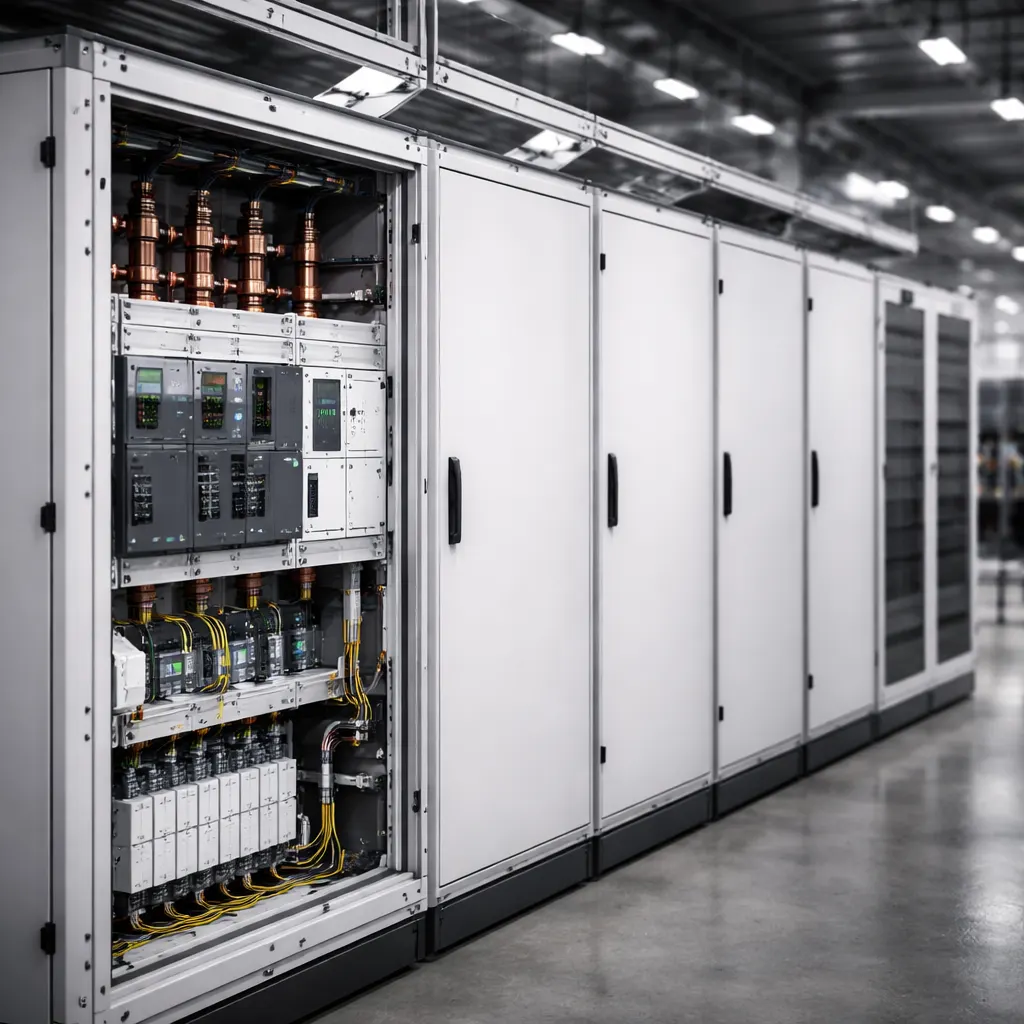
Schneider Electric is testing software-defined medium voltage switchgear with Equinix that could cut ordering and manufacturing time by up to two-thirds and reduce commissioning work by half compared to traditional systems. The energy infrastructure company revealed its software-defined architecture at the YOTTA 2026 digital infrastructure event in Las Vegas, where it promised faster datacenter builds and electrical systems that can gain new functions through over-the-air updates without hardware changes. The technology is already running in one Equinix colocation facility as part of a pilot program.
Traditional switchgear—which controls and protects electrical flow through a facility—is engineered to meet the specific demands of each site, a process that involves extensive testing before power-on and can create lengthy delays. Schneider's approach replaces this with standardized hardware modules that can be mass-produced and configured after they arrive at the datacenter. Protection, automation, metering, monitoring, and control functions are all handled through software rather than fixed hardware design. Medium voltage systems typically run between 1 kV and 36 kV, connecting high-voltage grid power to the low-voltage supplies that feed server racks. Some planned server farms are now approaching gigawatt-scale compute loads, which requires more extensive medium voltage distribution at 13.8 kV, 34.5 kV, or both, according to a Schneider white paper on the subject.
According to Schneider EVP of Energy Management Frédéric Godemel, "The challenge facing datacenter operators today is not just keeping pace with AI growth, but building the resilient, efficient and scalable power infrastructure needed for an increasingly digital world." The company argues that moving more functions into software will let operators standardize equipment across sites while adapting it as power needs evolve. Greg Metcalf, Equinix's senior director for Global Data Center Design and Innovation, said the technology could standardize how the company designs, procures, builds, and operates switchgear while maintaining safety, quality, and reliability.
The shift to software-controlled electrical systems raises questions about cybersecurity, update testing, and failure recovery that Schneider will need to address. A faulty or malicious update to safety-critical electrical equipment carries different consequences than a problematic desktop patch, meaning the company must show how updates are authenticated, tested, rolled back, and prevented from disrupting power distribution. Schneider claims over-the-air updates will add features and boost performance without physical modifications or operational downtime. A campus may also have on-site generation or energy storage facilities that increase the scale and complexity of medium voltage infrastructure, making the flexibility of software-defined systems more valuable.
Schneider plans to extend the architecture across its medium-voltage product portfolio, including its PremSet and AirSeT switchgear ranges. Pilot programs will run through 2027, with broader availability expected in 2028. The technology represents a shift from site-specific engineering to configurable standard modules that can be adapted as datacenter power demands change. If Schneider can prove the security and reliability of software-managed electrical systems, the approach could become standard across the industry. The real test will be whether operators trust software updates to manage critical power infrastructure without the safety net of hardware-based protections they've relied on for decades.