
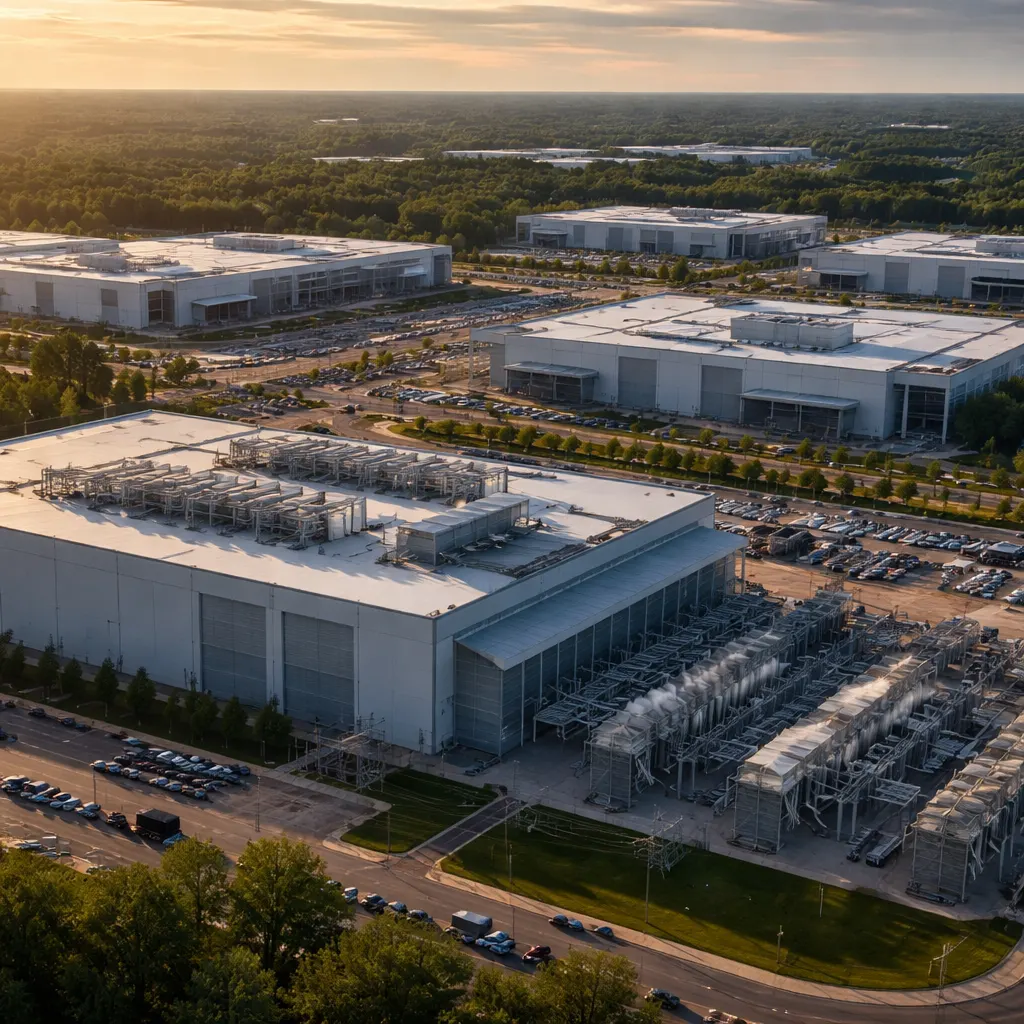
The United States now controls 15 of the world's 20 largest hyperscale datacenter markets, with Northern Virginia alone housing nearly 12 percent of worldwide capacity, according to new research from Synergy Research Group. The findings show American locations have strengthened their grip on the rankings as cloud infrastructure continues to expand globally. Hyperscale datacenters are massive facilities built to support the computing needs of major cloud and internet companies.
Since last year, the composition of the top 20 markets has shifted significantly, with Tokyo, Sydney, and South Carolina falling out of the rankings, replaced by Indiana, Tennessee, and China's Guangdong province. Of the five non-US markets remaining in the top 20, four are located in Asia-Pacific, while Europe holds just one spot: Dublin. Amazon, Microsoft, and Google maintain the widest datacenter footprints and collectively represent 57 percent of global hyperscale capacity, followed by Meta, Alibaba, Tencent, Oracle, Apple, ByteDance, and CoreWeave. Synergy's analysis examined infrastructure belonging to 21 hyperscale companies spanning cloud services, search, social media, ecommerce, and gaming. Texas has seen operational hyperscale capacity surge 71 percent over the past year, compared to 36 percent growth worldwide.
Synergy attributes US dominance to two primary drivers: 62 percent of the world's hyperscale operators maintain headquarters in the country, including the four biggest players, and the US generates almost half of cloud revenue across several critical segments. The nation also offers plentiful land for enormous campuses such as Meta's Hyperion project in Richland Parish, Louisiana, which is anticipated to hold up to 5 GW of infrastructure. According to Synergy chief analyst John Dinsdale, multiple factors shape where hyperscale infrastructure gets built, including closeness to customers, real estate and power availability and cost, networking infrastructure, local financial incentives, political stability, and exposure to natural disasters.
The report identifies changing priorities in site selection as AI-related demand accelerates. Dinsdale notes that power availability has become "an ever more critical criterion," along with the capacity to address or navigate local community resistance to large datacenter construction, and these considerations are significantly shaping where future infrastructure gets developed. The financial dynamics vary widely by location—Loudoun County in Northern Virginia houses roughly 250 datacenters and anticipates collecting about $1.3 billion next year from taxes on the equipment inside them, yet a report earlier this year found states were giving up billions in revenue through incentives to datacenter operators, with Virginia's concessions estimated to cost it $1.94 billion. Northern Virginia doesn't appear as prominently in new development plans as it once did, Dinsdale says.
Synergy is currently tracking another 915 hyperscale facilities at different stages of planning, development, or fit-out. The shift toward inland US locations reflects both the search for available power and the challenge of securing approvals in established markets. For enterprise leaders weighing infrastructure strategy, the concentration of capacity in a handful of regions creates both opportunity and dependency risk that extends well beyond technical considerations.