
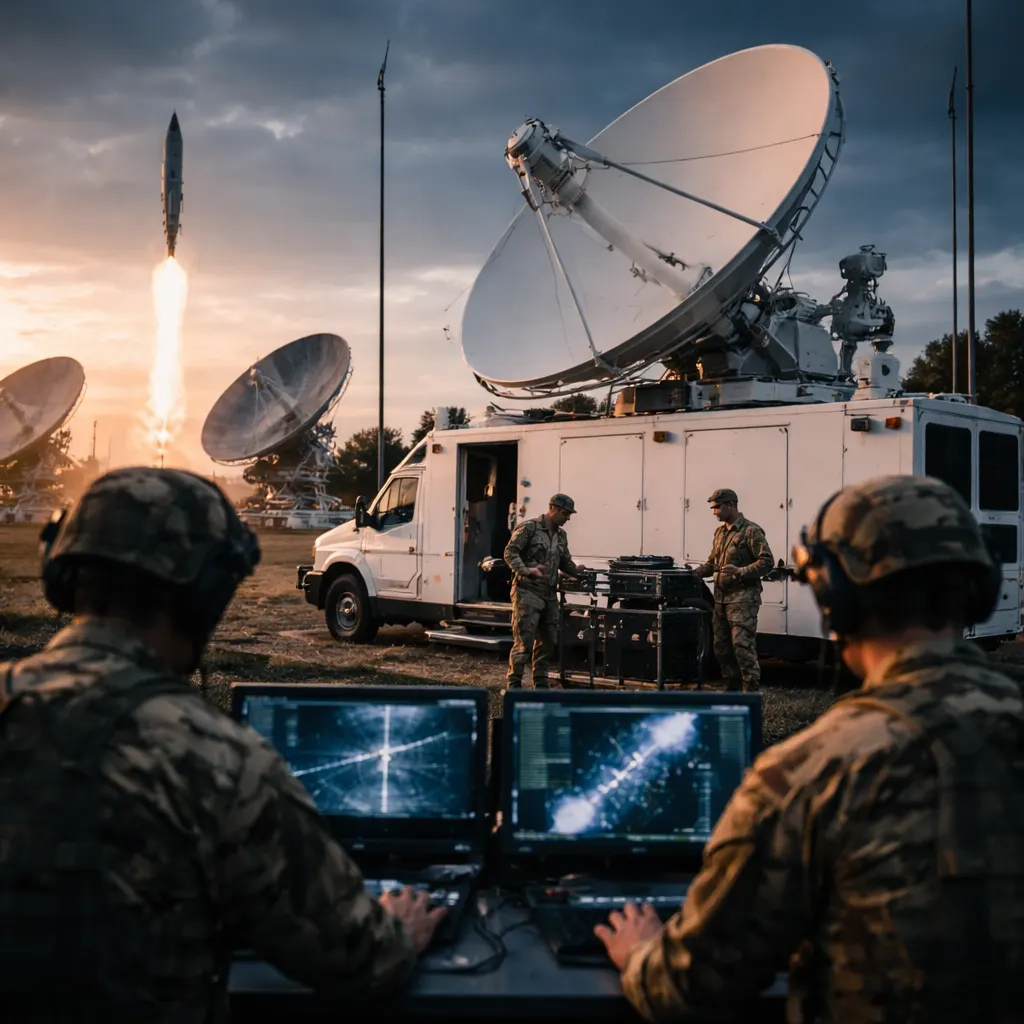
Britain's Royal Air Force has activated No. III Space Effects Squadron, a new unit designed to counter threats against the satellites the UK depends on for communications and navigation. Air Chief Marshal Sir Harvey Smyth revealed the squadron's creation at the inaugural UK Space Power Conference in London this week, according to a report from The Register. The unit will rely on electronic warfare and other advanced technology rather than destructive anti-satellite missiles to disable hostile actions in orbit.
The new squadron joins two existing RAF space units: No. I Space Operations Squadron and No. II Space Warning Squadron, which provide monitoring and threat detection capabilities. According to the Ministry of Defence, the latest unit differs by having the ability to act against threats, not just observe them. The squadron will use ground-based jamming systems and other electronic warfare tools to "disrupt, degrade and deny hostile actions," the government says, while the UK has formally ruled out destructive anti-satellite missile testing. The RAF's headquarters at High Wycombe transitioned to become Air and Space Command just weeks before the announcement, the report notes.
Smyth stated the squadron will safeguard the vital benefits that space gives Britain's armed forces and be capable of denying those benefits to adversaries. The MoD says the squadron will support both offensive and defensive space operations and will expand over time as new capabilities enter service, though a spokesperson told The Register that further details remain classified. The government emphasizes that satellites are critical for both national security and daily life, enabling intelligence gathering and missile warnings while also providing telecommunications and weather forecasts. Emergency services rely on satellite navigation for emergency responses, and energy networks use the same systems to organize power grids, making use of precise time coding to synchronize operations.
The squadron arrives as space-based infrastructure faces growing threats from adversaries testing various methods to disable satellites. Four countries have tested anti-satellite missiles: the United States, Russia, China, and India, with Russia destroying one of its own defunct orbiters in 2021, endangering the International Space Station. China has reportedly looked at employing lasers and high-power microwaves to disable orbital assets, while the US Space Force has claimed to observe Chinese satellites practicing "dogfight" manoeuvres in orbit. Last year, the MoD was working with the UK Space Agency on technology that can spot when lasers are being used to dazzle satellites and disrupt communications. In 2022, the United Nations passed a US-led resolution calling on countries to commit not to conduct anti-satellite missile tests, which the UK continues to support through the UN Committee on the Peaceful Uses of Outer Space. The squadron's reliance on non-destructive electronic countermeasures positions Britain to protect its space assets while avoiding the debris-generating destruction that has twice forced the ISS to manoeuvre for safety. For military planners and satellite operators alike, the shift toward jamming and electronic denial reflects a recognition that tomorrow's orbital conflicts will be won or lost through signals, not shrapnel.