
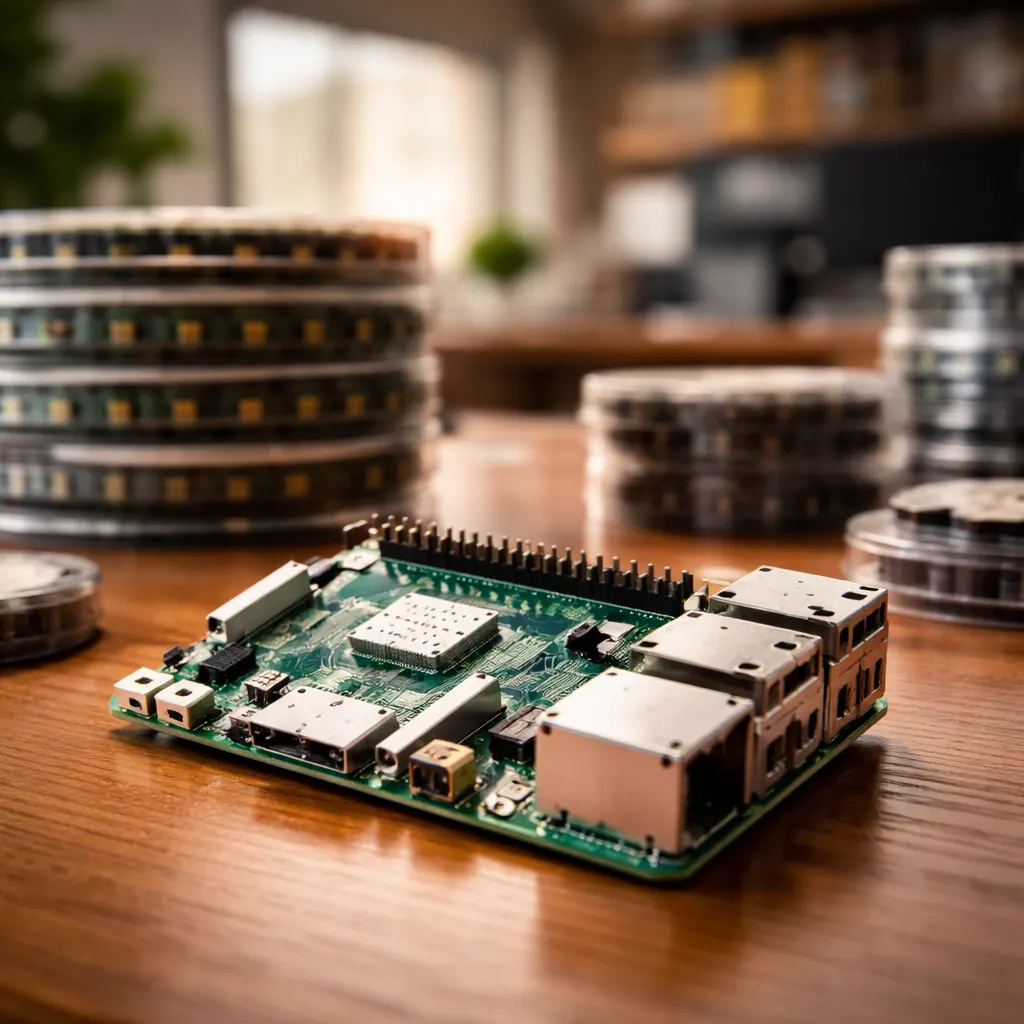
Raspberry Pi recorded its strongest first-half performance ever after stockpiling memory ahead of industry-wide shortages, according to a financial report published by The Register. The Cambridge-based company brought in $256.9 million in revenue for the six months ending June 30, compared to $135.5 million during the same period a year earlier. Pre-tax profit more than tripled to $19.6 million, driven by a bet the company made in 2025 to build up memory reserves before prices surged and supplies tightened.
The company delivered 4.2 million boards during the half-year period, a 17 percent increase from the previous year, while its order backlog doubled to reach 2.6 million units. Gross profit per board rose from $8.00 to $12.20, boosted by both price increases on Raspberry Pi products and the use of cheaper memory inventory purchased during 2025. Overall gross profit climbed 79 percent to $59.4 million. Direct sales of Raspberry Pi 4 and Pi 5 boards grew 69 percent and 47 percent respectively, with continued demand for the pricier 8GB variants. Direct shipments to customers increased 26 percent to 3.4 million units, with particularly strong demand coming from the smart home and aerospace and defense sectors.
CEO Eben Upton said the decision to build significant strategic memory inventory during fiscal year 2025 allowed the company to maintain product availability while smaller competitors struggled to secure allocation. The report notes that the "exceptional unit economics" observed during the first half have since moderated as the cheaper memory bought in 2025 has been consumed. The company hasn't stopped accumulating memory reserves, but it's now paying considerably more. The average cost of memory in inventory stood at $13.30 per gigabyte at the end of June, up from $3.60 per gigabyte at the end of 2025.
The memory crunch explains why Raspberry Pi's profitability spiked during the first half and why that advantage is now fading. By buying RAM before demand skyrocketed, the company spent the period burning through inventory acquired at much lower prices, which directly padded margins even as competitors faced allocation problems. At the end of June, Raspberry Pi held 2.4 million LPDDR4 devices representing 5.8 million gigabytes of memory, which grew to 8.3 million gigabytes by the end of August—roughly three months of sales for products using it. Between that stockpile and confirmed orders, the company says it has enough memory to meet production targets for the rest of 2026, with additional purchases planned to ensure it enters 2027 with significant inventory. The shortage hasn't left Raspberry Pi completely unaffected: Pi Zero sales fell 9 percent after production congestion at a Taiwanese company packaging a core component restricted supply, leaving about 1 million Pi Zero units sitting on back order.
Raspberry Pi expects to ship more units in the second half than the first, despite the ongoing squeeze on memory supplies. Customers appear willing to accept the higher prices forced by rising memory costs, and OEM customers are becoming an increasingly important part of the business. The report concludes that planning for the memory shortage has so far proven more lucrative than painful for Raspberry Pi, with buying RAM before widespread need turning out to be a useful move. The gamble on early stockpiling transformed what could have been a supply crisis into a competitive windfall, though sustaining that edge will require continued heavy spending on inventory at prices nearly four times what the company paid a year ago. Hardware makers that treat commodity procurement as a strategic timing game rather than a cost-management exercise may find themselves better positioned when the next supply shock arrives, though few can afford to tie up capital in speculative inventory without the balance sheet and forecasting confidence Raspberry Pi demonstrated.