
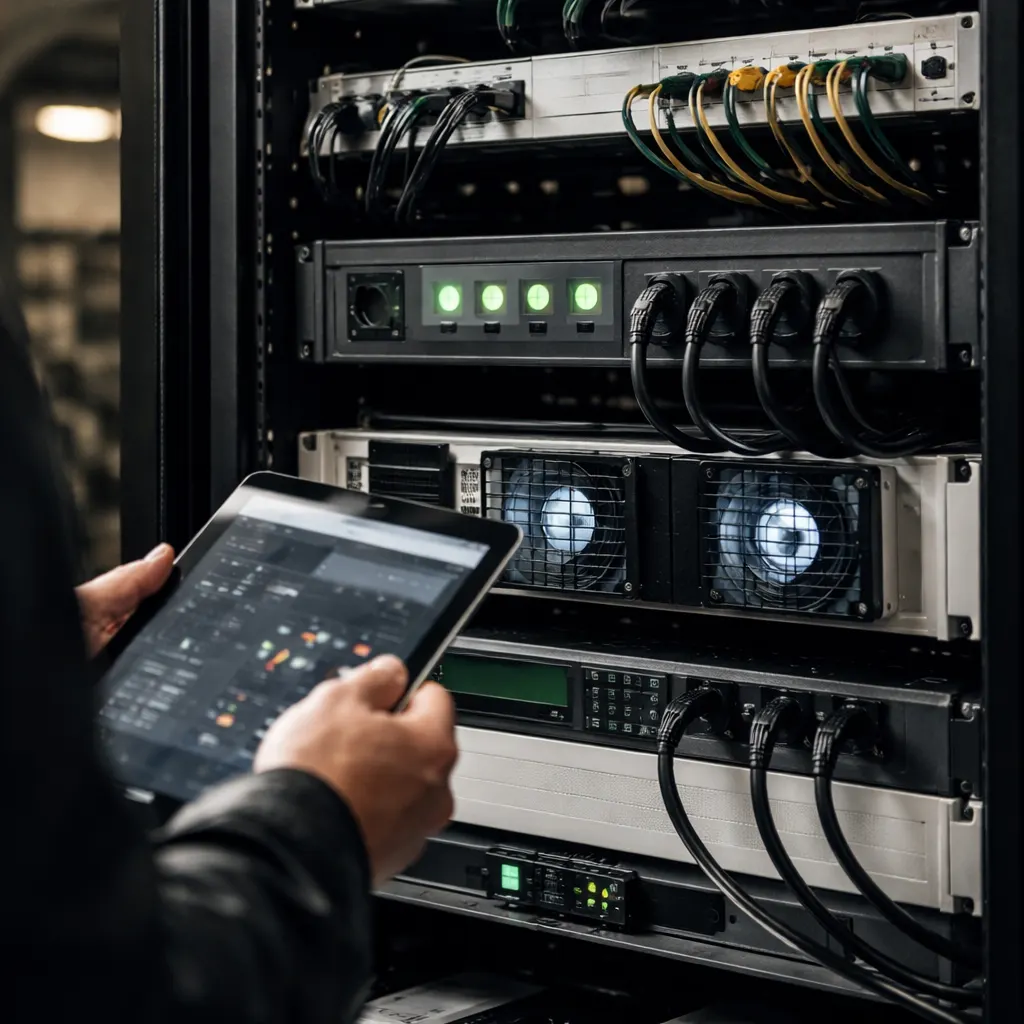
BCN has launched BCN RPM (Remote Power Monitoring, Management, and Cycling), a managed service that constantly tracks network connectivity and can automatically restart routers, modems, and other infrastructure when preset conditions signal a failure. According to the company, the service addresses a gap that persists even when organizations invest in redundant connectivity and SD-WAN technology. The platform is designed to eliminate costly truck rolls and reduce reliance on nontechnical staff for equipment troubleshooting at distributed locations.
The service allows remote or automatic rebooting of routers, modems, firewalls, switches, and access points, while supporting scheduled maintenance and independent control of multiple devices. BCN is framing RPM as an extension of connectivity service rather than standalone technology, positioning it as a feature that activates alongside every broadband service sold. The company supports customers across retail, restaurant, industrial, and other sectors, using that experience to recommend configurations tailored to individual operating requirements. Engineers and partners must determine when automation should occur based on how each customer's business operates—for example, delaying equipment restarts until a retail location closes to avoid interfering with point-of-sale operations during business hours.
BCN Chief Product Officer Chris Alberding told Channel Insider that even when organizations purchase a primary circuit, backup circuit, and SD-WAN management, "there's still a common point of failure in there, and that's the end device." He highlighted the challenge facing retailers and similar businesses with many distributed locations: when a cable modem or other device needs restarting, companies must either ask a nontechnical employee to troubleshoot or send an IT professional to the site. "The last thing you want is your cashier employee going back into the phone closet and unplugging something and hoping they unplug the right thing," Alberding said. He emphasized that managed remote power isn't simply about providing customers a button to restart equipment but requires understanding each customer's business model to put the best practice in place.
The launch gives BCN and its partners another way to position connectivity discussions around business outcomes rather than network specifications, according to Alberding. He said organizations should evaluate what thirty or forty-five minutes without connectivity means in terms of lost productivity, troubleshooting time, and potential service costs. BCN RPM joins the company's broader portfolio of managed connectivity, SD-WAN, cybersecurity, cloud communications, Network-as-a-Service, and global connectivity offerings. For partners, the service creates another opportunity to position connectivity around higher uptime, lower operational costs, and less hands-on intervention rather than simply the underlying circuit or equipment. The customization built into the managed service reflects BCN's focus on adapting automation to each customer's operational rhythms, ensuring that recovery processes don't create new problems while solving connectivity failures. Organizations with sprawling physical footprints now face a choice between accepting the operational drag of dispatching technicians or empowering non-specialists to handle critical infrastructure—neither of which scales efficiently as location counts grow.