
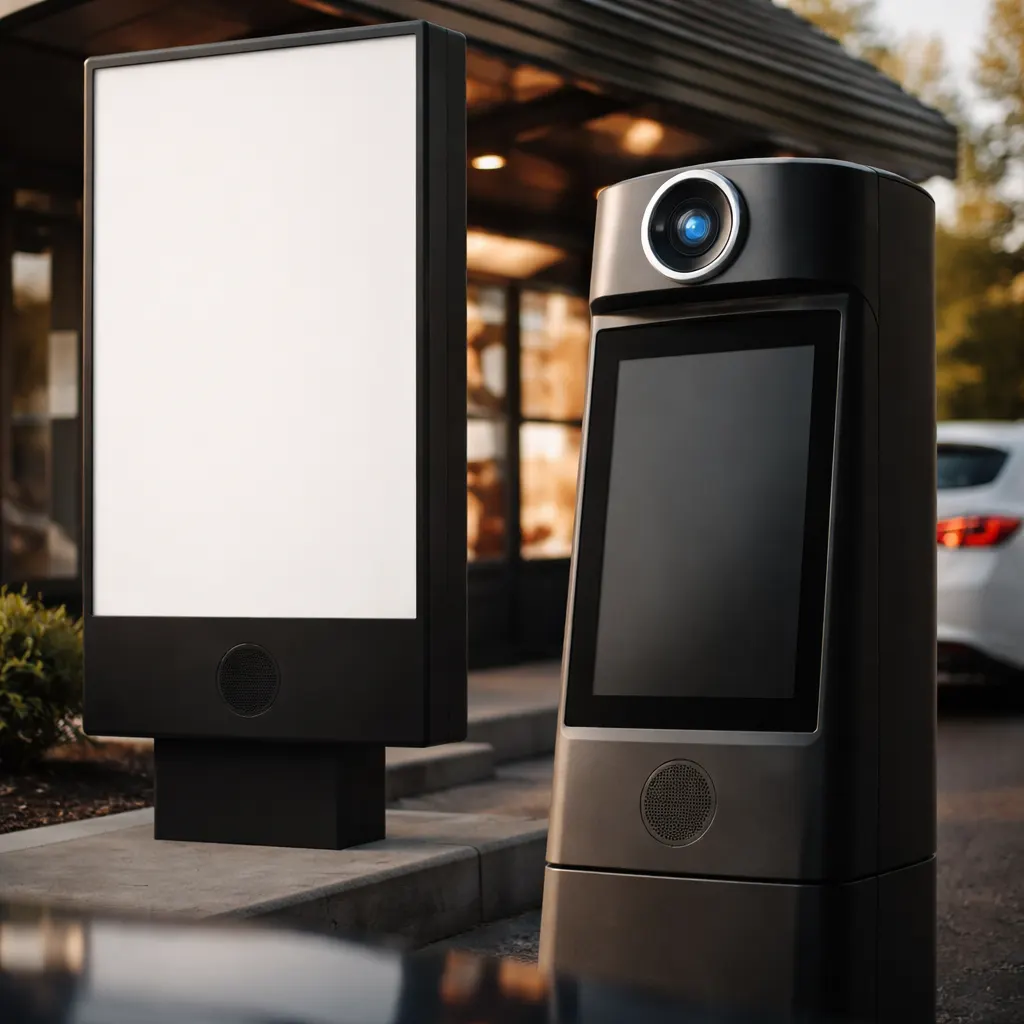
Six percent of fast-food locations in the United States now use voice AI technology in the drive-thru lane, according to early research reported by WIRED. That's up from 5 percent last year and 4 percent in 2024, based on Intouch Insight's annual Drive Thru Survey. The shift marks a quiet but accelerating transformation in how millions of Americans order their meals, as automated voices replace human headset workers at chains across the country.
The adoption varies widely by chain. Taco Bell announced in July that it deployed AI at 890 drive-thru lanes, representing more than 10 percent of the chain's US locations. Dairy Queen is implementing the technology in 25 states, with plans to eventually roll it out to all restaurants. Twelve percent of White Castle locations use an AI named "Julia" in their drive-thrus, and all new locations now open with Julia taking orders. Meanwhile, chains known for customer service excellence—including Chick-fil-A, Dutch Bros, and 7Brew—have avoided the technology entirely. McDonald's initially abandoned its AI drive-thru efforts after selling McD Tech Labs to IBM and pulling the plug on the tech, but announced this summer it was testing AI-powered ordering again, this time partnering with Google at five US locations with a system that takes orders in English and Spanish.
The report reveals that AI drive-thru agents use "suggestive selling"—upselling—71 percent of the time, compared to an industry average of 58 percent among human workers. However, Intouch Insight found that AI drive-thrus tended to be less friendly than humans, with lower order accuracy. Customer satisfaction with the technology reached 97 percent, according to Intouch Insight. On average, AI drive-thrus beat the industry by 21 seconds in service speed. Most chains solve accuracy problems by having a human employee on a headset ready to intervene when the AI struggles with certain accents and dialects.
The technology's appeal to fast-food chains extends beyond speed and upselling. According to the report, AI represents "the dream at the very core of fast food: making the process of obtaining sustenance faster and faster, while cutting costs further and further." White Castle's chief marketing officer Jamie Richardson says AI drive-thrus make employee shifts run smoother and speed up service, while Taco Bell reported that locations using voice AI have higher employee retention rates. White Castle's employment numbers have remained steady throughout the AI rollout, and executives claim the technology isn't stealing jobs—data so far appears to support that assertion, since most people working the drive-thru are multitasking across multiple roles that remain difficult to automate. Sarah Beckett, vice president of sales and marketing at Intouch Insight, notes that "the brands who have invested and who have been testing this heavily over the last three years—the technology has gotten to a point where they are ready to go."
Looking ahead, AI-equipped drive-thrus may soon take orders in dozens of languages, recognize customers the moment their car pulls up, and offer suggestions based on encyclopedic knowledge of each customer's ordering history—potentially down to calculating that a customer is 78 percent more likely to order dessert on the second Tuesday of every month. The technology represents a fundamental shift in fast-food service, with chains preparing to "start scaling this massively," according to Beckett. But the human element remains a sticking point for some customers and chains alike. As 7Brew's chief marketing officer Nick Chavez explains, "For us, hospitality starts with genuine human connection, and that's something our guests consistently tell us they value."