
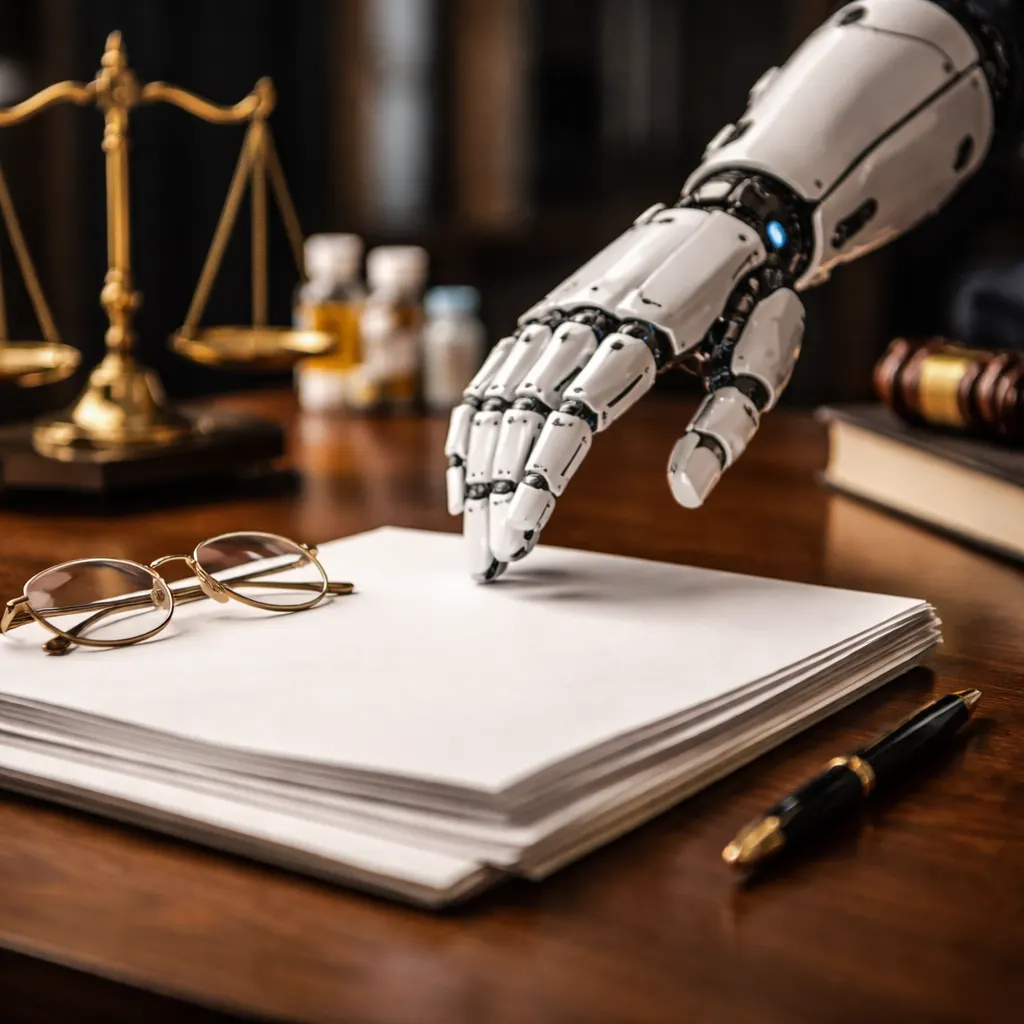
When biotech firm Insilico Medicine used computer models to design a promising treatment for pulmonary fibrosis, the company publicly declared the molecule had been "discovered by" its generative AI platform. But when filing for patent protection on that chemical structure, the company listed five humans—including CEO Alex Zhavoronkov—as the drug's "inventors," with no reference to AI. This gap highlights a crucial wrinkle in intellectual-property law: regardless of how central AI is to a discovery, only humans can be credited as inventors when securing patent rights, according to an August 2026 article in MIT Technology Review's The Checkup newsletter.
The legal precedent came from a test case brought by Ryan Abbott, a partner at LA law firm Brown, Neri, Smith & Khan, who argued that an AI system called DABUS should be named inventor of an improved food container with geometric surfaces that enable efficient heat transfer and stacking. In 2022, a Washington, DC appeals court rejected the claim, ruling that US statutes define an inventor as an "individual," which plainly means a human being. Since machines aren't people, they can't be inventors, the court concluded. The US Patent and Trademark Office initially published guidance under the Biden administration to help applicants determine when humans truly qualify as co-inventors of AI discoveries, but reversed course after Trump took office, now stating AI is simply a tool like a calculator that doesn't require mention.
"There needs to be a human inventor or there's no invention and no patent," says Sarah Korman, chief business officer and legal officer at Alphabet spinout Isomorphic Labs, according to remarks made at MIT Technology Review's EmTech event. Korman added there's "no doubt" laws will need to evolve to keep pace with AI. Abbott warns one method to invalidate a patent is proving it lists incorrect inventors, potentially creating legal challenges for AI-generated drugs. At Insilico, Zhavoronkov notes human chemists still synthesize the drugs, create variants, and test them on animals—"that's the person who is going to be named on the patent," he says, adding that even with full roboticization, someone will still push the button and allocate the budget.
Abbott worries that excluding AI-generated outputs from protection could dampen future drug development, particularly as the US Copyright Office already refuses copyrights for AI-generated images and text, raising concerns from organizations like the Motion Picture Association of America. The constitutional purpose of intellectual-property law is to encourage innovation by granting inventors and authors exclusive rights for limited periods "to promote the Progress of Science and the Useful Arts," Abbott notes. Pioneering AI drug companies are keeping humans involved and documenting everything carefully for now, but the central question remains unresolved: should pushing a button qualify as being an inventor? Abbott suggests this will be settled in future legal cases, asking, "What if I asked Claude to cure cancer, and it did? I think it would be inappropriate to claim that I invented that." The challenge for regulators and courts will be balancing innovation incentives with intellectual honesty about who—or what—truly creates the next generation of medicines. As computational tools grow more autonomous, the fiction that every discovery traces back to human ingenuity may become harder to sustain, forcing a choice between legal tradition and technological reality.