
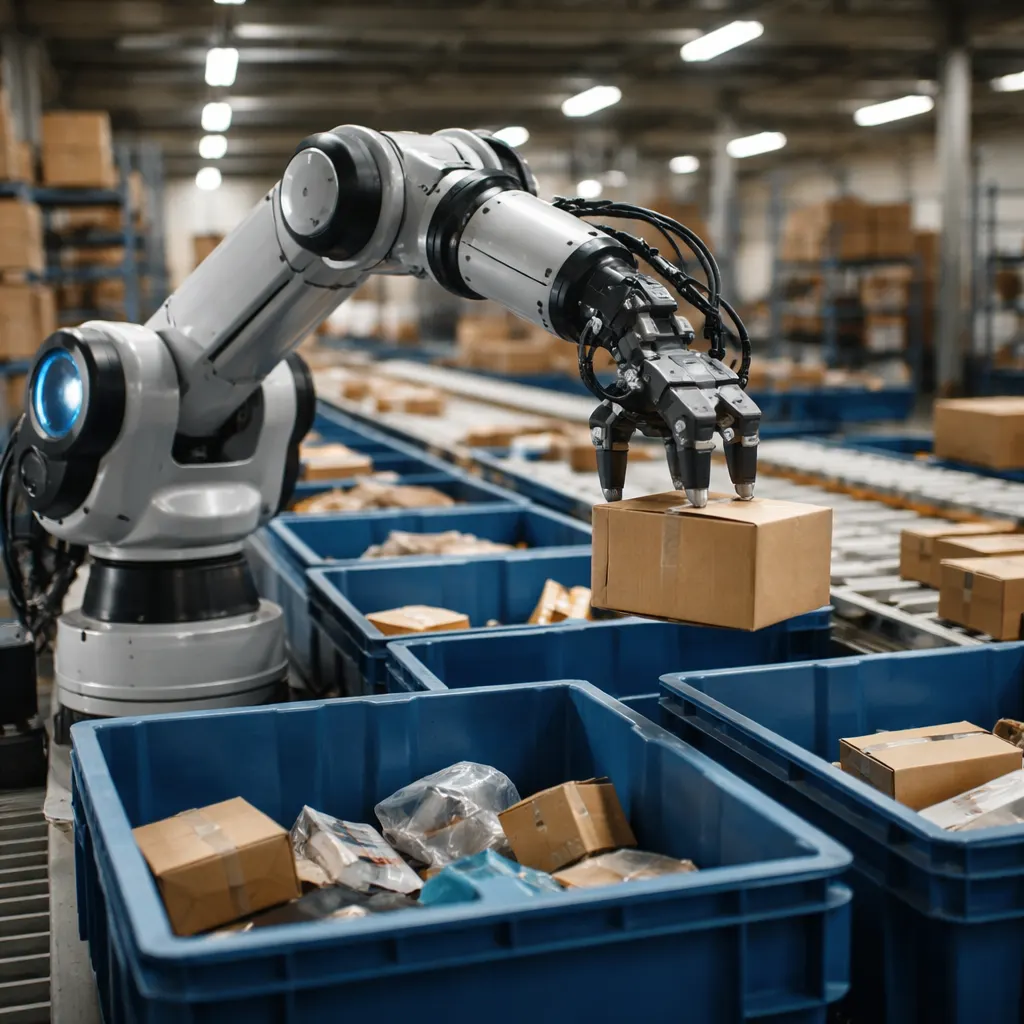
A robotic system built by Eka Robotics can grasp roughly 1,500 items weighing up to one kilogram each hour, compared to around 600 for a human worker, according to a TechCrunch report published October 20. The startup, founded by MIT professor Pulkit Agrawal and former Google DeepMind researcher Tuomas Haarnoja, just raised $150 million in Series A funding that values the company at $1.45 billion post-money, with a16z and F-Prime leading the round. The system combines a force-sensitive gripper with a deep-learning model that reliably picks up objects more than 95% of the time, prompting veteran roboticists to describe the demonstration as having a "wow factor" compared to recent competitors.
The robot's manipulation architecture rests on what Eka calls a vision-force-action model, which trains the system to understand relationships between language, force inputs, and actions rather than the vision-language-action approach most rivals use. Eka designed a proprietary robotic hand that's more flexible than traditional grippers and includes additional force sensors that react to contact, preventing the system from crushing delicate items like raspberries. The arm moves quickly enough and with sufficient strength that it could damage itself during operation, indicating high confidence in the underlying algorithm. The company generates thousands of hours of simulated robot experience in minutes using a physics simulator to model the multiple forces encountered during grasping, then feeds that data into a reinforcement learning environment that can run at scale.
According to Eka co-founder Agrawal, "vision is not the primary way in which you close this last millimeter problem" because while vision provides rough location and pose information, "the actual grabbing, the actual searching is happening through forces." University of Illinois Urbana-Champaign professor Kris Hauser noted the robot "was able to adapt to a large number of different objects without retraining" and displayed a quality of "humanness, creepy humanness that it would try over and over again if it failed the first time." Raghu Raghuram, the a16z general partner who co-led the funding round, told TechCrurch that Eka's robots "are already exceeding superhuman performance for certain tasks," with expectations for superhuman performance across many dexterous manipulation tasks within months.
The force-centric approach addresses what critics like Rodney Brooks argue is a fundamental flaw in current generative AI robotics models, which fail without representing force and touch. Rather than relying on videos collected by gig workers or robot operators performing tasks over many hours, Eka's method uses simulation to achieve reliable manipulation at scale, a feat that has historically proven more difficult for tasks requiring object interaction rather than avoidance. The model bridges what Agrawal calls "the generality-performance gap" that plagues modern robotics, where the most generalizable physical AI models capable of attempting diverse tasks aren't particularly good at them, while highly capable single-task models don't close the business case. Eka's promise is handling the physicality while more general models like ChatGPT's Astra make high-level decisions about problem-solving, such as knowing plates belong in cupboards while Eka's system picks up dishes without breaking them.
The company faces two major hurdles before proving field viability. Eka is currently running secretive pilots with industrial customers on pick-and-place and wire manipulation tasks, but Hauser notes the leap from lab to production line requires systems that "run without breaking for an entire year" when working with integrators on real assembly lines. The gripper hardware, which costs less than $1,000, is currently rated for five million duty cycles, but Agrawal says the goal is reaching the 20 million cycle standard set by industrial arms. The company is taking what Agrawal calls a "very pragmatic" approach, focusing on two verticals in pick, arrange, place, and wire handling to "make them be home runs" before expanding, with the belief that "once we have made home runs on them, the sky is the limit." The force-sensing breakthrough suggests that robotics progress may hinge less on feeding more video data into vision models and more on teaching machines to feel their way through tasks the way humans do. If Eka's approach scales beyond controlled environments, the company's bet on simulation over demonstration could reshape how the industry trains robots for physical work.