
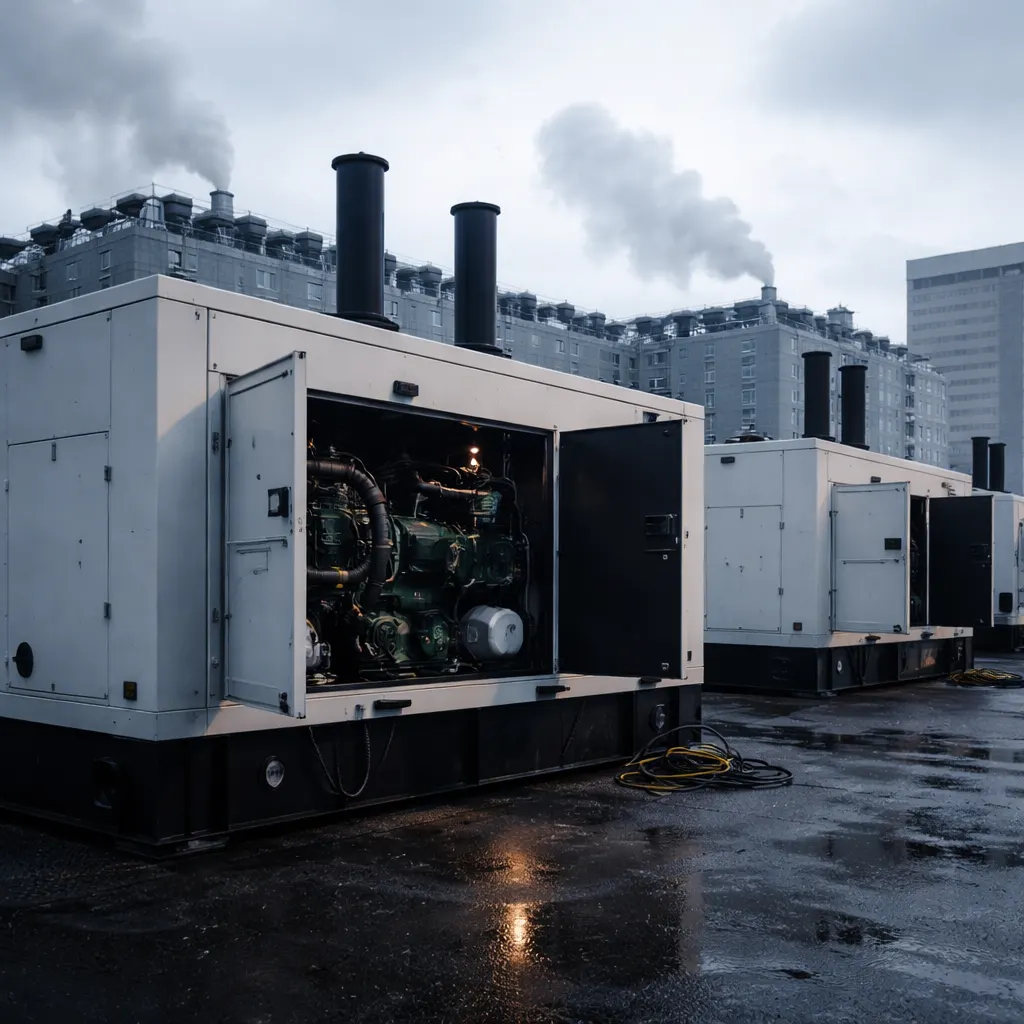
A misconfiguration in Google Cloud's backup power systems prevented emergency generators from starting during an October 20 outage that disrupted services for major customers including Lloyds, HSBC, Royal Mail, and Revolut. Google revealed the cause in a November 4 update to its service status page, explaining that a programming error in the facility's control logic left the London availability zone without power when its connection to the electrical grid failed. The incident exposed weaknesses in the data center's resilience at a moment when scheduled maintenance had already reduced its backup capacity.
The europe-west-2-b facility operates on a 2N utility power architecture, meaning it maintains completely duplicate power paths for every critical load, supported by a central high-voltage generator bank managed through a dual-redundant Programmable Logic Controller. The site draws electricity from two independent utility feeders designated A and B, plus a standby utility connection that can be manually activated during maintenance or emergencies. On October 20, an external underground cable carrying power from the supplier failed, cutting off primary feeder A. Feeder B was already offline — its circuit breaker had been physically opened on October 14 to allow corrective repairs following problems discovered during a quarterly generator load test. With feeder A now supporting the facility's total critical load and feeder B's breaker remaining open for ongoing repairs, the site depended entirely on its backup systems when the cable failure occurred.
Google's uninterruptible power supplies activated as designed, providing five minutes of bridge power to keep the availability zone running while generators should have taken over the critical load. But a voltage-sensing design flaw and PLC misconfiguration blocked the facility's generator plant from receiving an automatic start signal, according to the status update. The PLC logic registered that a healthy utility source remained available even though both the primary and secondary distribution feeds had lost power, so it never issued a start command to the generators. Once the UPS batteries drained after five minutes, the data center went dark.
The root problem lay in how the PLCs were programmed to interpret the electrical conditions they encountered that day. Google determined its control systems weren't configured to handle the scenario where both utility feeds lost power simultaneously while one circuit breaker remained physically open for maintenance work. After restoring the connection to its power utility, the company reprogrammed the PLC to prevent a repeat of the same error. Google has since implemented multiple changes to the electrical setup at europe-west-2-b and reports that it tested all modifications to verify they function correctly. The company has assigned itself two action items: a communications enhancement to speed up notification through an automated alert-to-communication mechanism for location-impacting incidents, and an expansion of platform-wide testing outcomes for infrastructure-level events. Once those improvements are complete, Google says it will be better positioned to handle outages and advise customers about troubles more quickly. The scale of disruption to household-name financial institutions and public services underscores how deeply enterprise operations now depend on cloud availability promises that assume multiple layers of physical redundancy will never fail in tandem. When maintenance windows intersect with rare hardware failures, even the most sophisticated data center operators face difficult questions about whether their backup-to-backup systems have truly been stress-tested against every plausible combination of simultaneous breakdowns.