
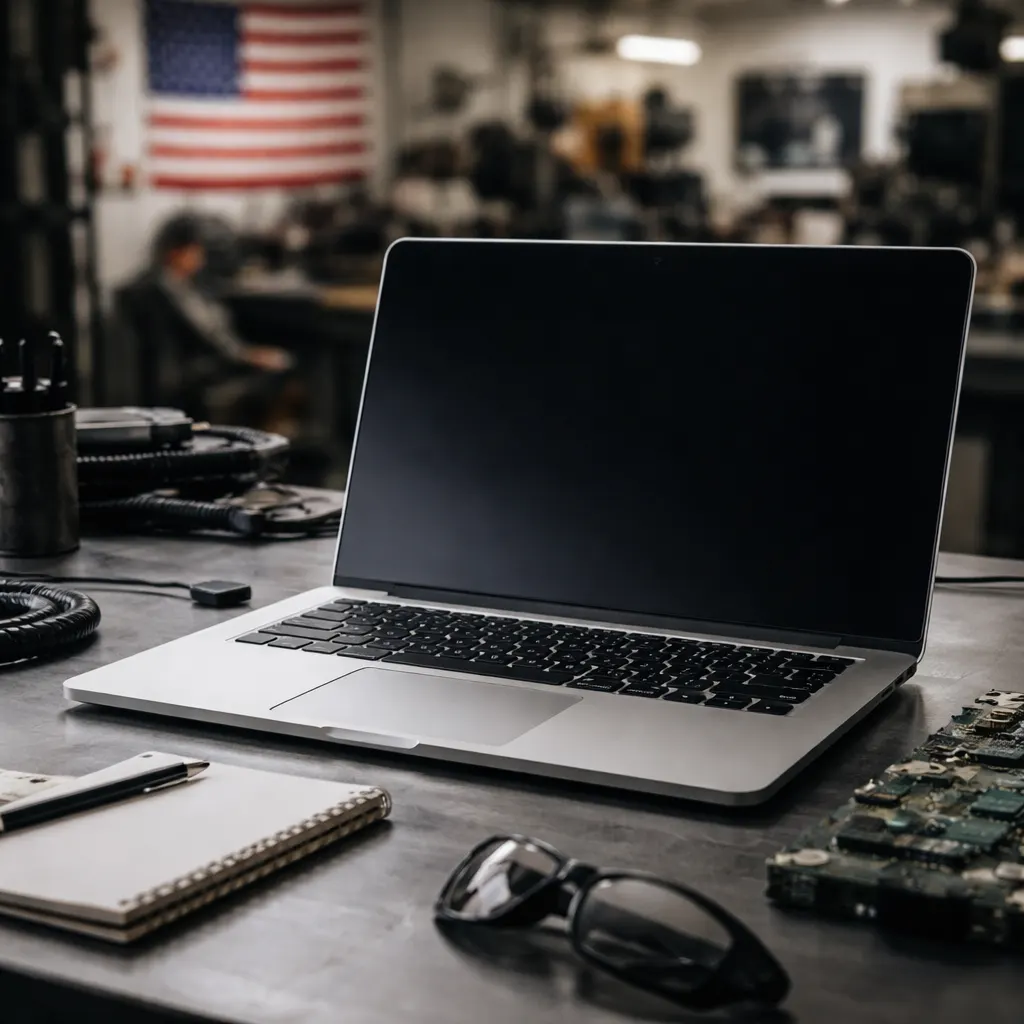
Defense contractor Anduril and chipmaker Qualcomm announced plans to build laptops entirely in the United States, starting with a single model in 2027, according to a report published Tuesday by The Verge. The companies also declared a long-term aim to push the computer industry toward creating a fully domestic supply chain. No major US computer company currently manufactures its laptops domestically, including Apple, Dell, HP, or Microsoft, making even a single American-made laptop a notable departure from industry norms.
When Anduril founder Palmer Luckey spoke with reporters on Monday, he was asked what percentage of components in the BlueChip laptop would be made in the US when it launches in 2027, and his answer was "TBD." The prototype currently sits at approximately 32 percent US-origin content by component procurement cost, with more than 90 percent sourced from the United States and allied countries combined, an Anduril spokesperson told The Verge on Tuesday. When asked specifically about hitting the 65 percent threshold required by the Buy American Act, the company initially said the final domestic-content percentage remained unsettled and declined to confirm whether it would meet that standard. Over two days, that position changed. Anduril communications VP Shannon Prior now says the laptop will have at least 65 percent of its components made in the US by launch, marking the first time the company has committed to meeting the federal purchasing standard.
Luckey told journalists that Anduril wants to make every part of a computer domestically and has already charted a path forward. "We have a technical roadmap to get to 100 percent domestic over time," he said on the Monday call. He also argued that his laptop would comply with military and government agency requirements, claiming it would meet or exceed the Buy American Act standard. "We are not just barely meeting the bar for Made in America," Luckey said. "We are going hard to make this an all-American play, and not even the Buy American Act requires what we're trying." The Buy American Act, dating to 1933 but updated during the Biden Administration, requires at least 65 percent of a product's component costs to be domestically sourced for federal agencies to purchase it without a waiver, a threshold that rises to 75 percent in 2029.
The shift from uncertainty to commitment matters because many federal products must meet these standards or agencies cannot buy them without waivers, which Luckey himself said agencies currently use en masse. The report notes that companies have previously assembled computers in the US seemingly to appease President Donald Trump, promised US jobs only to deliver empty buildings, or even lied about domestic production. That history explains why The Verge pressed Anduril on specifics rather than accepting broad manufacturing promises. Luckey outlined several domestic sourcing plans on the call, including a US glassmaker for cover glass, programming FPGAs to replace power management chips normally sourced from China, and developing American-made batteries. The enclosure is designed for US machining and will use metals that American industry can produce and machine at scale. Qualcomm CEO Cristiano Amon confirmed the laptop's Snapdragon processor will be manufactured at TSMC's Arizona facility.
The 65 percent commitment means government agencies shouldn't need to wait for Anduril to achieve its full 100 percent domestic goals to purchase a laptop meeting the Buy American standard, assuming everything proceeds as planned. If successful, Anduril's first laptop in 2027 should qualify for federal procurement without requiring the waivers that currently dominate government computer purchases. The company's latest statement confirms that meeting the 65 percent threshold is "a fundamental objective of the program," with the precise percentage still being determined as suppliers are finalized and prototypes advance. The reversal from "can't confirm" to formal commitment suggests either internal clarification or external pressure forced a more definitive public stance. Whether political rhetoric around domestic manufacturing translates into durable supply chain investment remains the question every such announcement must ultimately answer.