
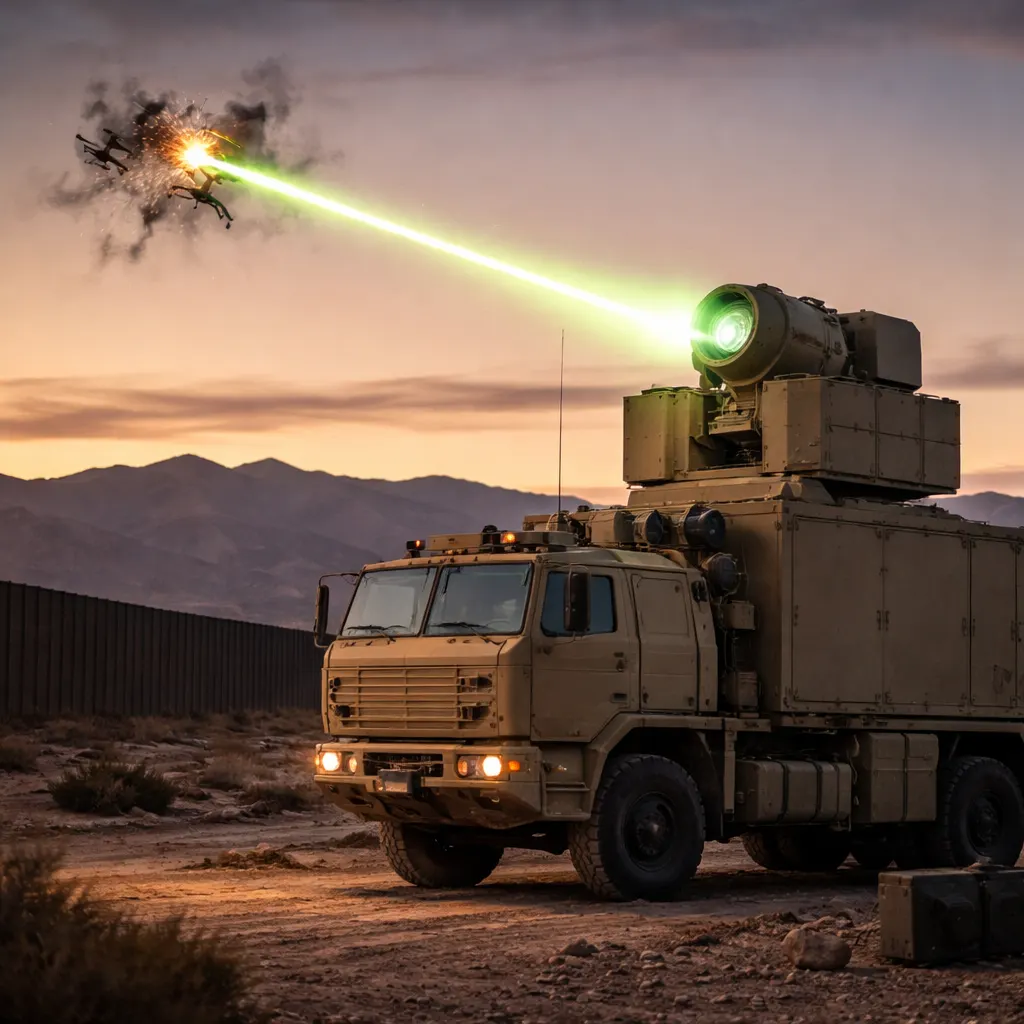
The US Army used a high-energy laser weapon to shoot down three drones near the US-Mexico border this week, marking a significant deployment of directed-energy technology in border security operations. The operation, which took place between the night of August 25 and the early morning of August 26 in the vicinity of the Rio Grande Valley in Texas, was led by the Joint Task Force Southern Border (JTF-SB), which operates under US Northern Command. Official reports said the drones were "posing a physical threat to US military personnel and CBP partners," referring to Customs and Border Patrol.
The military relied on technology derived from the Army's High-Energy Multipurpose Laser (AMP-HEL) system, a program focused on implementing high-energy lasers for new defense capabilities. The initiative began in September 2025, when AeroVironment, a defense technology company, delivered the first two functional prototypes of these laser-based weapons to the US Armed Forces. Two additional, improved systems were delivered in December of the same year as the program expanded. The manufacturer calls this particular platform the Locust Laser Weapon System, which is designed to be mounted on military vehicles. Operating at 20 kilowatts, the Locust system relies on an extremely concentrated beam of light that, in various phases, allows for the detection, tracking, illumination, damaging, or destruction of targets at a distance.
The exact location of the operation remains unknown, and there's no concrete information about the origin of the neutralized drones or the entities responsible for their operation. However, Curtis Taylor, commander of JTF-SB, suggested the aircraft could be linked to criminal cells involved in drug trafficking and operations in Mexican territory. "Cartel networks are increasingly employing unmanned aircraft systems to facilitate illicit human smuggling and actively spy on our personnel and law enforcement partners," the major general stated in a press release. He added that "by integrating layered countermeasures alongside advanced directed-energy capabilities like this laser system, we have made it clear that we will not tolerate hostile surveillance."
The technology works by using sensors, cameras, radars, or other means to locate an object. Once identified, the system focuses the light beam on the target with great precision, even when it's moving. It then uses an additional electrical energy charge to increase the beam's power and convert it into heat, which ultimately damages or disables the drone. The exact outcomes depend on factors such as distance, exposure time, and the target's characteristics. Locust's most recent versions—such as the one delivered to the military last December—include radar and command-and-control systems, making it easier to integrate the weapon into a more complex mobile defense platform rather than using it as a stand-alone device.
The official statement doesn't specify the exact models from the AMP-HEL program that were used in the operation. However, the international press has linked the action to the campaign against illegal immigration and drug cartels that President Donald Trump has been waging since he began his second term. During his election campaign, Trump promised to combat both issues by implementing drastic measures, especially along the US-Mexico border, and his administration has deployed a wide variety of technologies, with HEL systems being just part of the growing toolkit. The deployment signals a willingness to field experimental weapons in active security scenarios where traditional countermeasures may fall short. Whether laser systems become standard border infrastructure or remain niche tools will depend on how commanders weigh cost, reliability, and the evolving tactics of adversaries who adapt faster than procurement cycles typically allow.