
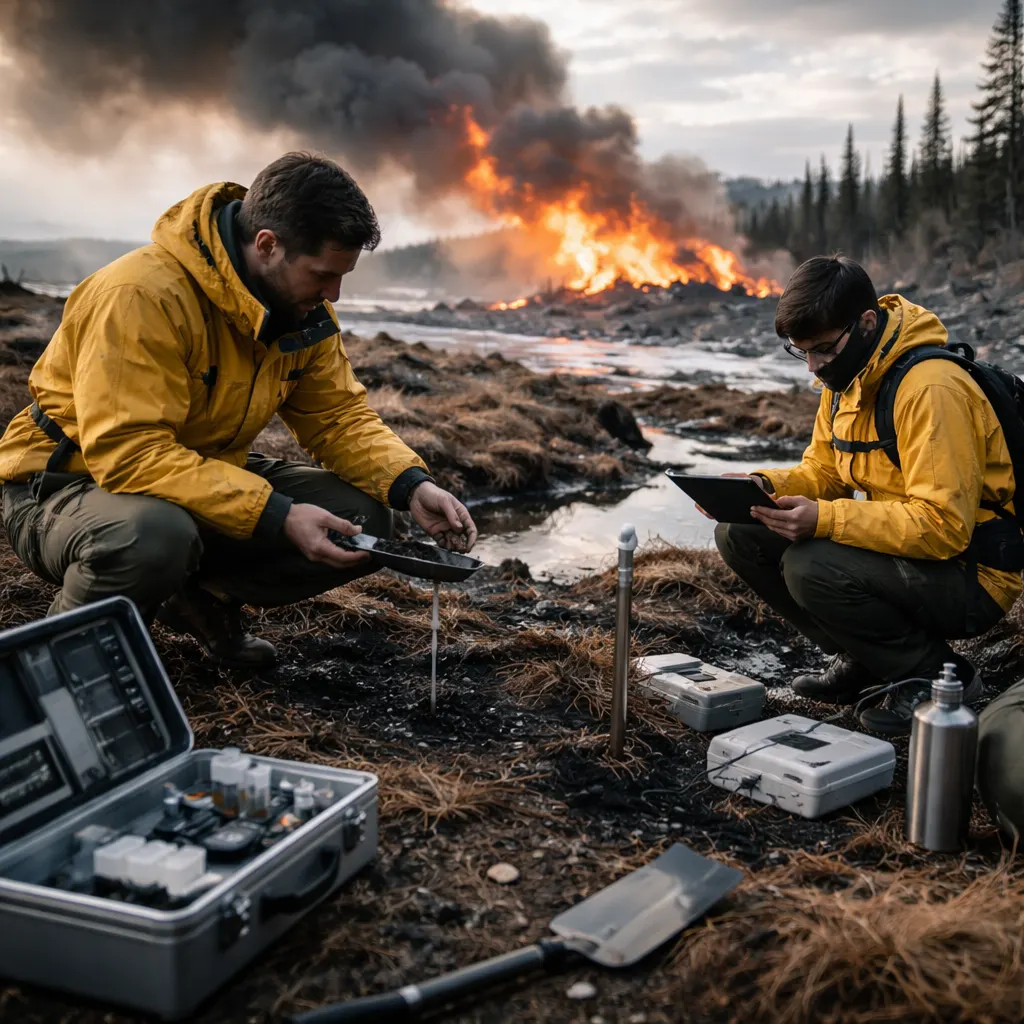
Researchers are exploring an once-unthinkable intervention: deploying firefighters to protect permafrost carbon reserves rather than human lives or buildings, according to a new report from MIT Technology Review published October 19, 2026. International teams across the US, Canada, and other nations are racing to understand whether controlled burns, rapid fire detection, and aggressive suppression can prevent the Arctic-boreal region from shifting from a massive carbon sink into a major source of atmospheric emissions. The effort reflects the extreme choices climate change is forcing upon researchers as greenhouse gas emissions continue to climb each year.
Fires in the planet's northern latitudes have released carbon at nearly triple the rate seen in 2001, while global forest fire emissions have climbed 60% over the same period. Thawing permafrost driven by fires could release the equivalent of nearly 80 billion tons of carbon dioxide by 2100 under high warming scenarios, more than half the emissions produced by direct combustion of vegetation, a January study found. The Arctic permafrost, which underlies 15% of land circling the Northern Hemisphere and holds roughly twice the carbon currently in the atmosphere, has already shrunk by about 12% since 1850. Thawing from general warming could release more than 400 billion additional tons of carbon between now and the end of the century. Most dramatically, intensifying Canadian wildfires released more carbon than the entire nation's combined fossil fuel emissions in 2023.
"We need to figure out a better way to live with wildfire," says Brendan Rogers, a senior scientist at the Woodwell Climate Research Center driving the research effort. "I do think that it can make a meaningful difference." The report notes that only a minority of models informing UN climate reports to date include gradual permafrost loss from warming temperatures, and none incorporate the abrupt collapse and accelerated thaw often occurring after fires and heat waves. These warming-driven emissions represent a "massive blind spot," according to Brian Buma, a senior climate scientist at the Environmental Defense Fund working to develop tools for prioritizing which fires agencies should tackle. A 2022 paper in Science Advances led by Woodwell researchers found that greater efforts to extinguish boreal fires could be cost-effective climate solutions, comparable to or cheaper than building wind turbines, solar farms, or carbon-sucking factories.
Woodwell, the University of Victoria's Polis Institute for Ecological Governance, and the nonprofit Alaska Venture Fund are now partnering on a multimillion-dollar initiative called North Fire to study and raise public awareness about potential benefits of these interventions. The program will include pilot projects examining cultural burning near Fort Yukon, Alaska, and studying how fuel breaks alter fire risks in British Columbia. Additional fire suppression efforts would cost about $12.63 per metric ton of prevented carbon dioxide emissions, adding up to roughly $7 billion in additional spending this decade to maintain Alaska's fire emissions at historical levels, and another $7 billion to $50 billion over the subsequent 30 years as fire severity continues rising. The report notes that Alaska produces about half the nation's wildfire emissions but receives around 4% of federal firefighting funds. Technologies under consideration include the FireSat satellite constellation, expected to deliver fire data at least twice daily by the end of this year, and autonomous firefighting helicopters pre-positioned to respond rapidly to high-risk blazes.
Researchers acknowledge the approach faces significant obstacles, including constrained resources at fire agencies tasked with protecting life and property rather than saving carbon. The US Bureau of Land Management's Alaska Fire Service agreed to a pilot project on a 1.6-million-acre section of the Yukon Flats National Wildlife Refuge, putting out fires threatening yedoma permafrost if resources are available and containment seems achievable within 72 hours. The program was formally preserved and broadened in February 2026 despite initial funding cuts. "We can't overpromise what's possible. We don't know what's possible," Buma says. "It's all new. But we're in a new climate and have to consider trying new things." The question of whether to risk firefighter safety to reduce broader climate threats will depend on developing early detection systems, preventative stewardship practices, and improved suppression planning that can minimize dangers while protecting vulnerable carbon stores. Institutions comfortable letting remote ecosystems burn for millennia now face a choice between intervention and watching frozen carbon reserves built over ice ages escape into an already warming atmosphere.