
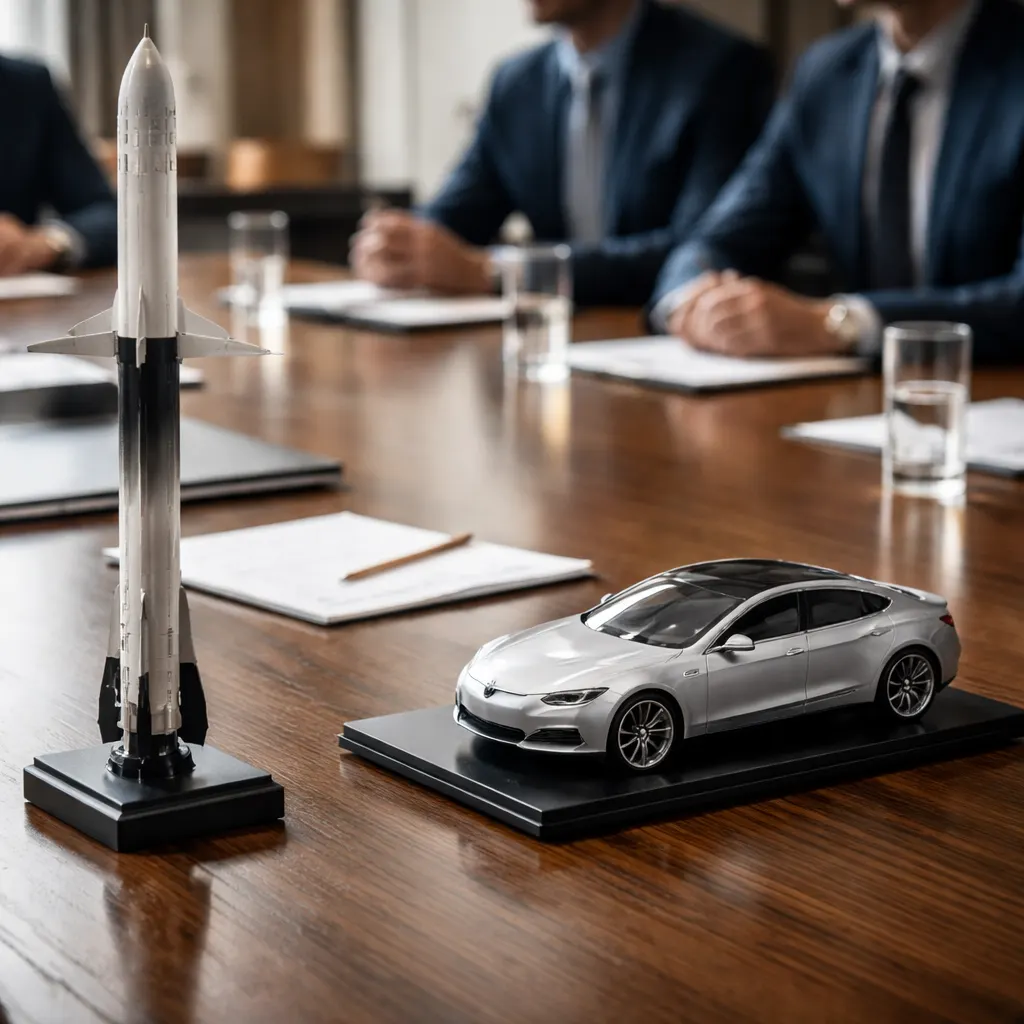
The boards of SpaceX and Tesla have each established special committees to evaluate a potential merger between the two companies, according to Elon Musk, who serves as CEO and largest individual shareholder of both firms. The committees, composed entirely of independent directors, were created following requests from shareholders. Musk disclosed the development during SpaceX's third-quarter earnings call on October 20, emphasizing that the merger remains under review rather than a done deal.
Tesla has seven independent board members under Nasdaq's listing standards, according to the company's October 19 proxy filing: board chair Robyn Denholm, committee chair Ira Ehrenpreis, former Tesla CTO JB Straubel, Joe Gebbia, Jack Hartung, James Murdoch, and Kathleen Wilson-Thompson. Neither Elon Musk nor his brother Kimbal Musk qualify as independent. SpaceX lists six independent directors, including Ehrenpreis, who also chairs the company's compensation and nominating committee, along with Randy Glein, Donald Harrison, Steve Jurvetson, Luke Nosek, and Roelef Boutha. Antonio Garcias, Musk, and SpaceX president Gwynne Shotwell also serve on SpaceX's board but aren't considered independent. Garcias, who previously sat on Tesla's board, founded and runs Valor Equity Partners, which holds a 3.4% stake in SpaceX and has financed SpaceX's AI hardware purchases through leaseback arrangements.
Musk said he backs the merger concept but warned against viewing it as certain. "I think some people out there assume that a SpaceX and Tesla Motor is a certainty, and I think that would be overstating it," he stated, adding that shareholder support would be essential. Because of his conflicted position, Musk explained he's excluded from the special committee discussions, describing it as "an odd kabuki dance where two groups of people are talking, and I can't be in the conversation." The special committees haven't reached agreement on any transaction terms yet, according to Musk.
Musk noted that SpaceX's recent IPO gave him more than 50% voting power, making it easier to secure merger approval from SpaceX shareholders. Tesla presents a much bigger challenge: the company would need a 50% vote from all shareholders, not just those who cast ballots. The rationale behind combining the companies centers on their shared focus on advanced technology. "I do think there's a lot of merit to combining the companies as we are pretty much in the superintelligence singularity," Musk said, pointing to potential gains from collaborating on AI software development, robotics, SpaceX's orbital AI data center project Starmind, and Terafab, the joint chip manufacturing initiative between Tesla and SpaceX. The overlap in these technical domains could drive efficiencies and accelerate innovation across both organizations, though achieving the necessary shareholder consensus at Tesla remains the critical hurdle that could determine whether the merger proceeds.
The committee structure suggests both companies are treating this as a serious strategic possibility that requires careful governance, particularly given Musk's dual role. How independent directors balance the operational synergies against the risks of concentrating two major companies under one corporate umbrella will likely shape not just this transaction, but future debates about founder control in high-stakes technology mergers.