
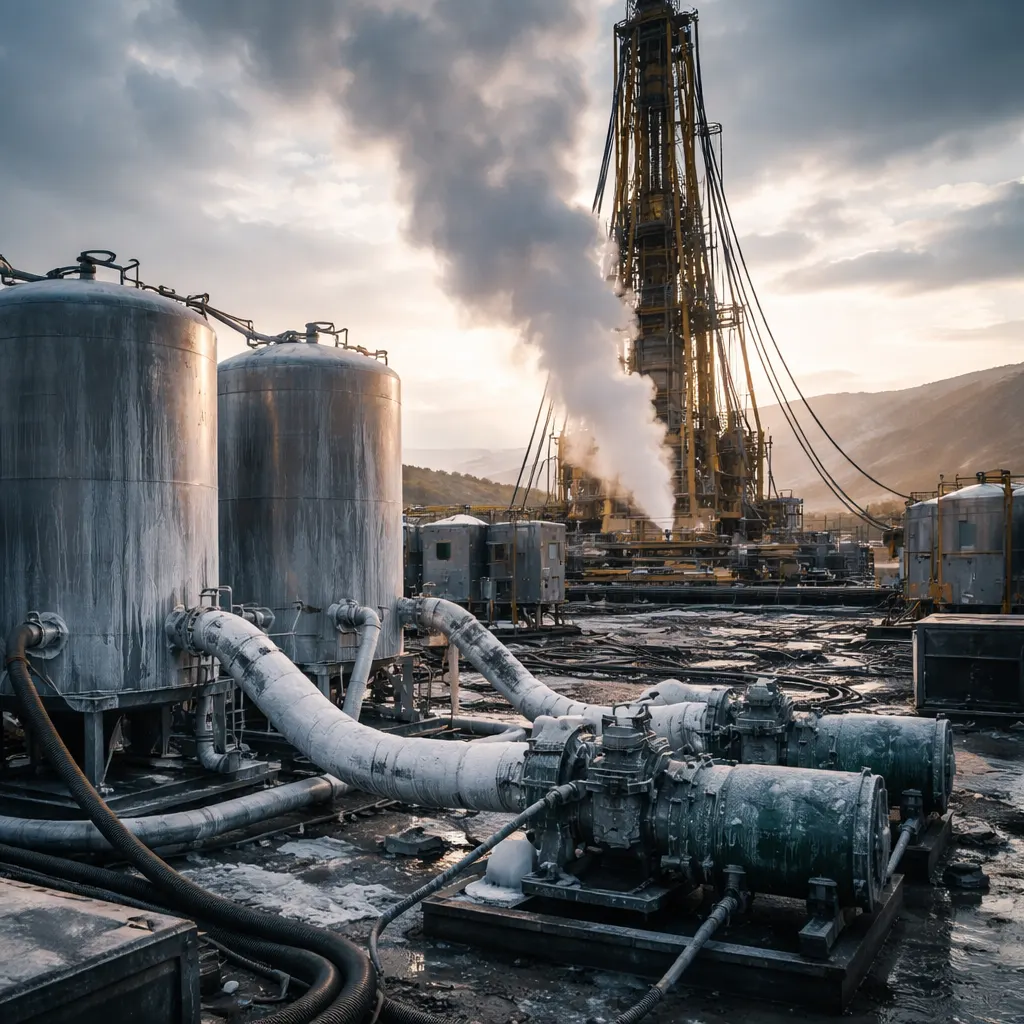
Mazama Energy has developed a new technology that increased its drilling speed by 20% while targeting super-hot rock formations for geothermal energy production, according to an exclusive report from TechCrunch published November 16. The system, called Carbon Chill, uses carbon dioxide instead of traditional mud to cool drill bits and remove rock cuttings, allowing the company to reach extreme temperatures that would otherwise damage equipment. The breakthrough addresses one of geothermal energy's core challenges: drilling both quickly and deeply without destroying electronics that keep the drill on course.
The company recently drilled a well that exceeded 700˚F, surpassing an earlier October 2025 well in Oregon that reached 629˚F. Drilling accounts for roughly 25% to 30% of the total expense of constructing a geothermal power plant, meaning faster drilling can substantially reduce overall costs. The National Laboratory of the Rockies estimated that geothermal could produce between 26.5 to 57 terawatts of electricity across the United States, and developing just 10% of the lower estimate would more than double the country's peak generating capacity. In September, the Khosla-backed startup secured $135 million in funding led by Centaurus Capital and Doerr Capital.
"Our rate of penetration increased 20% over the already very high rates we were achieving," Sriram Vasantharajan, co-founder and CEO of Mazama Energy, told TechCrunch. The CEO described carbon dioxide cooling as essential rather than optional, stating, "Without such technologies, I am, today, not able to drill these horizontal wells at super-hot rock temperatures." According to Vasantharajan, the company aims to complete a single well capable of producing up to 15 megawatts of electricity by next year, adding that "what was just a dream or a quest, I can tell you with confidence is now a promise."
The technology works by injecting liquid carbon dioxide down the drill string's center, where it heats up and becomes supercritical as it travels deeper into hot rock. Just before reaching the drill head, the carbon dioxide flows through a valve shaped like a rocket nozzle, where the expanding gas rapidly cools and absorbs heat from both the electronics and the drill bit. Traditional mud-based cooling can't bring temperatures down enough at extreme depths, causing electronics that guide the drill to fail, and high-temperature-rated alternatives would be prohibitively expensive. Super-hot rock formations, where temperatures exceed 752˚F, turn water into a supercritical state that carries five to 10 times more energy than water from conventional geothermal wells, allowing developers to drill fewer wells and lower costs. Companies including Google and Meta have begun exploring geothermal energy as the technology's potential becomes clearer.
If Mazama's carbon dioxide system proves commercially viable at scale, geothermal could help reshape electricity grids in the 2030s, as hyperscalers are already planning facilities that will come online by decade's end. Vasantharajan said his company now sees "a path towards this commercial super-hot rock geothermal." The funding injection will enable Mazama to drill additional wells deeper, testing whether the promise of super-hot rock can translate into competitive electricity prices. For venture-backed geothermal startups, the race isn't just about reaching extreme temperatures—it's about doing so reliably and cheaply enough to compete with every other power source on the grid. The coming years will reveal whether carbon dioxide cooling becomes an industry standard or remains a niche solution for the most ambitious projects.