
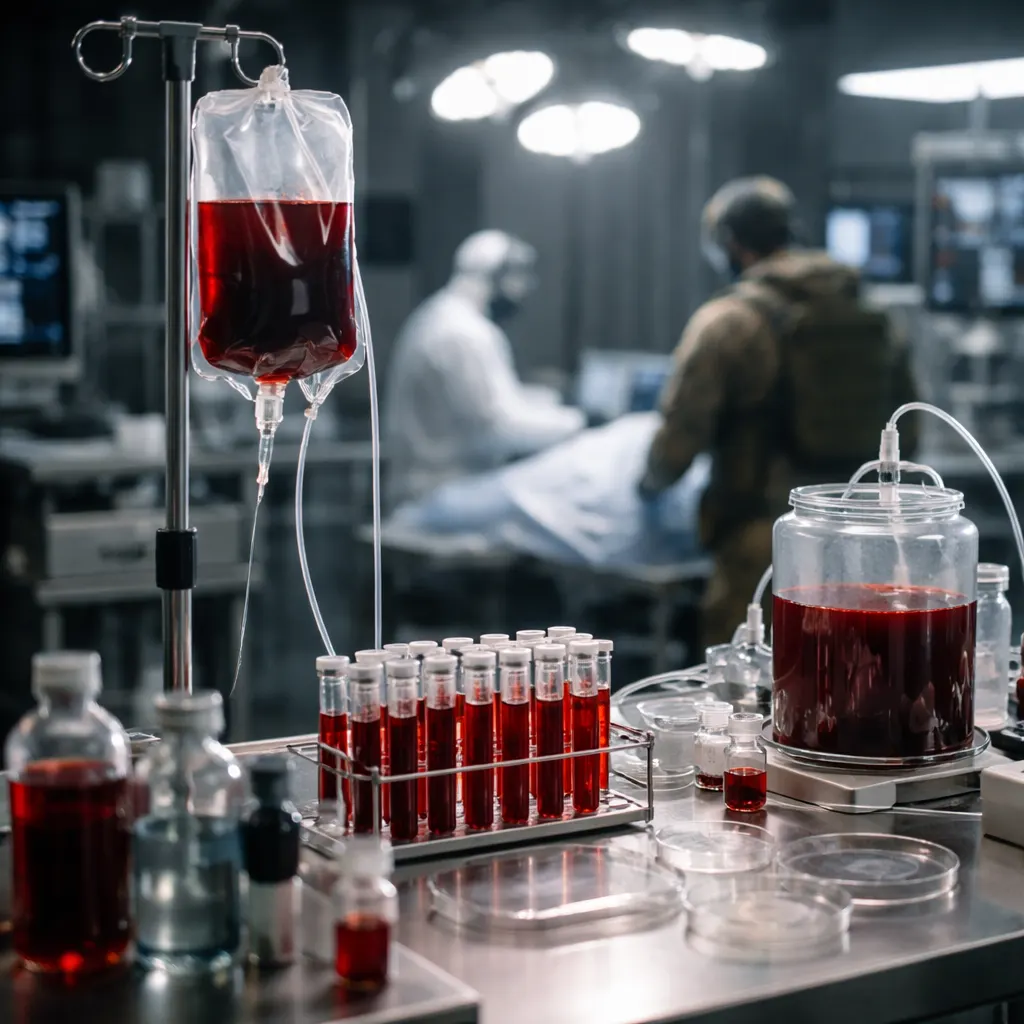
The U.S. military has launched a $73 million program to develop shelf-stable synthetic blood components, aiming for battlefield deployment by 2029, according to a report published by MIT Technology Review on October 14, 2026. The initiative, called RAPIID (resuscitation and prevention of ischemia-induced dysfunction), is managed by DARPA and seeks to create artificial versions of plasma, platelets, and red blood cells that can last years at room temperature. The effort comes as roughly 90% of deaths on the battlefield that could be prevented stem from hemorrhaging, the report notes.
The blood shortage kills about 10,000 people annually in the United States alone, with the global toll likely reaching millions, the report states. A 2025 study in Transfusion found that among 1.2 million U.S. trauma patients who potentially required blood before hospital arrival, only 1% actually received it. Research on combat injuries in Afghanistan identified a crucial window: wounded soldiers who need transfusions have just 36 minutes to begin receiving blood, after which survival rates "start to drop precipitously," according to Lieutenant Commander Robert Murray, the Navy officer and DARPA program manager leading RAPIID. Current blood supplies face severe storage constraints—whole blood lasts just 35 days refrigerated, while platelets stored at room temperature expire within a week or less. Frozen red blood cells and plasma spoil within days once thawed.
Murray told the outlet that the 36-minute threshold means soldiers are "almost guaranteed to survive if you get the blood before that 36-minute mark" for injuries classified as survivable, which includes most hemorrhage cases. The RAPIID program builds on a previous $47.5 million DARPA project called FSHARP that demonstrated promising animal results. Among the technologies moving forward is ErythroMer from KaloCyte, which packages hemoglobin from expiring donor blood inside lipid nanoparticles that function as artificial cell membranes and can be freeze-dried for two-year shelf life at room temperature. Another is SynthoPlate from Case Western Reserve University, a synthetic platelet made from lipid nanoparticles with peptide attachments that bind to injured blood vessels and mimic natural clotting—in 2026 testing, it reduced bleeding time and blood loss by more than half in mice with low platelet counts.
The urgency stems partly from past battlefield tragedies and current vulnerabilities. In February 2007, a casualty evacuation helicopter called Morphine 1-2 was shot down during a daylight "blood run" to retrieve supplies in insurgent-controlled Iraqi territory, killing all seven crew members—an incident Murray studied as an intelligence officer. More recently, the military's main Pacific blood bank on Okinawa sits just 200 meters from satellite communications infrastructure, making all three targets vulnerable to a single missile strike while serving 27,000 Marines and thousands more across a 100-million-square-mile area. The report explains that previous attempts at hemoglobin-based oxygen carriers in the 1980s and 1990s failed catastrophically—one product called HemAssist killed 24 of 52 trial participants compared to eight of 46 in the control group, because "naked" hemoglobin breaks down rapidly and constricts blood vessels by scavenging nitric oxide. DARPA's 2008 effort to grow red blood cells in labs was abandoned when costs couldn't drop below tens of thousands of dollars per unit.
RAPIID has funded seven companies in total, including Abioremedi, which is testing synthetic oxygen-carriers like cytoglobin and myoglobin instead of hemoglobin, and Octapharma USA for plasma and clotting proteins. Each contractor working on blood components receives only one year of guaranteed funding, with Murray setting up competitive trials to hedge against manufacturing or regulatory delays ahead of the 2029 deadline. The next year focuses on getting technologies through large FDA-regulated animal studies, followed by two years of human trials overseen by the University of Colorado Anschutz Medical Campus, including tests on severely injured people in ambulances where the danger of doing nothing outweighs side-effect risks. Murray is also sourcing combat-durable storage bags, finger-stick blood tests, and battery-powered heating devices to prepare for field deployment. Military planners will need to balance the promise of extended shelf life against unresolved questions about whether synthetic components can replicate whole blood's multiple functions—red blood cells assist clotting, platelets reduce inflammation, and plasma tunes coagulation in ways artificial versions may not match.