
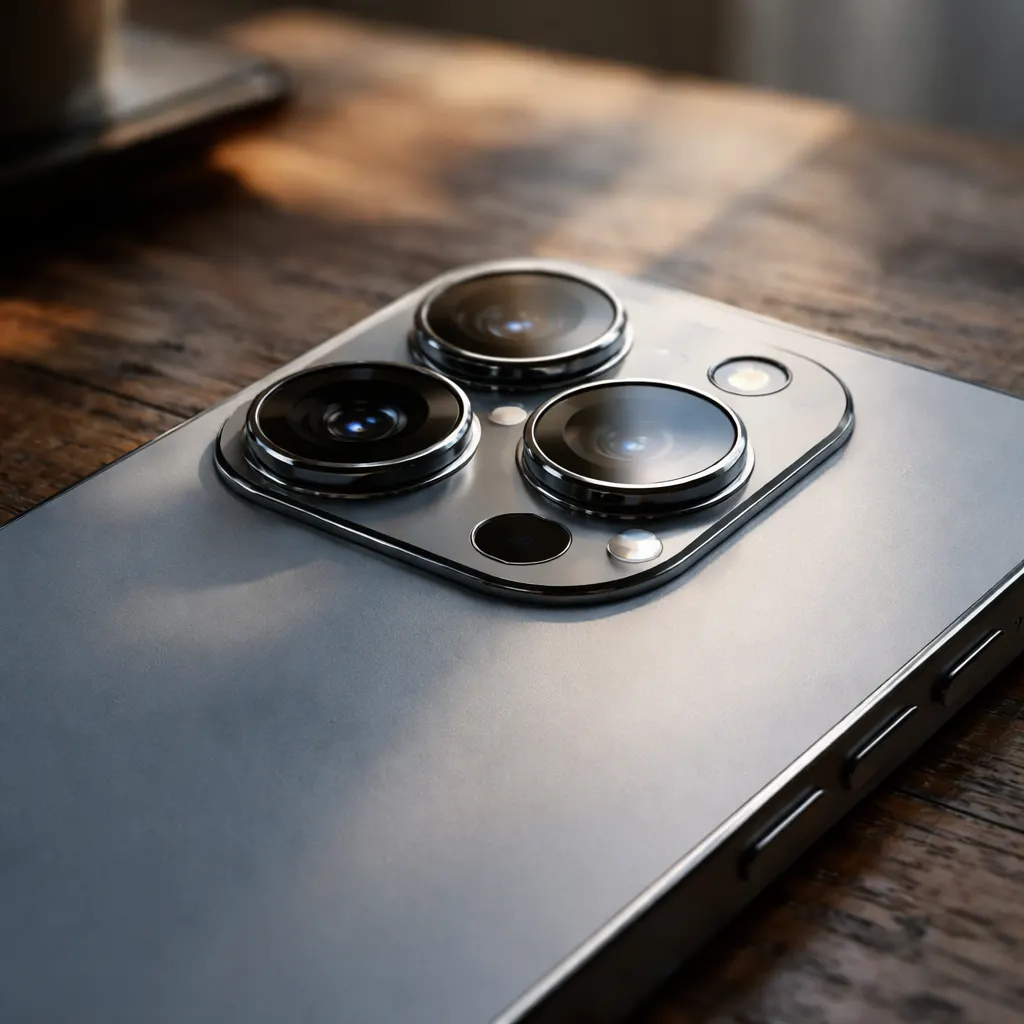
A new optical layer called HoloCoder can capture up to 2.5 times more light than current smartphone camera systems, according to a report from Wired on technology developed by Israeli startup PxE Holographic Imaging, which Boston-based Metalenz recently acquired. The technology replaces the 50-year-old Bayer filter—a red, green, and blue layer that sits above camera sensors—which wastes roughly 60 percent of incoming light by absorbing it before it reaches the sensor. The HoloCoder instead bends light waves toward the sensor's pixels rather than blocking them, promising dramatic improvements in low-light photography and dynamic range.
The Bayer filter creates colored pixels by blocking unwanted wavelengths—throwing away blue and green light to produce a red pixel, for instance. This microscopic structure sits directly on the image sensor and uses diffraction to redirect light rather than absorption. The technology delivers a secondary advantage: it can gather 3D depth information simultaneously, eliminating the need for the secondary cameras, dedicated depth sensors, or AI estimation that most smartphones currently rely on to calculate distance for features like portrait mode. By combining light sensing and depth sensing in a single layer, the system promises to reduce the electronics required on smartphone backs, saving both space and processing power.
Rob Devlin, Metalenz CEO and cofounder, told Wired that PxE's approach mirrors his company's strategy of patterning microscopic structures onto image sensors to capture light data that conventional systems discard. "Once information is lost when you're absorbing all of that light, you can't really buy it back," Devlin said, even with extensive software processing. The acquisition makes strategic sense for Metalenz, which launched publicly in 2021 and has already shipped more than 300 million metasurface optics—flat-lens systems with nanostructures that bend light—to consumer devices. Devlin expects HoloCoder could appear in consumer electronics as early as late 2027 or early 2028.
The technology's enhanced light-gathering capability could transform high-contrast photography scenarios, according to the report—like shooting a selfie against a bright window—by capturing more light to recreate scenes without overexposed highlights or noise-filled shadows. Night-time video capture and low-light photography stand to see dramatic improvements. While the HoloCoder functions as a diffractive optic rather than a true metasurface, Devlin said Metalenz has already replicated the technology in its lab using its own metasurface optics, envisioning a unified system that extracts polarization, color without filtering, and depth from a single image sensor. The company sees applications beyond phones: autonomous robots and self-driving vehicles could use single-sensor systems instead of large modules with multiple sensors and computationally expensive chips to align spatial data in real time, delivering a smaller, cheaper design with lower computing demands. However, Arka Majumdar, who researches low-energy opto-electronics at the University of Washington, expressed skepticism about revolutionizing robotics and autonomous vehicles, noting that unlike phones, vehicles have ample space for stereo cameras or lidar, and the bottleneck isn't image quality but computational power for split-second decisions. For consumers waiting on the next leap in smartphone photography, the path forward may depend less on which companies perfect the hardware first and more on whether manufacturers choose to prioritize sensor innovation over the incremental software gains that have dominated recent release cycles.