
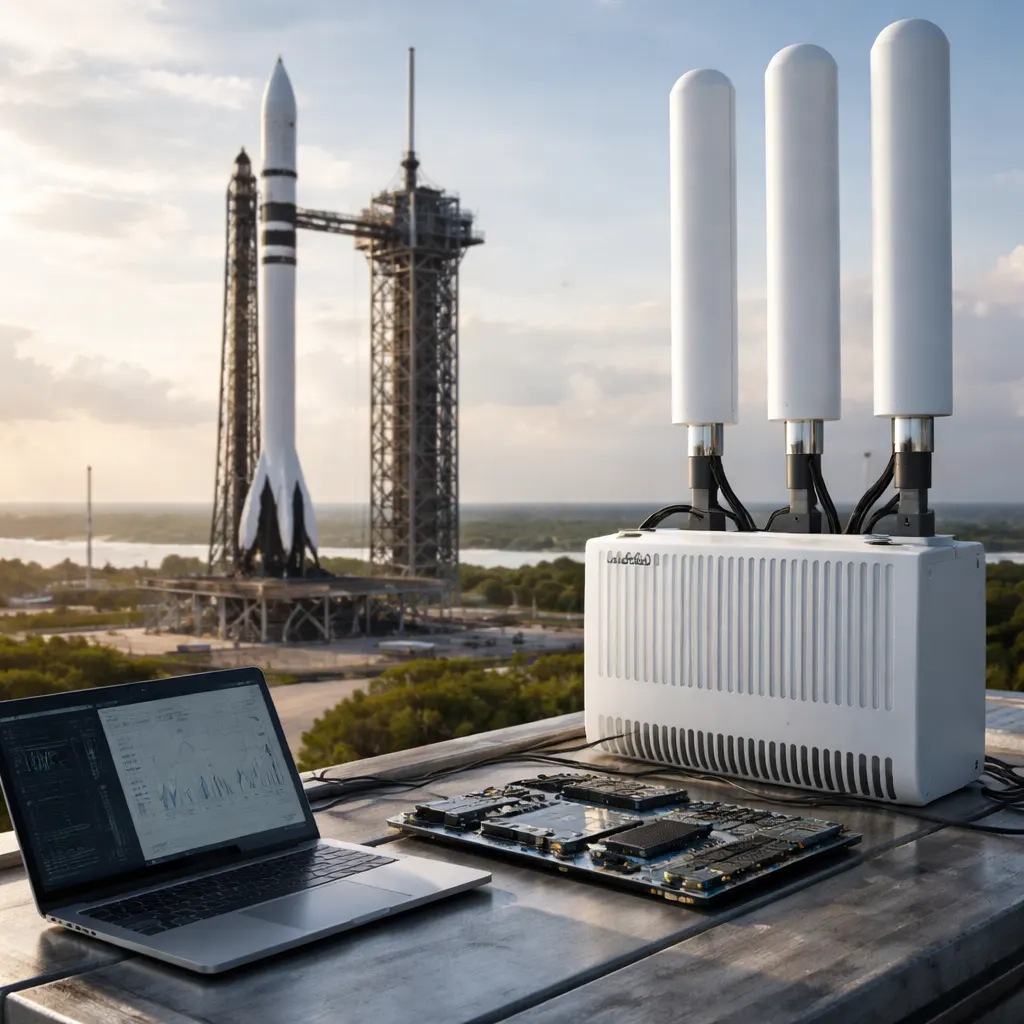
SpaceX is expanding beyond satellites to construct its own ground-based mobile network across the United States. Qualcomm disclosed Nov. 4 that Starlink Mobile chose its Dragonwing cellular technology to power a planned nationwide 5G network, with rollout anticipated to start in 2027. The move positions SpaceX as a potential rival to traditional wireless carriers and introduces another service option for managed service providers and enterprise connectivity vendors, though no wholesale or reseller deals have been revealed yet.
Starlink Mobile's planned infrastructure will employ a 64-transmit, 64-receive Massive MIMO setup designed to extend coverage and boost the volume of traffic that cellular towers can manage. Two Qualcomm Dragonwing platforms split the processing tasks: the QRU100 handles Massive MIMO radio unit processing, supporting the antennas that transmit and receive wireless signals, while the QDU100 executes time-critical baseband operations in the distributed unit using commercial-grade Layer 1 software for core 5G signal processing. The QRU100 platform also complies with Open RAN specifications, enabling operators to deploy standardized interfaces between network elements. Both chips are engineered to deliver superior performance per watt, cutting energy use during network operations—a factor that grows more significant at scale, with tens of thousands of cellular sites mapped out across multiple deployment stages.
SpaceX is also buying additional wireless spectrum to support the terrestrial expansion. In October, the company struck a deal to acquire Grain Management's nationwide 800 MHz portfolio, pending FCC clearance and other closing requirements. The lower-frequency spectrum is projected to strengthen reception indoors, where walls typically degrade cellular signals, while the 2 GHz mid-band spectrum is meant to furnish higher-bandwidth connections, giving the operator diverse frequency bands for coverage and capacity. Current Starlink Mobile services already link compatible LTE phones via satellites and carrier partnerships, including T-Mobile, and next-generation satellites would deliver faster mobile data while ground-based infrastructure lets SpaceX run conventional cellular coverage as part of its wider network.
Channel partners already bundle Starlink satellite broadband into enterprise networking agreements, with Granite Telecommunications offering it alongside managed network monitoring and automated failover, and WEI Connect integrating satellite access into SD-WAN services. A retailer operating multiple stores and field teams might deploy satellite broadband as backup internet access at fixed sites, while cellular connections support employees working remotely. If Starlink Mobile becomes available through distribution channels, MSPs overseeing those stores would gain another connectivity choice for mobile operations and the accompanying support responsibilities. Merging both access methods under a single operator, however, doesn't automatically guarantee independent backup connections—cellular and satellite services may rely on shared critical infrastructure, potentially creating a common point of failure. The report notes that MSPs selling network redundancy would need to confirm path diversity and test failover before making uptime guarantees, and that business coverage, partner provisioning access, and service-level terms will decide whether existing Starlink partners can sell and manage the new offering. The convergence of satellite and terrestrial infrastructure under one provider could reshape enterprise connectivity strategies, especially for organizations that prioritize redundancy but may need to rethink what true independence means when a single company controls both layers.