
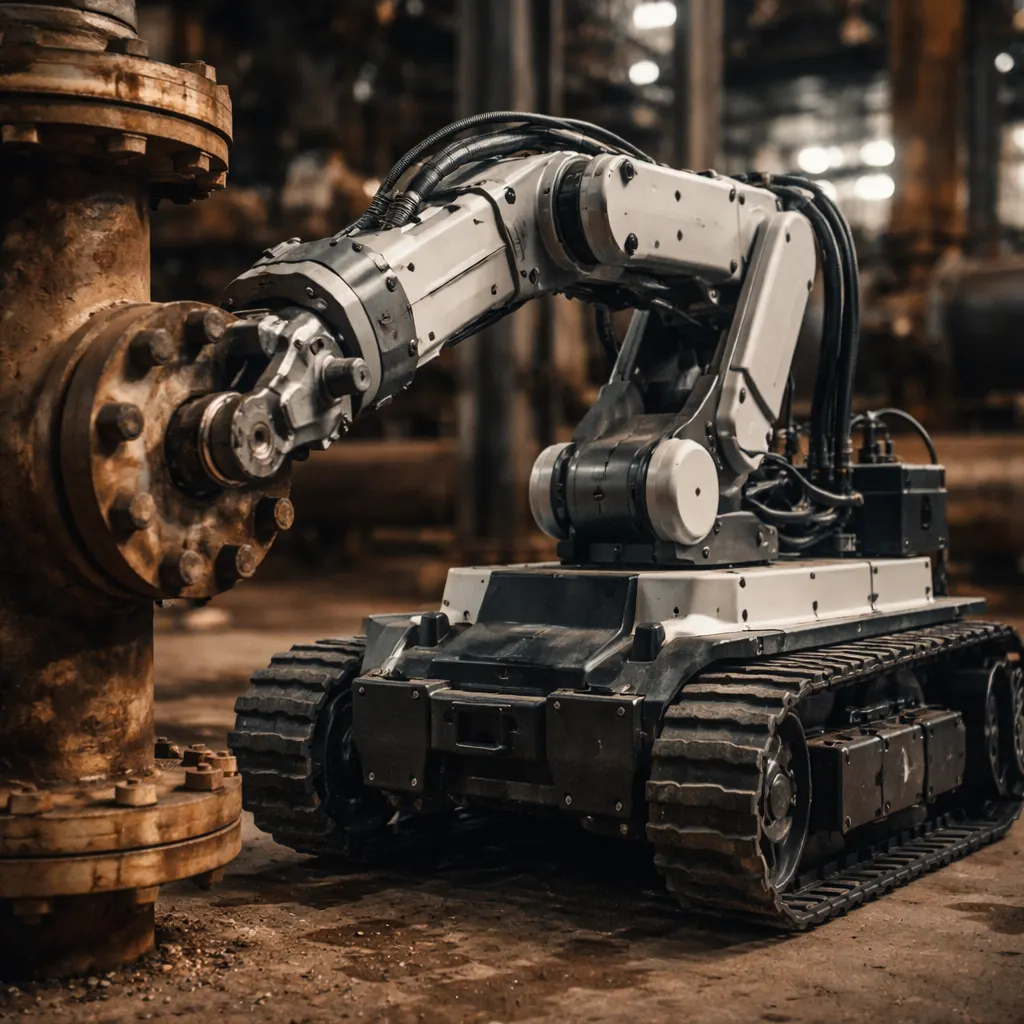
A remote-controlled robot designed to handle one of the most physically demanding and injury-prone tasks in pipefitting is being developed by Nexterity, a startup selected to participate in TechCrunch Disrupt's Startup Battlefield 200. The device targets bolted flange joints — the connections between pipe sections — which require strenuous manual labor to loosen and tighten and are a leading source of worker injuries. Founder Lindsey Elliott, a former ExxonMobil engineer and planner who spent years examining how to improve oil, gas, and petrochemical infrastructure, believes the technology could make pipefitters safer and more productive while addressing a labor shortage in the trade.
The machine arrives in two main components that wrap around a pipe and can slide along it once attached, loosening and tightening four bolts simultaneously. Battery-powered and compact enough to fit in a Pelican case, the robot can be carried by one worker to any job site. Nexterity has built several configurations to accommodate different standard pipe dimensions, with plans to rent the equipment like traditional construction machinery rather than selling it outright. The design focuses on pipes between two and eight inches in diameter — designated NPS2 to NPS8 — which account for 80% of piping infrastructure, according to Elliott's conversations with members of the Pressure Vessels & Piping Division of the American Society of Mechanical Engineers.
Elliott told TechCrunch that she's "repeatedly been told North American pipefitting productivity is notoriously low" after speaking with pipefitters across the U.S. and Canada. Workers become exhausted when required to labor 12 hours daily for three months straight, she noted. "I think it would shock a lot of people just how big this market is," Elliott said, pointing to applications beyond oil and gas: water and wastewater systems, water treatment facilities, food and beverage production, mining operations, nuclear plants, and green manufacturing all rely on similar piping.
The robot's design emerged from Elliott's attendance at industry gatherings including the 13th annual Bolting Symposium, where she played Bolting Bingo with self-described "torque dorks" and learned which bolt types and pipe sizes would make ideal automation candidates. The concentration of piping work within a narrow range of standard dimensions — that 80% falling between two and eight inches — creates what Elliott calls "a fantastic candidate for automation" due to the repeatability involved. If widely adopted, the technology could fundamentally reshape this blue-collar occupation by shifting workers away from the physically taxing bolt work that causes injuries, letting them focus on other aspects of the job. The flexibility of the rental model and single-worker portability may prove crucial to adoption, allowing contractors to deploy the robots quickly without major capital investments or logistical complications.
For industries grappling with chronic labor shortages and worker safety concerns, automation that removes the most hazardous tasks without eliminating jobs entirely may offer a pragmatic middle path. Whether pipefitters themselves embrace the shift, or resist what they perceive as encroachment on their craft, will likely determine how quickly this particular corner of infrastructure work evolves.