
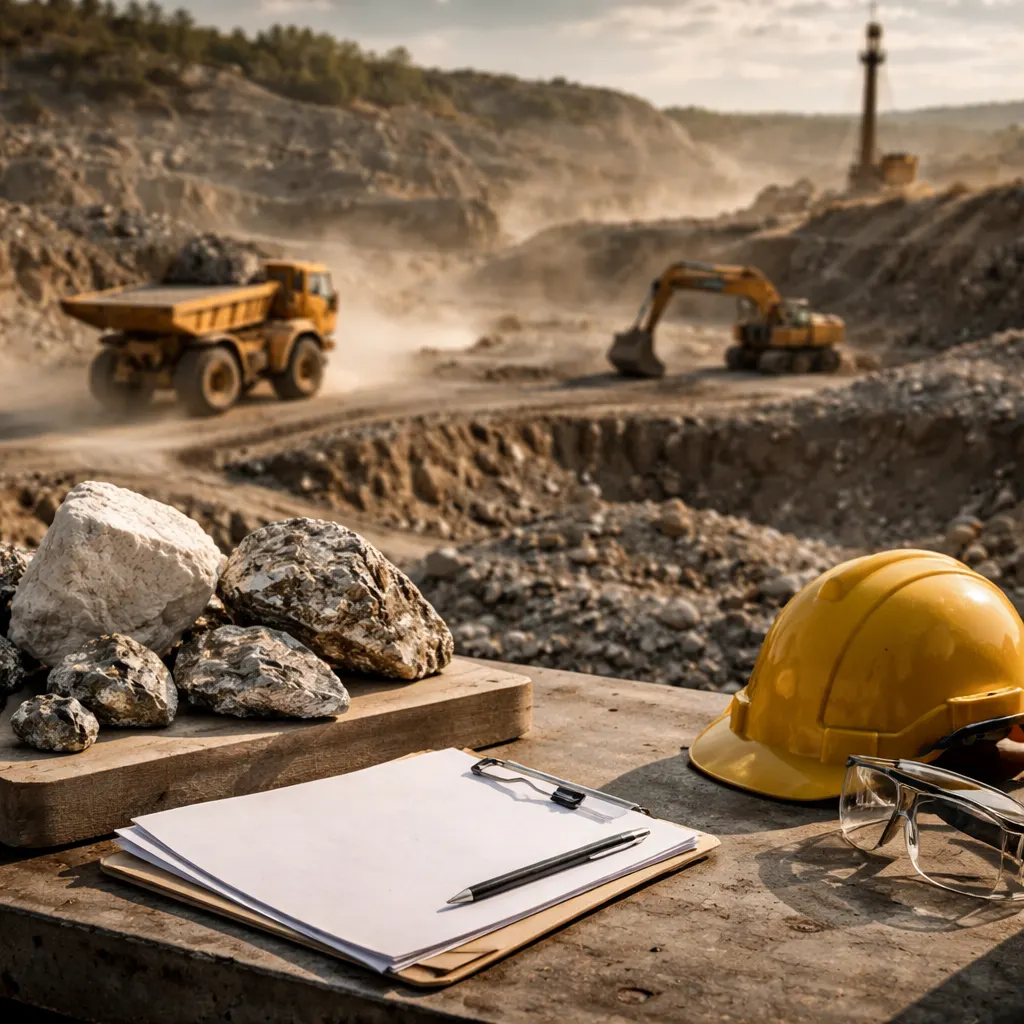
A California cement startup that once emphasized its ability to cut greenhouse-gas emissions by roughly 60% has shifted its messaging under the Trump administration to highlight a different benefit: extracting valuable minerals from the same industrial process. Brimstone Energy, profiled in MIT Technology Review's 2026 Climate Tech Companies to Watch published October 6, is now stressing its capacity to produce critical materials domestically, a pitch aimed at an administration focused on trade protectionism rather than climate action. The Oakland-based company, founded in 2019, has developed a process that substitutes silicate rocks for standard limestone in cement production, eliminating the carbon dioxide released when limestone is heated.
In early 2025, Brimstone announced its process could yield smelter-grade alumina, the raw material for aluminum production. Late last year, the company revealed it could also manufacture steel, magnesium, titanium, and other critical minerals from the same rock in a single refinery. CEO Cody Finke told the publication those materials represent a $2.4 trillion global market. The company's approach offers a domestic production route for goods currently manufactured mostly in China, which has become the target of the Trump administration's harshest trade policies. Conventional cement manufacturing accounts for roughly 8% of global carbon dioxide pollution, according to the report.
The company argues its process would strengthen national security and bring about the "next generation of industrial refining," claiming that producing all these materials from the same rock and a single mining operation would demand far less energy and create substantially less waste than making them separately. "I think that we have one of the generational companies that's actually able to create an industrial revolution," Finke stated. In 2023, Brimstone earned third-party industry certification for its Portland cement manufacturing process, allowing its product to qualify for standard construction projects. The company has yet to produce anything at commercial scale, however, and some observers question whether it can economically extract sufficient quantities of so many materials from a single rock type or overcome the cost and labor challenges that make mining and refining minerals difficult in the United States.
Brimstone suffered a significant setback last year when the Trump administration revoked a $189 million grant meant to subsidize its planned commercial demonstration facility in Reno, Nevada. Finke says the company continues productive discussions with the administration about restoring those funds, emphasizing its potential to boost domestic critical mineral production, and has previously said the company will move forward with the plant even without that grant or other subsidies. The company expects to begin operating the Reno facility, which will produce only cement, supplementary materials, and alumina, in 2028. Delivering steel, titanium, and other critical materials will require financing and building a first full-scale factory, likely pushing that timeline into the next decade. Despite these hurdles, Brimstone has already secured commercial agreements, including deals to supply cement to Amazon and alumina to Century Aluminum, one of the largest US producers of the metal. Even if the company falls short of sparking an industrial revolution, its ability to slash cement emissions makes it worth watching closely. For investors and policymakers betting on reshored supply chains, the question won't be whether Brimstone's climate credentials matter—it's whether the economics of multi-mineral extraction can survive without the subsidies that launched it.