
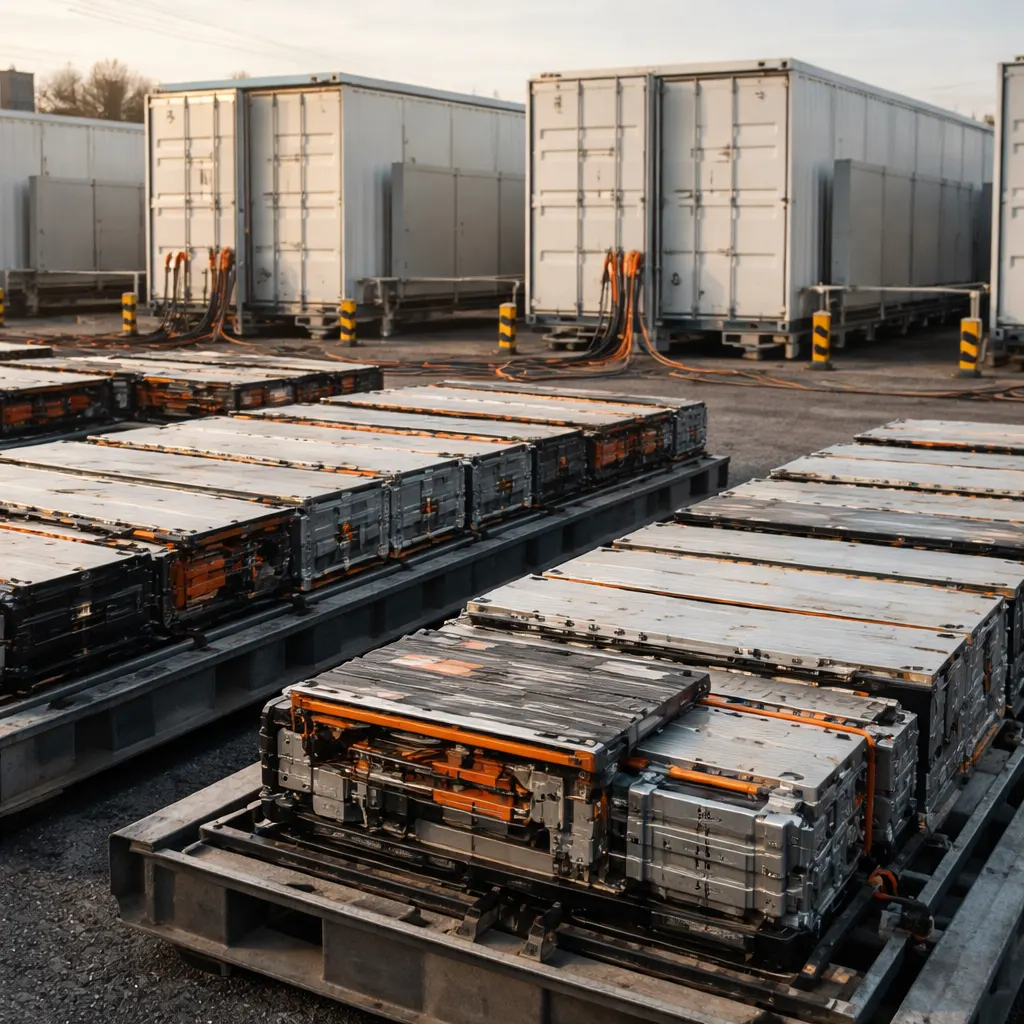
A Vancouver-based startup says it can divert more than two gigawatt-hours of used electric vehicle batteries from landfills or recycling plants annually by repurposing them into energy storage systems, according to a profile published by MIT Technology Review on October 6, 2026. Moment Energy, founded in 2019, disassembles batteries from electric cars and repackages them into shipping containers that deliver backup power to homes, hospitals, airports, and other facilities. The company's model capitalizes on the fact that when an EV reaches the end of its road life, as much as 80% of its battery capacity remains intact.
The world deployed 1.2 terawatt-hours of electric vehicle battery capacity last year, the report notes, and battery storage is now the fastest-growing power technology globally. More than one million EV batteries worldwide could reach the end of their lives by 2030. Since launching, Moment has deployed 11 systems, initially for off-grid homes and more recently for grid-connected commercial and industrial sites. The company opened its Megafactory 1 in Vancouver in June, a facility designed to repurpose one gigawatt-hour of battery capacity per year by 2030—making it the world's largest plant for repurposing EV batteries. It took just six weeks to bring the facility online. Moment now sources used batteries from around 20 car companies, including Nissan and Mercedes-Benz, and the company's systems currently cost under $90 per kilowatt-hour, while average costs for energy-storage batteries reached $70 per kilowatt-hour in early 2026.
The company claims it's the only "second life" battery company to receive key certifications from independent safety evaluator UL, which financiers and insurers use to judge whether a battery system is a secure investment. Moment's systems are built to extend a battery's useful life for another 10 to 30 years, according to the profile. After the company receives a used battery pack, it screens each cell for health and safety, feeds metrics into proprietary AI models that quantify remaining life, and recycles any cells that don't meet standards. The rest are linked together and repackaged in 20- or 40-foot-long steel containers. The company's bylaws contain a promise that it will never send a battery to a landfill.
Repurposing addresses a resource-intensive problem: producing new batteries requires mining and processing minerals, manufacturing them into a final product, and shipping them—often from China—to ports around the world. The great majority of battery recycling capacity is also in China, meaning battery materials from North America must be shipped back across the ocean to be stripped of useful minerals and metals. Global warming potential, resource use, and impacts to human health are all reduced when repurposing a battery before recycling it, a 2023 analysis found. Ongoing trade battles between the US and China have boosted Moment's prospects, the report explains, because nearly all battery manufacturing is rooted in China and batteries imported to the United States face steep tariffs. Meanwhile, Moment will soon be able to classify its repurposed batteries as domestic products in both Canada and the US, where it's building its next plant.
Using funds from the US Department of Energy and part of the $100 million the company has raised from investors including Amazon and Liberty Mutual, Moment is now finishing an even larger facility in Texas. But even together, the two hubs will be able to process only a fraction of the batteries retiring from North American roads. How significantly the company can scale will depend largely on the stream of EV batteries it can obtain and how quickly it can test and repackage them. Moment must also compete against cheap, new batteries flowing in from China; even when accounting for tariffs and shipping costs, some new batteries may still undercut repurposed models. To realize its full climate potential, the startup will need to sustain its early momentum and scale up dramatically. The tension between repurposing economics and recycling infrastructure will shape whether second-life batteries become a standard bridge or remain a niche solution, and regulatory clarity on tariffs and domestic content rules could determine which players survive the next wave of consolidation.