
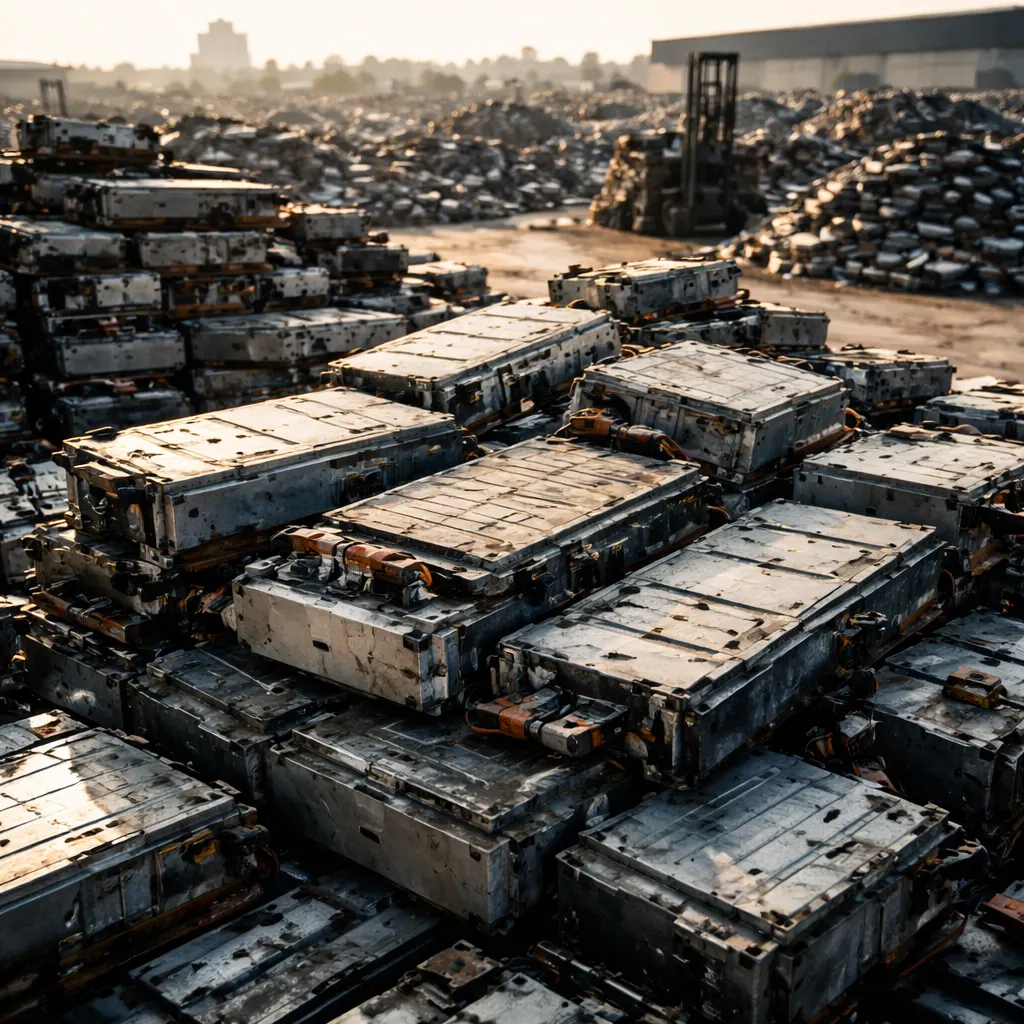
After building the world's largest electric vehicle market over the past decade, China is now confronting a surge of batteries reaching the end of their useful life, according to an investigation published by Wired and originally reported by Inside Climate News. The nation recorded 400,000 metric tons of EV battery waste last year, but a joint study by Chinese and American researchers projects that figure could balloon to 1.69 million metric tons in 2030 and 22.39 million metric tons by 2040. The crisis highlights a growing waste-management challenge as the first major wave of battery retirements arrives, with EV batteries typically lasting about eight years.
Annual sales of battery-powered vehicles in China, including fully electric vehicles and plug-in hybrids, have jumped from roughly 1 million in 2018 to more than 16 million in 2025, the report notes. By 2023, certified recycling companies had built a combined annual processing capacity of 623,000 metric tons—more than 1.5 times the volume of batteries retired that year. Yet these authorized firms handled only about 25 percent of those batteries. An investigation by Yicai, a Chinese financial news outlet, tried to contact every company on the government's certification "white list" and found that more than 100 were no longer operating or couldn't be reached. Nearly 270,000 metric tons of retired batteries flowed through uncertified recyclers in 2023, and without intervention, that volume could reach 1.26 million tons in 2030 and 16.79 million tons by 2040.
"There is poisoning, explosion, and fire caused by improper battery dismantling, waste water being dumped into rivers, contaminants being seeped into groundwater and polluting the soil," Laixiang Sun, a University of Maryland professor and coauthor of the study, told Inside Climate News. The researchers described China's effort to control the informal market as a "losing battle" in their paper titled "The Urgency to Regulate Informal EV Battery Recycling in China." In a 2024 case announced in Jiangxi Province, an uncertified company improperly dismantled 364 metric tons of waste lithium iron phosphate batteries, causing vegetation to die across 6 acres of forest and killing more than 420 cubic feet of standing timber. "You cannot dump them into the environment," said Yan Wang, a mechanical engineering professor at Worcester Polytechnic Institute and cofounder of Ascend Elements, noting the lithium, copper, and nickel content in batteries.
The informal recycling network thrives because unlicensed operators can pay more for used batteries by avoiding the costs of safe testing, dismantling, and pollution control, making it more convenient for vehicle owners to sell to them. Repurposing batteries requires recyclers to test and grade batteries, modules, and sometimes individual cells—a technically complex and expensive process, especially when a Tesla Model Y battery pack can contain more than 4,000 individual cells. Unlicensed operators skip much of that testing and dismantle packs at far lower cost, sometimes selling used cells for unapproved applications like aftermarket range-extending battery packs that create substantial fire and safety risks. In November, a Xiaomi SU7 electric sedan caught fire in Changzhou, Jiangsu Province, with the owner later saying the battery involved was an aftermarket range extender rather than the factory-installed battery. Advanced recycling processes can recover more than 95 percent of certain critical battery materials by processing batteries into "black mass"—a powder containing lithium, cobalt, nickel, manganese, graphite, and other materials—but unlicensed recyclers lacking technology and infrastructure are unlikely to achieve such high recovery rates.
A new national regulation governing EV battery recycling took effect on April 1, adopting an approach similar to Europe's "battery passport" system that requires automakers to bear greater responsibility for collecting and recycling used batteries. Under a scenario with stricter controls on informal recyclers and incentives to consumers and certified recyclers, certified companies could handle 60 percent of retired EV batteries by 2030 and 92 percent by 2060, the study concluded. But Sun said the government's efforts alone won't solve the problem, and automakers must take responsibility even if it pushes up costs. The challenge isn't unique to China—Ascend Elements filed for Chapter 11 bankruptcy protection in April after raising more than $1 billion, while two other major North American battery recyclers, Li-Cycle and Lithion Technologies, entered insolvency proceedings in 2025. Unless Beijing can prevent retired batteries from flowing into the informal market, the country risks repeating a familiar pattern: rapid industrial growth followed by a new wave of pollution.