
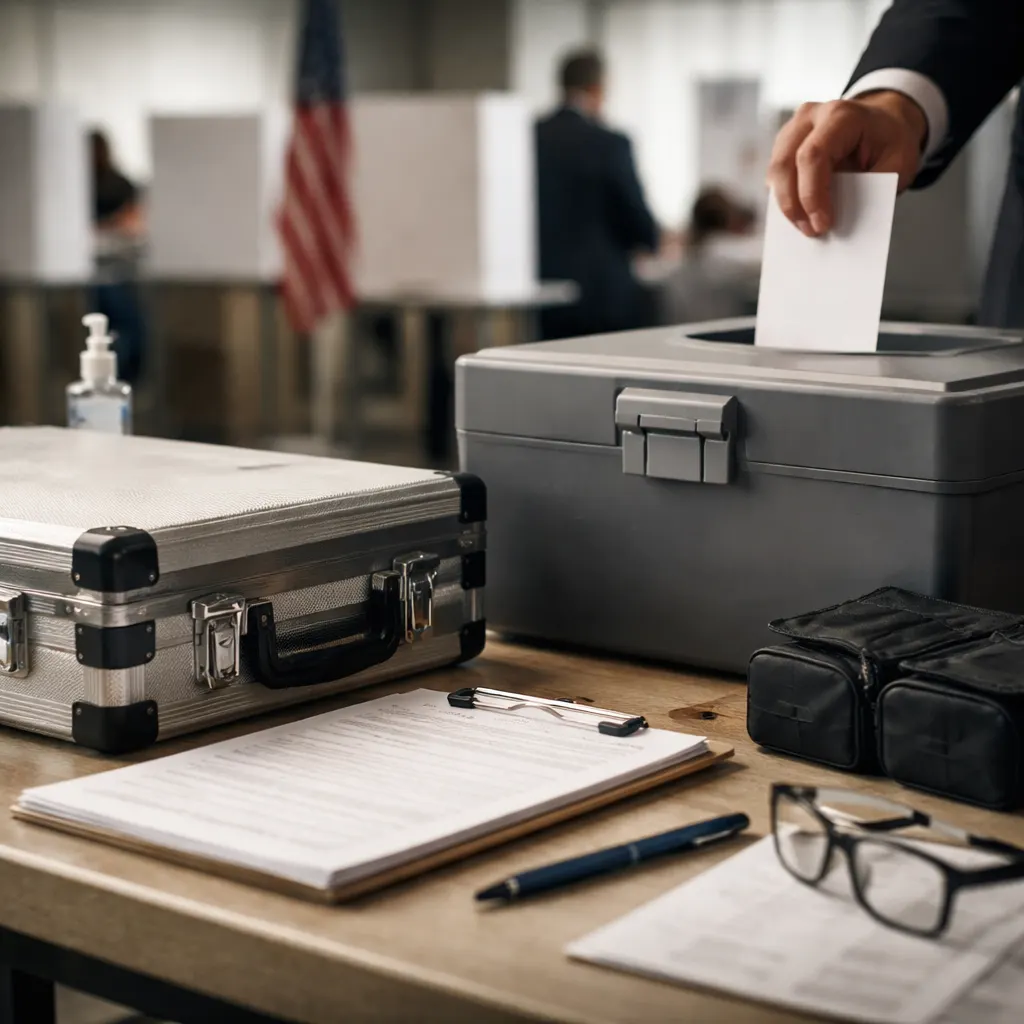
Election officials across the United States are scrambling to address a new threat ahead of November's midterms: the rapid expansion of prediction markets that allow betting on election outcomes. In a recent report by WIRED, election administrators warn that these betting platforms could undermine public confidence in results and fuel aggression against poll workers. Jim Allen, who oversees elections in Delaware County, Pennsylvania, has taken the unprecedented step of requiring roughly 2,500 election workers—from full-time staff to temporary ballot processors—to sign oaths affirming they have no financial stake in any wagers or prediction markets tied to the vote.
The concern gained urgency after officials observed heightened volatility following recent elections. Dean Logan, county clerk for Los Angeles County, reported that prediction markets "fed a lot of the volatility in the aftermath of the June election," leading to threats and aggressive behavior from observers and people with money riding on outcomes at levels not seen in previous contests. A survey conducted by the Partnership for Large Election Jurisdictions found that three-quarters of respondents couldn't correctly identify what prediction market odds actually represent, with 35 percent mistakenly believing they were either counted votes or official projections from state officials. Last week's Wisconsin gubernatorial primary highlighted the disconnect when both Kalshi and Polymarket incorrectly predicted progressive candidate Francesca Hong as the likely winner until actual results came in, though traditional polling was similarly inaccurate.
According to Allen, "The rapid growth of prediction markets, and their plans to prey on elections, are direct threats to undermining trust in electoral outcomes." He warns that these platforms "have the potential to monetize a reward for manipulating results" while also "capitalizing on the anger and frustration by those who lose in these prediction markets." Logan explains that the core problem is confusion: "Prediction markets are a form of speculation, but they are increasingly being presented, and in some cases interpreted, as indicators of likely election outcomes." The difficulty, he notes, is that many voters can't tell the difference between market speculation reflecting participants' views and the actual official election process.
The emergence of betting markets on elections creates what officials see as dangerous incentives for interference. When people place money on expected outcomes based on market odds they believe to be reliable forecasts, incorrect predictions can generate anger that officials fear may be directed at poll workers and election staff who had no role in setting those odds. The confusion documented in the survey—where more than a third of people think market odds are official government projections—means bettors may see election workers as responsible when results don't match their wagers. Both Kalshi and Polymarket have told reporters they won't allow markets on whether unrest will occur at polling locations, and Kalshi's spokesperson condemned threats against election officials as criminal conduct. But with less than 100 days remaining before the midterms and President Donald Trump and his administration actively working to erode trust in American democracy, election administrators are preparing for prediction markets to add another layer of complexity to an already fraught environment.
Delaware County's oath requirement represents one jurisdiction's attempt to insulate election administration from financial conflicts of interest, but the broader challenge of public confusion about what betting odds signify remains unsolved across the country. Officials worry that as these platforms grow and attract more users, the gap between market speculation and electoral reality will continue to generate mistrust precisely when democracy depends on public confidence in the integrity of vote counting. For administrators already contending with misinformation and harassment, prediction markets represent an additional vector through which doubt can spread and anger can escalate on Election Day itself. The sector's rapid expansion into electoral forecasting may ultimately force a reckoning over whether monetizing speculation on democratic processes serves any legitimate public interest, or whether it simply introduces perverse incentives that officials managing the actual vote can't effectively counter.