
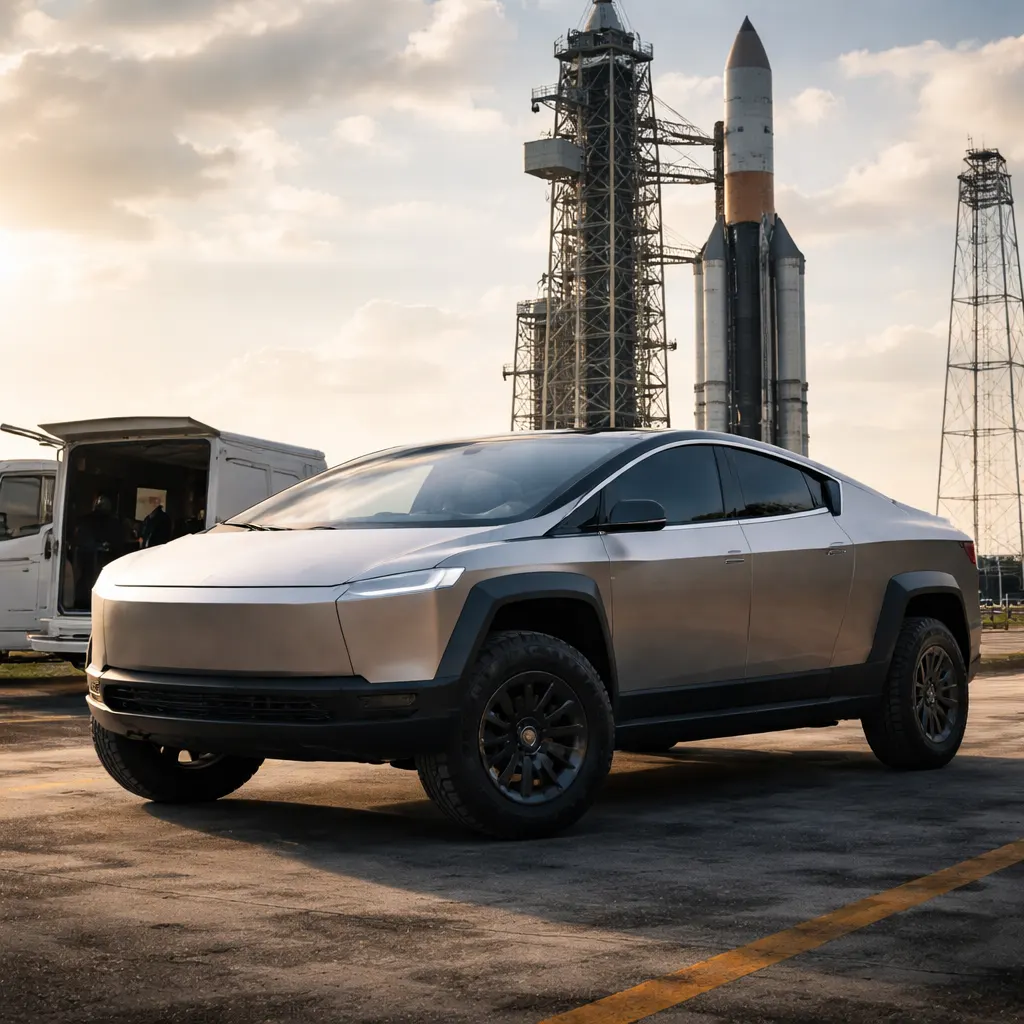
NASA has decided to use Tesla's Cybertruck as the emergency escape vehicle for astronauts during a crewed mission scheduled for September 2026, despite the vehicle having been recalled 11 times for problems including trim panels detaching and accelerator pedals getting stuck. The aerospace agency announced the shift during a Monday briefing about SpaceX Crew-13, which will carry four astronauts to the International Space Station no earlier than September 12. The Cybertruck will replace the Mine Resistant Ambush Protected vehicle, a heavily armored military carrier designed to withstand gunfire and mine blasts.
The MRAP, which NASA currently uses for launchpad evacuations, features armor so heavy that each door weighs 600 pounds and has what the agency in 2015 described as "the sound and feel of a bank vault." The vehicle can act as a standalone bunker even when stationary. Tesla's Cybertruck, by contrast, is constructed from stainless steel and markets itself on shatter-resistant glass that the company claims can handle baseball-sized hail impacts, though a 2019 demonstration by Elon Musk showing the glass resisting metal balls famously backfired. When asked whether SpaceX modified the Cybertrucks for rescue duty, Joel Montalbano, deputy associate administrator at NASA's Human Spaceflight Mission Directorate, indicated he wasn't aware of any changes to the vehicles.
Montalbano explained NASA is satisfied with the Cybertruck choice because the vehicles offer greater speed than MRAPs and are simpler to operate while wearing gloves. The executive also noted the primary motivation was avoiding the need to coordinate a separate MRAP crew for launches, an arrangement he described as inefficient given that SpaceX already operates its own Cybertrucks during its launches. The Crew-13 mission will send NASA astronauts Jessica Watkins and Luke Delaney, Canadian Space Agency astronaut Joshua Kutryk, and Roscosmos cosmonaut Sergey Teteryatnikov to join Expedition 75 aboard the ISS, where Watkins will become the first person to reach the station twice in a SpaceX Dragon capsule.
The report notes that SpaceX has completed 90 Falcon rocket launches in 2026 alone, with every single one successfully leaving the launchpad, suggesting a strong probability the Cybertruck's capabilities as an emergency vehicle won't be tested during Crew-13. The expedition crew plans to investigate in-space manufacturing methods, augmented reality and artificial intelligence approaches for monitoring crew health, and techniques for bioprinting human tissue. The switch to Cybertrucks reflects NASA's increasing operational integration with SpaceX's existing infrastructure rather than maintaining parallel emergency response systems. The choice signals confidence in SpaceX's launch reliability even as it substitutes combat-proven armor for a consumer vehicle with a troubled recall history. Relying on commercial partners' equipment choices may streamline operations but also transfers risk assessment to companies whose primary expertise lies outside emergency rescue protocols.