
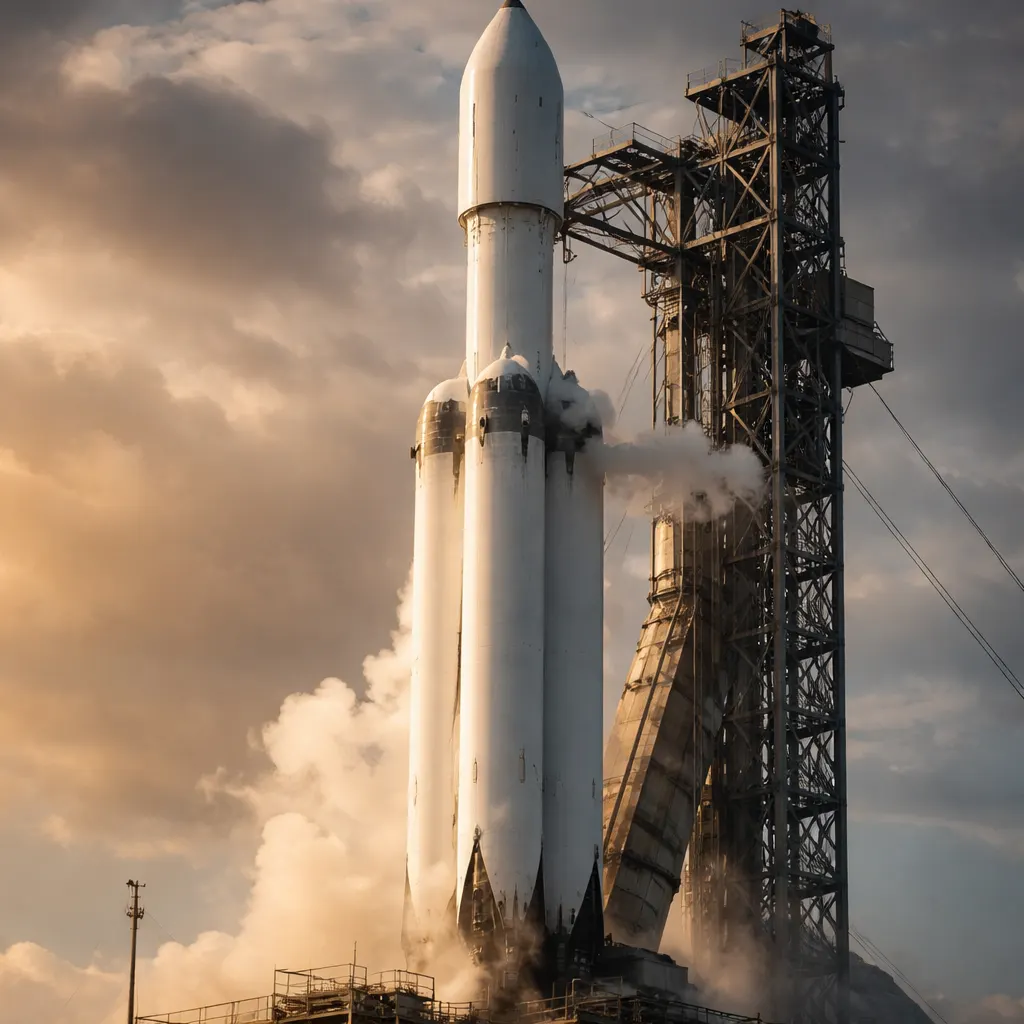
A discarded SpaceX Falcon 9 rocket stage is expected to slam into the moon's sunlit surface on Wednesday at more than 5,400 miles per hour, potentially creating the first-ever impact flash visible from Earth on the moon's lit side, according to new research posted to arXiv. The collision, forecast for around 6:34 am UTC on August 5 near Einstein crater, could throw up a debris plume bright enough to spot with a strong telescope. The findings come from two new preprint studies analyzing what happens when rocket hardware crashes into the lunar surface.
A study led by William Jo, a doctoral candidate at the University of Texas at Austin, used high-resolution physics simulations to predict the scale of the impact. The model forecasts the collision will displace roughly 12,700 kilograms of debris and create a broad curtain of lunar soil spreading as wide as 183 kilometers, along with a thinner spike shooting nearly straight up. The plume could extend 50 kilometers past the moon's edge, spanning about 28 arc seconds in the sky—roughly one-sixtieth the moon's apparent width. According to the research, the spent stage weighs 3,900 kilograms and is essentially hollow metal after burning its fuel, the upper stage from a January 2025 launch that carried two landers toward the moon.
David Goldstein, an aerospace engineering professor at UT Austin who oversaw the work, describes the rocket stage as "like an empty eggshell, because it had all the fuel in it, and there is a rocket engine at one end that's denser." Rather than punching in like a solid meteorite, the shell will crumple from its edges inward. Jo cautions his simulation represents a "best-case" scenario because the code only models a straight-down, engine-first impact, while the real stage will likely arrive at an angle. A glancing strike would produce a smaller, dimmer plume, possibly without the prominent spike. Laurence Trafton, a UT Austin astronomer, notes the plume will be 30 to 300 times fainter than the bright moon beside it, and scattered moonlight will make viewing harder, requiring "a very steady mount."
The research suggests Wednesday's crash offers a preview of hazards facing future lunar operations. Jo points out that particles ejected at 300 to 400 meters per second pose risks to astronauts, and moon rock is highly abrasive. NASA plans to return astronauts to the moon within a few years and eventually build bases, while China is also racing to land humans there. Every lander leaves spent hardware in orbit that can eventually crash down. Goldstein references Apollo missions, noting "dust control during lunar operations is going to be one of the biggest problems that's faced." Scientists including Bill Gray of Project Pluto, who first identified the impact, have published observation plans urging professional and amateur astronomers to try capturing the event, which peaks about 90 seconds after collision.
Observers in the US Southeast have the best chance of spotting the debris plume, the report notes. Anyone north of a line from Massachusetts to Texas will face poor viewing conditions, peering through more than three times the usual atmospheric thickness. Scientists hope to read the moon's composition by the mess the impact throws up, similar to past NASA missions that deliberately crashed objects into the lunar surface to detect water ice. With lunar exploration entering a more active era, the unplanned collision offers a chance to gauge just how hard spent rockets hit and how wide the debris spreads when metal meets moon.